

























































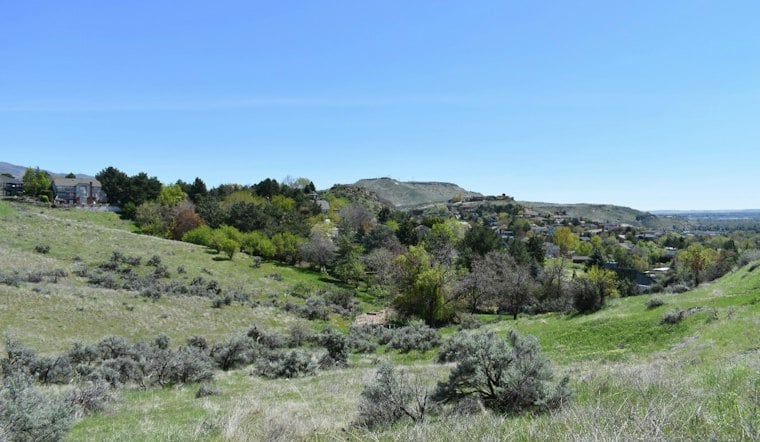
The Boise Foothills still carry the scars of the Claremont Fire, which tore through more than 6,600 acres before crews reached full containment. Now the city wants the public's help putting native plants back in the ground, with two volunteer planting days set for this month that require no experience and no gear of your own.
Ridge to Rivers is recruiting volunteers to assist the City of Boise's Claremont Fire restoration team, according to CBS2. A sagebrush planting is scheduled for Saturday, November 14, with a bitterbrush planting following on Saturday, November 21. Both events run roughly from 9 a.m. to 1:30 p.m. and include transportation, per the same report.
Organizers say volunteers need no prior experience, since the foothills restoration team will supply all necessary training and equipment on-site. That equipment includes planting bars, leather work gloves and buckets of seedlings, the outlet notes — everything needed to get sagebrush and bitterbrush roots back into scorched ground.
Why The Foothills Keep Burning Bigger
The fire that left this scar burned areas across the Boise Foothills, and the stakes of restoring them are tied to a landscape the City of Boise describes as fragile to begin with. The city owns more than 5,000 acres of open-space reserves concentrated in the sagebrush steppe ecosystem, which it manages through what it calls a science-based, adaptive management strategy, according to the City of Boise. The city also describes sagebrush steppe as one of North America's most imperiled ecosystems.
That vulnerability has become harder to ignore as major fires hit the region more often. Boise Fire Chief Aaron Hummel told the Idaho Statesman that large-scale incidents that used to strike roughly every 10 years earlier in his career now arrive every three to four years, saying plainly, “Now, it is every three to four.”
Early Green Shoots, With A Catch
There are early signs of life returning to the burn scar. Boise State researchers reported that native grasses are beginning to return in some areas, and the team told idahonews.com that a recent storm did not produce much erosion, though that single observation doesn't rule out erosion down the road.
Still, the same researchers caution that recovery is a long game and that appearances can mislead. They expect it will take years to fully understand how the burned landscape responds, and they warned that not all green growth is good news — some of it may be invasive cheatgrass rather than the native vegetation the restoration work is meant to encourage. As the researchers put it, the assumption that “if it's green, it's good” is “not the case.”
A Bigger Burn Scar In Wyoming Offers A Preview
Boise's effort has an instructive parallel in Wyoming, where the Weiser Knoll Fire almost completely wiped out 25 square miles of sagebrush ecosystem, according to wyomingnews.com. There, a Bureau of Land Management biologist landed an unexpected surplus of 7,000 sagebrush seedlings donated by the Wyoming Honor Farm, and three crews of state and federal employees were on pace to plant nearly 2,000 seedlings in a single day, the outlet reported. Managers there have also sought a $2 million grant from the Wyoming Wildlife and Natural Resource Trust specifically to treat the area for destructive cheatgrass — the same invasive threat Boise State researchers flagged closer to home.
Back in the Boise Foothills, the scale is smaller but the goal is the same: get native plants established before invasive species take hold. With training and tools provided on-site, Ridge to Rivers is counting on volunteers to show up for the sagebrush planting next Saturday or the bitterbrush planting the following week to help push that recovery along.





