

























































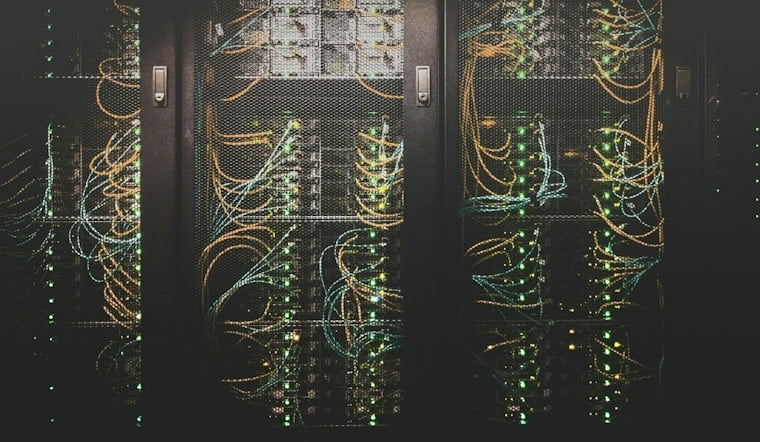
A proposal to build a sprawling data-center campus east of Declo, Idaho, has split the farming town of about 330 people, pitting neighbor against neighbor over a piece of land that could soon host a natural-gas power plant and rows of server racks instead of crops. TerraVolt Holdings has struck a deal to option the property, and the family that owns it says the decision was made with economic survival and their children's futures in mind.
TerraVolt announced it reached an agreement to option 1,000 acres east of Declo for a data-center campus with its own natural-gas power plant, according to Idaho News 6. In a separate announcement, TerraVolt Holdings said via GlobeNewswire that it had executed option agreements to purchase 1,077 acres in Cassia County outside Declo — a discrepancy in acreage between the two accounts that remains unresolved. The company's release describes a campus designed to support an initial 240 megawatts of dedicated on-site power generation, with plans to require low-water-use cooling technologies such as closed-loop systems at any data centers built there.
TerraVolt CEO Joel Stone framed the project as a boost to the local tax base. He said the company intends to work with county officials and the community to deliver what he called “responsible, long-term industrial tax base growth without impacting local power rates or the agricultural water the region depends on,” according to the company's statement via GlobeNewswire.
The Seller's Case for Letting Go of the Family Farm
Jesse Wickel, the property's seller, told Idaho News 6 that economic benefits and job creation factored into his decision, and that the project's plans for off-grid power generation and closed-loop water usage helped ease his concerns. He said farming was meaningful to his family but acknowledged it amounted to “a farm that cannot support all of our children's future families,” per the station's report.
Wickel said the choice was made with the community and his children's future in mind, and that he hopes his daughters can remain in the area and support their own families down the road. On Friday, he posted a Facebook announcement asking the community to reserve judgment until the plan's details become clearer, the same account notes.
A Hometown Rancher Pushes Back
Not everyone in Declo is on board. Les Hedges, a small-business owner and rancher who grew up in the town and calls it his hometown, told the station he has generally opposed data centers and specifically objects to one proposed less than a mile from his home. “Jesse has the right to sell his ground to whoever he wants. And I can't stop him from doing that. I just disagree with it,” Hedges said.
The disagreement has spilled onto social media, where the Declo community Facebook page has hosted discussion about the project, with some residents questioning it and others defending Wickel's right to sell his own land, per the station's report. Reporter Lorien Nettleton said she contacted both TerraVolt and Wickel but had not received a response by the time the story published.
Mixed Signals at the Local Gas Station
Down at the Declo country store gas station, reactions were scattered. Some people interviewed said they had no issue with the data center, but the station's report found that most people it spoke with said they simply did not know enough about the project to form an opinion, with the majority declining to register a stance either way.
Before anything gets built, the proposal faces a regulatory hurdle: data centers are not currently listed as a permitted use in Cassia County, meaning the county building and zoning department and the county commission would have to approve the project, according to Idaho News 6. An open house is scheduled for Tuesday, November 10, at 7 p.m. at the high school auditorium, where residents are expected to get more details on the plan.
Idaho's Bigger Data-Center Boom
Declo's debate is unfolding amid a broader rush of data-center proposals across Idaho. Copia Power is evaluating a plan to build a 3,700-acre data center on public land north of Twin Falls, while a Nevada company has renewed efforts to lease more than 3,700 acres of public land in southern Ada County for a complex with its own supporting power plant, according to the Idaho Statesman. Meta activated its own $1.2 billion data center near Kuna in September, the newspaper reported.
The scale of these projects has drawn attention from energy researchers. John Kumm, executive director of the University of Idaho Energy Institute, has said some data centers carry electric loads on the scale of a small town, according to KMVT. Kumm has also noted that water use varies by cooling system, and that closed-loop systems recirculate and reuse most of their water. A Taxpayers Protection Alliance report cited by the station estimated that data centers accounted for 0.01% of Idaho's water consumption and 1.5% of its electricity use in 2025.
At least one Idaho county has already hit pause on the trend. Bannock County stopped accepting or processing data-center applications in unincorporated areas for 180 days while it develops its first data-center ordinance, though the pause does not apply within incorporated cities, KMVT reported.
Water Worries Loom Over the Region
Idaho has experienced repeated irrigation cutbacks in 2021, 2022 and 2023, according to a report from the Idaho Capital Sun examining how artificial intelligence's growth could collide with the state's water supply. Researcher Manuel Herrera's work, cited in that report, projects global AI water consumption could rise sevenfold by 2050, reaching 28.11 billion liters per day. The Idaho Capital Sun also pointed to Google's data centers in The Dalles, Oregon, which consumed 355 million gallons of water in 2021 — nearly 29% of that city's total water use that year — as a cautionary example of how thirsty such facilities can become.
For now, Declo's future remains an open question that will likely come into sharper focus at next week's open house. Whether the county approves the project, and whether TerraVolt's promises about power rates, water use and jobs hold up, are questions that have yet to be answered for the small farming community weighing what comes next.





