

























































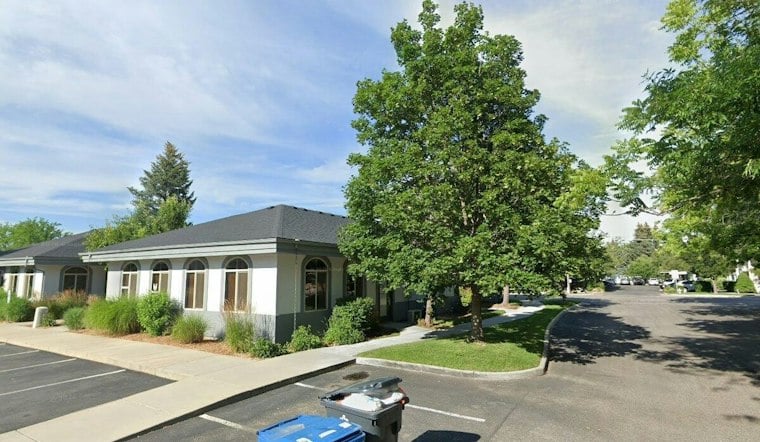
The proposal before Boise’s Planning and Zoning Commission has changed substantially since it was first floated. Commissioners voted 4-3 to approve a conditional use permit for dorm-style co-housing at Mountain View Church of the Brethren on Cole Road, advancing a plan that could house up to 60 people working toward education or career goals.
As Boise Dev reported, the commission had approved a rezone of the church property from R1-C to R2 in January 2026, but deferred the conditional use permit while seeking more information about operations, staffing and security. The church is at 2823 N. Cole Rd. The proposed Christian Safety Net Academy is described in the coverage as an operation separate from the congregation that owns the property.
What the Project Looks Like Now
The current proposal calls for two housing buildings, with capacity for up to 36 men and 24 women, according to Boise Dev. That differs from the publication’s account of an earlier men-only plan for as many as 72 residents in single-occupancy rooms with shared facilities. Earlier coverage described other configurations: the Idaho Statesman reported a three-story, 36-unit dormitory intended for up to 100 men, while January coverage described 35 housing units in seven buildings on a two-acre site next to the church. The reports do not reconcile these counts and layouts, but together they show how the proposal has evolved.
The latest plan also includes classrooms, a computer lab, a coffee shop and a mechanical shop offering basic automobile repair instruction to residents, Boise Dev reported. Residents would live independently and be paired with senior mentors. The proposed rent is $650 a month, with access to food and clothing banks, the mechanic shop and other amenities included. The academy plans to employ an onsite manager, career counselor and bookkeeper; the report says it would not have mental health professionals or other specialized staff. Visitors would not be allowed in the housing area.
Screening Rules and a Legal Distinction
The application’s classification as co-housing, rather than a recovery residence, was central to the commission’s review under Boise’s zoning code. Residents would be screened for mental illness, active addiction and other conditions before admission, and would have to complete four hours of community service each week. Commissioner Jennifer Mohr said she supported approval because the application was for co-housing. Jesi Lile described the intended residents as people able to function in society who may still need support and life skills.
Under the city-code requirements described by Boise Dev, co-housing must have at least four bedrooms, shared facilities and lease or occupancy agreements of at least 28 days. The report describes a recovery residence instead as a staffed facility providing medical, correctional or other mandated supervision, or a protective environment. If a code-enforcement investigation found the facility operating as a recovery residence, it would need a new conditional use permit.
Public Pushback Hasn’t Faded
The permit passed despite continued neighborhood opposition. Commissioners Ester Ceja, Tony Torres and Kati Stallings voted against it. Boise Dev reported that residents gave an hour and a half of testimony at a Nov. 2 hearing. The Idaho Statesman previously reported that about 50 West Bench residents submitted written opposition ahead of an earlier hearing, with a similar number attending at Boise City Hall. City staff recommended approval, according to Boise Dev.
Earlier Idaho Statesman reporting identified two other programs in the vicinity: Iron Sharpens Iron, a transitional housing program in a building next to the church, and Rising Sun Sober Living, less than half a mile to the northwest. Their proximity alone does not establish that either program operates like the proposed academy.
A nearby program with a different stated model
Iron Sharpens Iron Ministries describes its program as IDOC-approved faith-based housing developed by Bill Masimer in 2012, according to the ministry. That description distinguishes its stated model from the academy proposal, but the reporting cited here does not establish Rising Sun Sober Living’s services or land-use history, or show that either nearby program is directly comparable.
What Comes Next
The commission’s decision could still go before the Boise City Council. Chris Danley said the application will probably go to the council, which may hear an appeal of the permit decision, according to Boise Dev. No construction timeline or completion date has been established, and it is not yet clear whether the council will take up the matter or how it would rule.
The 4-3 vote advances the project past the commission’s earlier review, but leaves its future uncertain. Further review by the council or code enforcement, as well as continued neighborhood scrutiny, could shape whether the latest version proceeds.





