

























































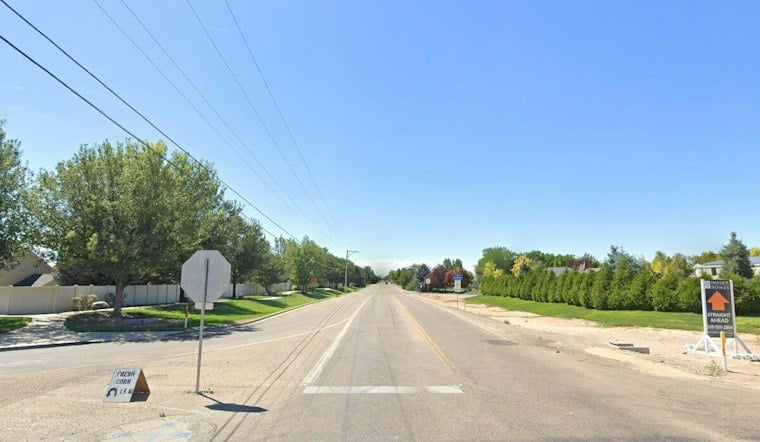
The Treasure Valley's first new freeway in more than 40 years is now 65% complete and running ahead of schedule, with most of State Highway 16 on track to open in early 2027. The Idaho Transportation Department shared the update during a public construction meeting this past Wednesday, even as officials warn that nighttime road closures are headed for State Highway 44 starting in January.
According to the Idaho Statesman, ITD says the project is 65% complete after more than four years of construction, and the agency is targeting an early 2027 opening for most parts of the highway. The lone exception is the interchange at Highway 44, which is expected to open later in 2027 than the rest of the corridor. Once finished, the new freeway will connect Interstate 84 and State Highway 44, giving the Treasure Valley a new north-south route and its first new freeway in four decades.
The project includes five interchanges, at Interstate 84, Franklin Road, Ustick Road, U.S. Highway 20/26 and State Highway 44. When complete, the highway will carry two lanes in each direction, separated by a center median barrier, with 10-foot shoulders. ITD conducted a corridor study and environmental evaluation for the project back in 2006, long before the surrounding farmland began filling in with rooftops.
The southern extension is the latest stage of a project planned over decades, not a single four-year build. ITD’s timeline shows the agency completed an environmental impact statement in 2006–2011, built the first 2.5 miles between State Highway 44 and U.S. 20/26 in 2012–2014, and began construction on the current I-84-to-U.S. 20/26 segment in 2022–2023. The design was refined in between, including a 2017–2019 update that reduced the highway’s footprint, as detailed in ITD’s project timeline.
Why Highway 44 Is Taking Longer
Highway 44 construction has proceeded more slowly than the rest of the corridor because crews cannot work over live traffic, and ITD is prioritizing keeping that traffic moving, ITD spokesperson Jill Youmans told the Statesman. “People have to get to work and have to get home,” Youmans said. That means nighttime closures will begin in January on State Highway 44 to install bridge girders at the interchange, with each closure expected to last about 15 minutes, though some could run slightly longer.
“We do understand it's causing a disruption,” Youmans said, acknowledging the inconvenience even as the broader project nears its finish line. ITD consultant Gina Staton said major construction impacts from the project are beginning to wind down overall, despite the upcoming nighttime work and occasional lane closures elsewhere along the route.
What's Left to Build
Remaining work on the highway includes concrete paving, bridge treatments, overhead signs, lighting and striping, the Statesman reports. Some of that work will have to wait for warmer temperatures before it can be finished. Beyond Highway 44, the project has also caused detours and delays on Ustick and Franklin roads as construction has moved through the corridor, and it required coordination with local farmers, developers, utility providers and local agencies along the way.
Nearly $700 million has been invested in State Highway 16 to date. Dan Gorley told the Statesman that construction remains on schedule for completion next summer and could even finish earlier than that. Gorley also noted that more than 500 homes and businesses in the surrounding area have been built since construction began, a boom that ITD anticipated by acquiring the highway right-of-way before many of those homes went up.
The accelerated opening date reflects a funding change as well as construction progress. In February 2025, ITD said the corridor was expected to open by 2027, a year earlier than previously planned, after additional money became available through the state’s Transportation Expansion and Congestion Mitigation program. The department said those funds allowed it to advance multiple interchange projects at once; the program is part of the state’s broader effort to move major transportation projects forward, as ITD announced.
Explosive Growth Is Driving Future Traffic
By 2045, average daily traffic on State Highway 16 is projected to range from 65,000 to 110,000 vehicles depending on the section, according to Youmans. That growth tracks with the broader boom in the area: Eagle and Star together now have more than four times as many residents as they did in 2000, according to the Community Planning Association of Southwest Idaho, cited in separate Statesman reporting. On a related stretch of Idaho 16 between State Street and Beacon Light Road, ITD projects daily traffic will climb from nearly 23,000 vehicles today to more than 33,000 by 2050 without widening, or nearly 50,000 if lanes are added.
That growth has already prompted ITD to propose a separate round of improvements further north, from State Street to Idaho 52 in Emmett, carrying an estimated price tag of nearly $500 million. Combined with the southern extension now nearing completion, the full Idaho 16 corridor project would approach a total cost close to $1 billion. One phase of those northern upgrades, covering a roughly two-mile section and the Floating Feather overpass, is estimated to cost between $55 million and $65 million. The proposed northern work would widen Idaho 16 to four lanes with a median barrier, an overpass, an interchange and new access roads.
The planned northern route is a separate undertaking, and it is not part of the freeway opening between I-84 and State Highway 44. ITD is reevaluating the environmental assessment for Highway 16 from State Highway 44 to State Highway 52, updating traffic and environmental information for a corridor whose improvements are being considered through 2050. That work is still a planning step: ITD says the project would move to final design, with construction to follow once design is complete and funding is secured, as outlined in the department’s update on the reevaluation.
How ITD Is Keeping Neighbors in the Loop
Throughout construction, ITD has held quarterly public meetings to field concerns from nearby residents, though turnout has stayed modest. Staton said those meetings typically draw five to 10 people, with returning attendees accounting for about half of that typical crowd. She added that most residents' concerns are specific to individual properties rather than the project as a whole.
To keep residents informed, ITD sends postcards to homes and new developments within about two miles of the project, Staton said. With major construction impacts easing and an early 2027 opening in sight for most of the corridor, the freeway that has reshaped the Treasure Valley's landscape for four years is entering its final stretch.




