

























































Sewage is backing up in parts of Bosque Farms, New Mexico, grinder pumps are failing faster than crews can replace them, and vendors say the village owes them six figures — all while three village councilors are pushing to remove Mayor Chris Gillespie from office. Residents are demanding answers as the wastewater system buckles and bills pile up unpaid.
The push to oust Gillespie became public when the Bosque Farms Village Council voted 3-0 at its Sept. 16, 2026 meeting to initiate district court proceedings to remove him for malfeasance in office, according to the Valencia County News-Bulletin. A statement read at that meeting alleged Gillespie directed the village clerk not to carry out council-approved actions, including a $4.9 million allocation the council had approved for grinder-pump replacements. A court filing tied to the removal effort accused Gillespie of malfeasance and alleged he disregarded that council-approved funding decision and instructed the clerk not to act on the council's vote, according to KOB 4.
Councilor Erica De Smet, who is pursuing the legal action, told the News-Bulletin that Gillespie blocked the clerk from acting on the pump funding. “He told the clerk not to do it,” she said, referencing Gillespie. The mayor pushed back hard on that account, according to the same outlet, calling the allegation a “bald faced lie.” The dossier does not resolve which version is accurate, and both are presented here as competing claims.
Vendors Say They're Owed Six Figures as Pumps Keep Failing
Contractor Drew Padilla told the council in September that Bosque Farms had run out of grinder pumps entirely and that sewage was overflowing in parts of the village. “There's overflowing sewage in parts of the village,” Padilla said, per the News-Bulletin's report. He said replacement pace had roughly doubled, going from about five pumps a week to 10. Padilla also said Prodigy Builders, the village's contractor, had gone unpaid for two months, and that its pump supplier was separately owed $100,000 for equipment already installed.
By an Oct. 8 special council meeting, the situation had escalated further. A statement read on Prodigy's behalf said the village was 30 days — and in some cases 60 days — past due on paying its invoices, the same outlet reported. The company said it would scale back to only the minimum support required under its base contract and would not fund any additional emergency repairs, grinder-pump replacements, or auxiliary field operations until its outstanding invoices were paid in full.
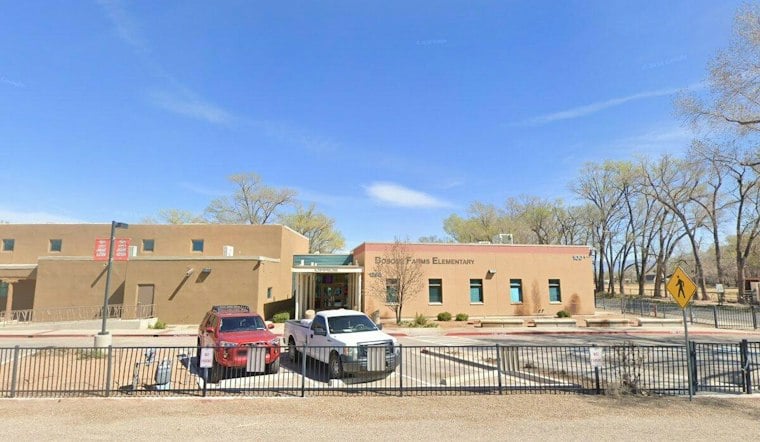
KOB 4 reports that vendors have stopped supplying replacement pumps after payment delays, and that first-responder gas cards for police and fire crews were turned off after a failed payment. Bosque Farms has roughly 1,500 grinder pumps approaching the end of their useful lives, according to the outlet, including one recently replaced at the elementary school. Contractor Andrew Padilla told KOB 4 that political dysfunction has affected contractors and that emergency wastewater calls are frequent, routed through local dispatch.
Residents Feel the Fallout in Their Mailboxes
The disruption has reached ordinary village business. Resident Dot Bossard told KOB 4 she paid a late fee after her water bill arrived late and said she would receive a credit for that fee on her next bill. Reporter Ryan Laughlin's KOB 4 investigation, part of the station's 4 Investigates series, frames the story around a village grappling with wastewater system problems, delayed contractor payments, and open questions about its leadership.
Village staff confirmed Gillespie had received an interview request and was unavailable, and KOB 4 reported that Gillespie did not respond to calls or an email seeking comment for its story.
A Longer Paper Trail of Allegations
The removal effort traces back further than the September vote. A nine-page letter from Councilor James Bruhn alleged a pattern in which Gillespie repeatedly told the clerk not to carry out approved actions, appointed people to leadership positions without taking proper steps, and violated the state's Open Meetings Act, according to KOAT. A related resolution’s findings, hosted by the Albuquerque Journal, state that more than 20 members of the public were removed from a June 2025 meeting and that the New Mexico Department of Justice subsequently determined that action violated the Open Meetings Act. The same findings state that village legal expenditures exceeded $100,000 without a request for proposals being presented for council consideration. Notably, the resolution itself states it was not intended to remove Gillespie from office, and the document on file leaves its adoption date blank.
The removal statement read at the September meeting also alleged delays in requesting a total of $1 million in grant reimbursements, accounts payable roughly three months delinquent, unprocessed fire-department stipends, and police and fire fuel cards that had stopped working. Gillespie was appointed mayor by a previous village council after his predecessor stepped down, per KOB 4's reporting.
At a special meeting on Sept. 22, the council voted 3-0 to hire Domenici Law Firm, P.C. and attorney Pete V. Domenici Jr. to represent the governing body in the removal proceedings, the News-Bulletin reported.
A System Built for a Smaller Village
The scale of the current strain stands in contrast to the system's history. A 2016 trade-publication account in Treatment Plant Operator described the village's wastewater plant as serving a community of about 5,000 residents while maintaining 1,460 grinder pumps, and noted the plant had won the New Mexico Rural Water Association's 2015 Wastewater Treatment System of the Year award. The facility was built in 1999 with a design capacity of 0.58 million gallons per day, the trade publication reported — infrastructure now facing a far heavier burden as pumps age out and repair funding stalls amid the fight over who runs the village.





