

























































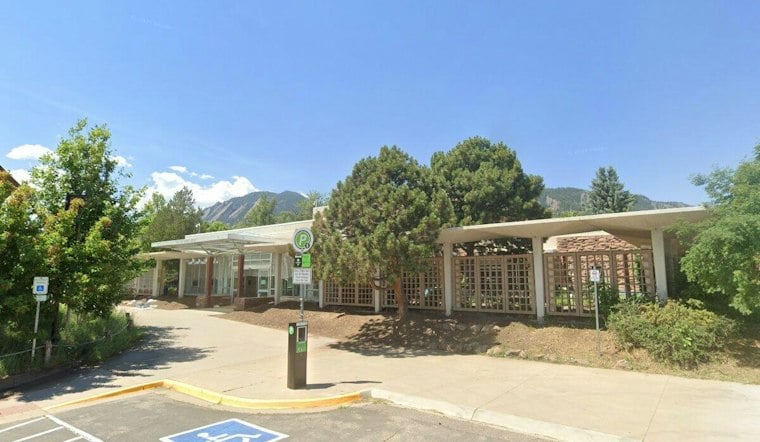
Boulder will no longer give advance warning before clearing a person's belongings along a roughly one-mile stretch of Boulder Creek near the library and Civic Area, even as the city keeps its 72-hour notice policy in most other areas. Permanent signs have gone up along that stretch, replacing the temporary pink notices that crews used last year, and they now tell people camping there that their things can be removed at any time.
Why The City Says It Made The Change
According to the Boulder Reporting Lab, the shift marks the first formal change to Boulder's camping-ban enforcement protocols in more than two years. City spokesperson Shannon Aulabaugh said the policy is meant to prevent obstructions on multiuse paths and in underpasses and to reduce the negative effects of unsanctioned camping along the creek corridor. Aulabaugh added that exceptions to the city's 72-hour notice requirement are narrowly tailored in order to comply with legal requirements.
The creek path has been a flashpoint since 2025, when Boulder began a more aggressive enforcement push, posting temporary notices along much of the corridor that let police immediately ticket people for camping and arrest those who resisted. The same reporting notes the city has issued more citations in 2026 than it did in 2025, though it appears the new policy has not led to a significant increase in citations specifically for camping or for obstructing government operations.
A Civil Rights Attorney Pushes Back
Not everyone sees the change as a narrow tweak. Andy McNulty, a civil rights attorney involved in litigation challenging Boulder's camping ban, said removing people's belongings without advance notice violates the due process protections of the 14th Amendment. “It's frankly just flat-out illegal,” McNulty said, arguing that case law requires notice before someone's property is seized. When told that Boulder considers its exceptions narrowly tailored, McNulty disagreed, saying there are no narrow exceptions to the constitution.
That legal fight is unfolding against a broader backdrop. The U.S. Supreme Court ruled in 2024 that enforcing camping bans does not violate the Eighth Amendment's prohibition on cruel and unusual punishment, even when shelter beds are unavailable, and cities across the country reconsidered their enforcement policies in the aftermath. A judge later dismissed a similar challenge to Boulder's camping ban brought under the Colorado Constitution, following that Supreme Court ruling, and the plaintiffs have appealed, seeking review by the Colorado Supreme Court.
How Boulder Compares To Denver And Aurora
Boulder's creek-path exception puts it in company with other Front Range cities that have already loosened notice rules. Aurora eliminated its 72-hour notice requirement before encampment removals last year, the Boulder Reporting Lab's report notes, while Denver continues to provide at least 48 hours' notice before removals. A 2023 document on Boulder's camping ban had described Denver as agreeing to provide seven days' notice before many encampment cleanups, though that earlier account may not reflect Denver's current practice.
Boulder's broader notice policy traces back to a national review of best practices and numerous court decisions, according to the city's Public Spaces Management page, which still describes 72 hours as the standard notice period for collecting belongings and vacating before a cleanup. The creek-path exception builds on groundwork voters laid in 2023, when they approved the Safe Zones 4 Kids ballot measure, which prioritized removing prohibited items near schools, sidewalks and multi-use paths. The city's encampment-removal scoring system already assigns an extra 40 of 150 points to encampments within 50 feet of a multi-use path or sidewalk and within 500 feet of a school, per the outlet's reporting. Boulder also warns that interfering with removal operations can result in a citation or arrest under city law.
Shelter Capacity Is Shrinking Too
The policy change comes as Boulder narrows who qualifies for help staying off the street. The city and All Roads, which runs Boulder's largest shelter, have begun prioritizing people with local connections for services, and the city now limits shelter stays to 10 days for people without demonstrated ties to Boulder County. Boulder also prefers people with longer histories in the city when allocating subsidized apartments, and it has emphasized diversion, which can include help with car repairs, family reconnection, rent deposits or bus tickets out of town, as a way to move people out of homelessness without subsidized housing. The city has also moved homelessness services away from Central Park this year.
That shrinking safety net is about to get thinner. Bridge House, which has served people experiencing homelessness in Boulder for nearly 30 years, announced it is closing amid financial troubles. Its Ready to Work program, which provides employment, transitional housing and case management to as many as 44 people in Boulder, will close by the end of December, a loss that advocates say will eliminate a key pathway from homelessness to stable housing and employment just as enforcement along the creek grows stricter.





