

























































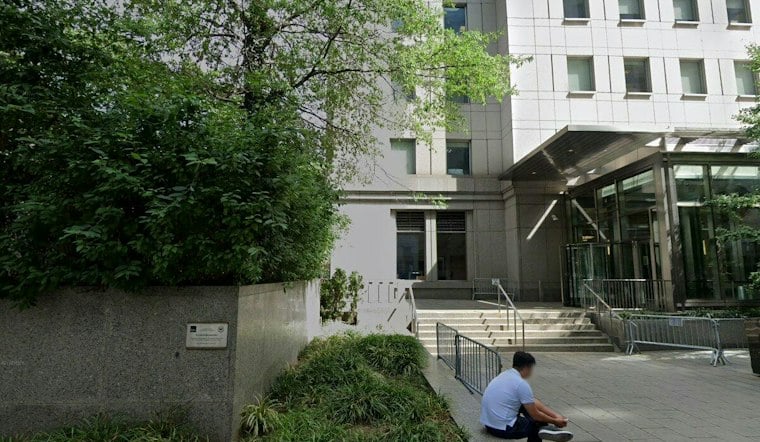
A 27-year-old man from Ecuador was detained by ICE in the Bronx on Wednesday, and by the next day, his own lawyers still did not know where he was being held. That gap forced them into federal court, filing an emergency habeas corpus petition in the hope that a judge could pry loose an answer ICE itself had not provided.
The case, now known as Padilla Guaman v. Genalo, et al., 1:26-cv-9919, was filed in the U.S. District Court for the Southern District of New York on Thursday, according to Inner City Press. The outlet reports that the man entered the United States as a teenager and that, as of Wednesday, ICE had not told his lawyers where he was being held.
The petition landed before Judge Lewis A. Kaplan, who ordered the government to state within two business days where the man is being held, per the same report. Kaplan also directed the government to address, in that same window, whether the case should be transferred to whatever district is ultimately found to hold him.
A Familiar Scramble Over Where Detainees Disappear To
The uncertainty echoes a broader pattern Inner City Press has documented at the SDNY courthouse, where the outlet notes that habeas petitioners held in the neighboring Eastern District of New York often remain opaque to the press entirely. The Bronx case is not the outlet's first dispatch on a detainee whose whereabouts became a legal flashpoint — the publication separately reported on a man from Mexico detained on Bushwick Avenue who similarly filed a habeas petition in SDNY after his arrest.
Questions about whether ICE's public-facing tools can even be trusted to show where someone is held have surfaced elsewhere recently. According to SFist, a lawsuit filed in federal court in Boston alleges that more than 20,000 people — roughly 30% of all ICE detainees — no longer appear in the agency's public database at all. That same report describes Dr. Ann Lawani, a Nigerian-born nurse and USF professor detained by ICE, who disappeared from the public locator system in a way that made it difficult for her own attorney to find her.
Lawsuit Claims Point to a Policy Shift in September
A separate account from Latin Times describes a lawsuit alleging ICE began excluding people with administratively final removal orders from its Online Detainee Locator System around mid-September, with exceptions carved out for only four facilities. The same lawsuit's plaintiffs cited July detention data putting the average daily ICE population at 66,904, including about 21,700 people with final removal orders — close to 32% of that total, the outlet reports.
His lawyers were, as of Wednesday, left without an answer from ICE about his location — exactly the kind of gap Kaplan's order is now demanding the government close within two business days.
A Prior Transfer Fight Offers a Legal Backdrop
Venue fights over where a habeas case should be heard are not new to this courthouse. In Khalil v. Joyce, a case involving Mahmoud Khalil, Judge Jesse M. Furman ordered the petition transferred from SDNY to the District of New Jersey because Khalil was actually detained there at the time his lawyer filed the case, according to the court's own opinion.



