

























































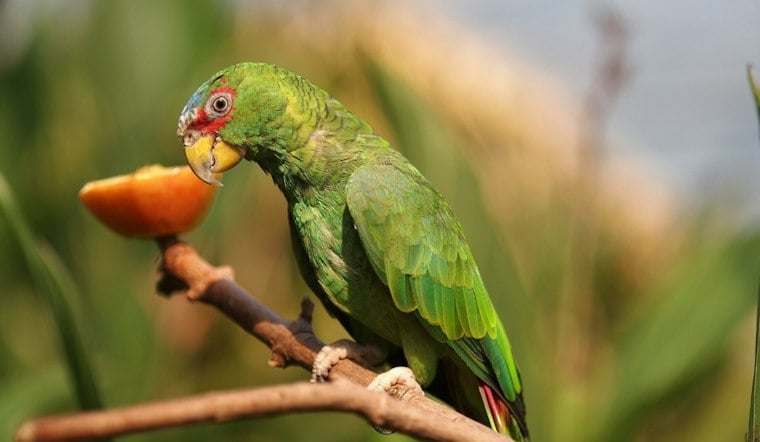
Dozens of parrots pulled from the illegal pet trade at the U.S.-Mexico border have found temporary homes in New York, with the Wildlife Conservation Society's Bronx Zoo stepping in to help the U.S. Fish and Wildlife Service care for some of the seized birds. The parrots, described as being in good condition, include several white-fronted amazons and orange-fronted conures that were confiscated from smugglers at the border.
The rescue marks the latest chapter in an ongoing partnership between the Bronx Zoo and USFWS, as first reported by News12 Bronx. Some of the white-fronted amazons are now being cared for at the Bronx Zoo's World of Birds exhibit, while others were sent to the Wildlife Conservation Society's Central Park Zoo. The orange-fronted conures, meanwhile, were transferred to another Association of Zoos and Aquariums-accredited zoo, where they will continue to receive ongoing professional care.
WCS said the parrot rescue is part of its continuing collaboration with federal wildlife authorities, a relationship that began in 2022. Since then, the Bronx Zoo has assisted with nine separate parrot seizures, the station's report notes, caring for more than 50 birds representing seven species along the way — some of them endangered.
A Lifeline For Trafficked Wildlife
Chuck Cerbini said zoos like the Bronx Zoo serve as a critical resource for law enforcement agencies handling live-animal seizures, providing what he called a lifeline for wildlife swept up in trafficking. He added that the parrots were stolen from the wild and deserve the best possible chance for a healthy future, per the same account relayed by News12 Bronx.
The scale of the problem helps explain why that kind of partnership matters. Researchers who examined more than 6,000 parrot confiscation records between 1997 and 2024 found that half of Mexico's 20 native parrot species analyzed are directly threatened by trapping for the illegal wildlife trade, according to news.asu.edu. The same research found that confiscations increasingly occur hundreds of kilometers from the birds' native habitats, often turning up in major cities such as Mexico City.
A Federal System Built For Volume
The Bronx Zoo's repeated involvement reflects just how often U.S. wildlife officials need placements for seized animals. Between 2015 and 2019, USFWS handled 834 cases involving live wildlife that was refused clearance, seized, or abandoned — encompassing 48,793 individual specimens that required care and placement, according to the Association of Zoos and Aquariums. That workload, the AZA page notes, averaged out to 14 new cases a month and 27 live specimens needing placement every single day.
Parrot seizures at the border are not new. The U.S. Fish and Wildlife Service has previously said that 149 exotic parrots confiscated from smugglers at the border were eventually returned to Mexico, according to a page posted by the agency. More recently, Border Report reported that Customs and Border Protection officers seized 13 live yellow-headed parrots at the San Ysidro Port of Entry.
Other Smuggling Cases Have Also Routed Birds To The Bronx
The Bronx Zoo's role as a landing spot for trafficked birds has come up in other cases as well. In a case resolved this year, Ricardo Alonzo was sentenced to three months in prison for smuggling 17 birds, and the surviving parrots and parakeets were sent to the Bronx Zoo, according to the Los Angeles Times. Separately, the Spokesman-Review reported that Jesse Agus Martinez was indicted after authorities alleged he tried to smuggle two juvenile orange-fronted parakeets into the country, and in another case described by the outlet, a 54-year-old man allegedly attempted to bring in 12 orange-fronted parakeets, of which at least three died.
This is not the first time the Bronx Zoo has stepped in to help federal officials manage a confiscated-wildlife caseload. The zoo also assisted USFWS in a separate rescue and rehabilitation effort for more than 1,000 North American box turtles, animals that had been confiscated from the illegal wildlife trade beginning in October 2024. For now, zoo staff say the parrots rescued in this latest seizure remain under professional care as they recover from their ordeal.



