

























































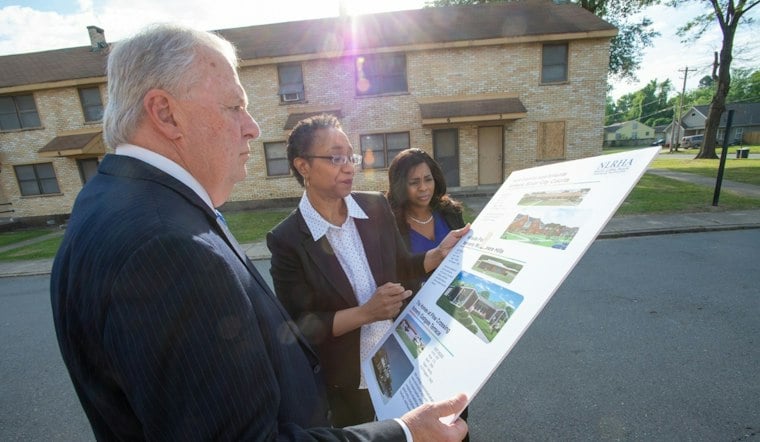
Affordable housing developers across the country, including in New Hampshire, say a federal rule requiring American-made construction materials is creating costly delays amid New Hampshire's affordable housing shortage. The requirement, known as Build America, Buy America, forces projects that receive certain federal funding to use U.S.-produced materials and products, and builders say getting exceptions when domestic supplies fall short can take far too long.
The Build America, Buy America Act, or BABA, became law in November 2021 as part of the Infrastructure Investment and Jobs Act, according to Nixon Peabody. The rule applies to covered federally funded infrastructure work, including housing developments that receive U.S. Department of Housing and Urban Development support. Associated Press reporting has described delays and added costs tied to the sourcing rules.
The law's project-by-project waiver system has become a major friction point. HUD and the Office of Management and Budget have often taken more than a year to approve waiver requests, per the law firm's reporting in Affordable Housing Finance, which also found that domestic production gaps for many essential housing materials were far greater than originally assumed. Product-specific waiver requests can delay critically needed affordable housing projects and, at worst, lead some developments to be abandoned altogether, the Nixon Peabody alert notes.
HUD Weighs Changes as Backlog Grows
HUD published a Request for Information on June 18, 2026, seeking input on domestic availability and compliance issues tied to products used in HUD-funded housing, with comments due by July 20. The agency specifically asked about heating, ventilation and air conditioning systems, door hardware, fire alarm and suppression systems, and wood trusses, according to the same Nixon Peabody alert.
Behind the scenes, HUD staff said they were preparing proposed program changes for OMB that could include full or partial product-specific waivers for several items, the trade publication reported. The agency has also been working to clear its waiver backlog while prioritizing Low-Income Housing Tax Credit developments because of placed-in-service deadline concerns, and officials may consider raising the de minimis waiver threshold above the current 5% cutoff.
In Washington, the pressure has reached Congress. The ROAD to Housing in the 21st Century Act includes a HOME-program review requirement, while the Build Housing Affordably Act has been introduced. Steel and manufacturing unions support American-made materials, while HUD has said it supports the industrial base and monitors costs.
A Federal Solar Proposal, and a Local Comparison
One flashpoint in the broader sourcing debate involves solar equipment. In a December 2024 notice, HUD proposed a temporary, limited non-availability partial waiver of BABA's manufactured-product requirements for domestically assembled solar modules used in federally assisted projects, according to a Federal Register filing — a proposal, not a finalized waiver.
New Hampshire already has a notable example of the kind of affordable housing project these debates affect. Avesta Housing unveiled the first phase of its River Turn Apartments along in Conway, marking the nonprofit's first community in the Mount Washington Valley region, according to Mainebiz. The first of four planned buildings includes 40 one- and two-bedroom apartments and is Passive House-certified; when all phases are complete, the development is expected to total more than 150 homes. River Turn was designed by Lassel Architects of South Berwick, Maine, and built by Hutter Construction Corp. of New Ipswich, with more than 30 local subcontractors and suppliers contributing to the project, per Mainebiz's reporting.
River Turn is one of several residential projects reshaping the Conway area. The Conway Daily Sun has reported on Riverline North Conway, a 228-unit luxury apartment complex being built behind Northway Plaza, as well as the Garg Complex in Conway Village — a site formerly known as the Echo Building and, before that, a shopping center — which is being converted into apartments.
What Remains Unresolved
For now, affordable housing developers and the lawmakers backing them are left waiting to see whether Washington moves to loosen the sourcing rules or simply speeds up the waiver pipeline that has frustrated builders for years.





