

























































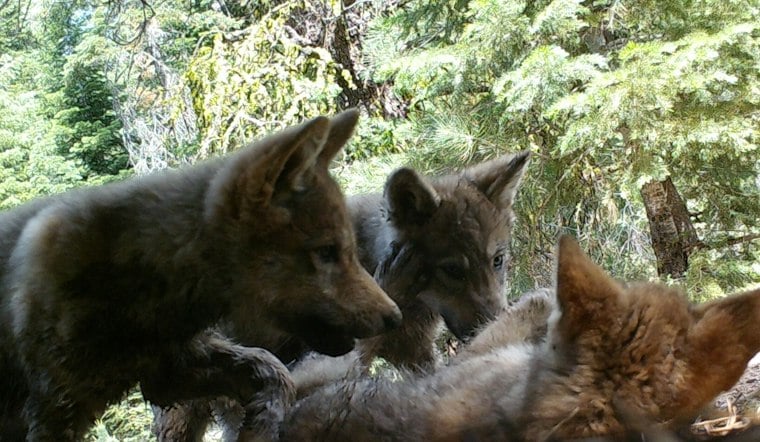
Biologists spent three days in the air over Northern California last week, successfully fitting GPS collars on six gray wolves from three different packs. The operation pushed the state's total number of actively tracked wolves to 15, part of an ongoing effort to monitor a species that was wiped out in California nearly a century ago and has only recently begun clawing its way back.
Crews attempted captures in five wolf packs but came away successful in three, according to spokesman.com. Efforts in Plumas and Modoc counties failed to result in any captures, the outlet reported. Where the operation did succeed, it collared a mix of pups and young adults, adding fresh data points to a wolf population still being pieced together pack by pack.
Where the New Collars Landed
The Long Valley Pack in Sierra County had two wolves collared, a pup and a young adult, per the reporting. In Shasta County, the Ashpan Pack had a single pup fitted with a collar. The biggest haul came from the Whaleback Pack in Siskiyou County, where crews collared two pups and one older wolf, bringing that pack's total to seven active collars, according to ecoticias.com.
That's a notably dense concentration of tracking gear on a single pack, and it's not an accident. The Whaleback Pack has a documented history of conflict with livestock, including a night in 2022 when it killed three calves in one sitting, a loss valued at more than $7,000 at the time, as reported by National Geographic. A two-year study cited by the magazine found the pack responsible for at least 114 confirmed or probable livestock losses since 2021, with livestock making up 92 percent of its summer diet. The pack had 10 pups the previous summer and was estimated to number as many as 16 wolves, National Geographic reported.
How the Tracking Technology Works
The new collars don't offer real-time tracking. Instead, the devices collect location data at preset intervals and generally send those stored points back to wildlife officials once a day, the same reporting indicates. Biologists also collected genetic samples from each of the six wolves during the operation, aiming to identify individual animals and map out family relationships within the packs, according to the spokesman.com account.
A public wolf location map is expected to be updated soon with the new collar data, per that same reporting. Not every collar stayed in state lines, though. One collared wolf moved into Oregon, and a separate collar on a Harvey Pack wolf stopped transmitting altogether, with evidence suggesting that animal, too, is now across the border, the reporting notes.
A Species Still Rebuilding Its Foothold
Gray wolves are native to California but were nearly eradicated from the state in the 1920s, driven out largely by hunting and removal as roads, cities and agriculture expanded across their habitat, according to FOX 5 San Diego & KUSI News. The species didn't return on its own until late 2011, when OR-7, a collared wolf from Oregon, crossed into Northern California and became the first wolf to live in the state in nearly a hundred years.
Since then, the state's gray wolf population has grown to around 55 animals organized into 10 confirmed packs, FOX 5 reports, with most of those packs concentrated in the far northern part of the state. The 15 wolves now wearing collars represent roughly a quarter of California's total wolf population. One notable outlier has pushed well beyond that northern range: a female wolf from the Yowlumni Pack, which established itself in Tulare County, traveled into Los Angeles County this year, marking the farthest south a gray wolf has ever been documented in California. The last detection of Yowlumni Pack wolves came in December 2025, FOX 5 noted.
The wolves' return has not come without friction. California has faced ongoing challenges balancing wolf recovery with the impacts on livestock operations, and ranchers in wolf territory now face added demands to protect their herds, according to FOX 5's reporting. GPS collars like the ones added this month are meant to help officials learn more about wolf ecology, movement patterns, family trees and the potential for wolf-livestock conflict, informing decisions as the species continues to spread across the state.





