

























































A Clovis father who lost his son to an execution-style shooting says he's no closer to justice, even after a conviction. Stephen Quick is one of a growing number of California parents now joining forces to demand changes to the state's juvenile justice system, arguing that current law lets young offenders avoid serious consequences for violent crimes.
Quick's son, Caleb, was shot execution-style in 2025 in a case involving two juvenile suspects, according to 23ABC News Bakersfield. One of those suspects, identified by Stephen Quick as Cassandra, was found guilty of first-degree premeditated murder, he said, but a judge at a transfer or fitness hearing under Section 707 determined she was rehabilitatable. “The judge looked at us and said, yes, she's guilty, but she is rehabilitatable,” Quick said, according to the outlet's report.
In a related case detailed by ABC30, a Fresno County judge sentenced Cassandra Michael to the maximum juvenile detention term of seven years for her role in Caleb's killing. Michael was convicted of first-degree murder for acting as the getaway driver after prosecutors said her boyfriend fatally shot Quick, the station reported. A transfer hearing for the 17-year-old accused of pulling the trigger outside a Clovis McDonald's has been rescheduled to Dec. 1, when a judge is set to decide whether he should be tried as an adult, per the same outlet.
A Second Kern County Case Tests the Same Law
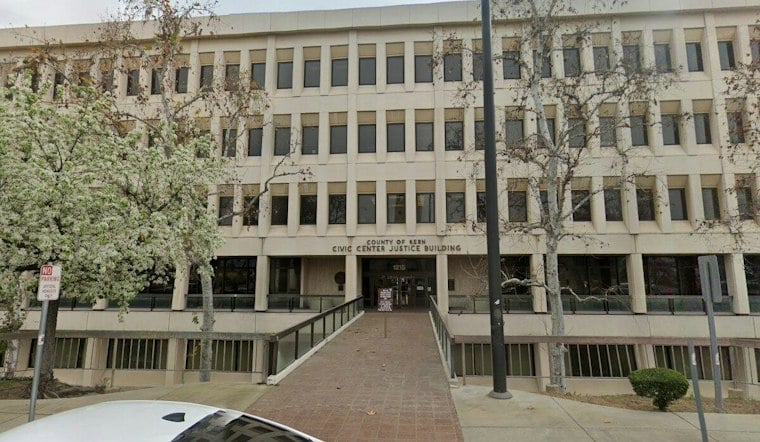
Families say Caleb's case isn't an isolated frustration. In August, 17-year-old Levi Brown was shot and killed during a football game at Independence High School, according to 23ABC. Prosecutors charged 15-year-old Gabriel Torres Reyes with first-degree murder along with additional firearm- and gang-related allegations, but because of his age, Reyes cannot be tried as an adult under Senate Bill 1391, the outlet reported.
The Kern County District Attorney's Office said Reyes faces a potential confinement term of four to seven years in the juvenile justice system if convicted of first-degree murder. Kern County District Attorney Cynthia Zimmer addressed the legal limits directly in comments to 23ABC, saying simply, “No it is the law,” when asked about why Reyes's case must be heard in juvenile court.
How Prop 57 and SB 1391 Changed the Rules
The legal constraints families are pushing back against trace to two statewide changes. Proposition 57 ended direct filing by prosecutors, while Senate Bill 1391 prevents 14- and 15-year-olds from being transferred to adult court, according to 23ABC's reporting. Under the California Secretary of State's own summary of Proposition 57, it is now the juvenile court judge, not the prosecutor, who decides whether a juvenile will be prosecuted as an adult, according to the California Secretary of State's Official Voter Information Guide.
Monterey County District Attorney Jeannine Pacioni said that under the current framework, families of juvenile crime victims may see the person responsible for a child's murder return to the community in just a matter of a few years. Pacioni called for a juvenile justice system that recognizes the seriousness of violent crime, provides meaningful accountability, and equips professionals to protect their communities, per 23ABC. “While rehabilitation is the goal for juveniles, district attorneys say it must be balanced with accountability and community safety,” the station reported.
A Statewide Network of Grieving Families
The push extends well beyond Kern County. A group called Victims of Teenage Crime is made up of roughly 50 families from across California, according to KCRA. The group is advocating for reducing harm to victims' families throughout the judicial process, restructuring rehabilitation programs to lower the number of repeat offenders, and loosening the standards required to try juveniles in adult court for crimes such as homicide, the station reported. Families called for these reforms to the juvenile justice system at a recent meeting, per KCRA's account.
A separate case in Kern County illustrates what some families fear could happen again. A KGET report found that Gabriel Prieto's case was moved to juvenile court after SB 1391 took effect in 2018, and that he was later released from a youth facility. Zimmer said Prieto went on to commit more robberies after his release, then murdered a man in 2024, according to the station's reporting.
The families involved acknowledge that no legal change can undo what happened to their children. Still, they say they hope their stories will prompt lawmakers to rethink how California handles juvenile crime, according to 23ABC. For Stephen Quick and others like him, the goal is less about the past than preventing the next family from sitting through a hearing where a judge calls their child's killer rehabilitatable.





