

























































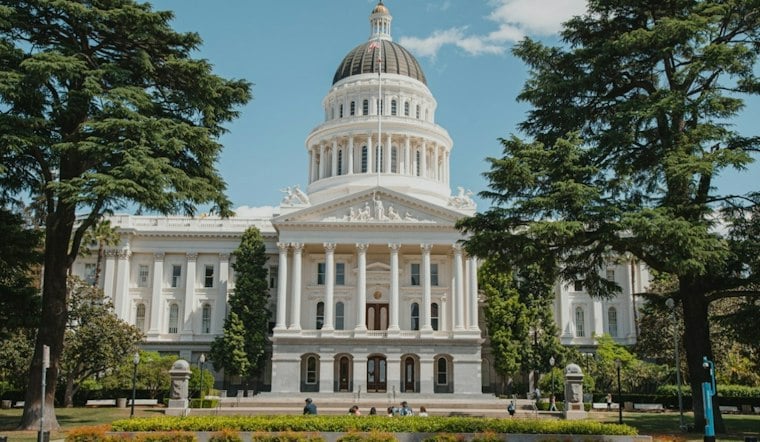
California and nearly two dozen other states sued the federal government Sunday to halt a new rule that would require every resident of federally funded public housing to document their legal immigration status or face eviction. The rule is scheduled to take effect Dec. 14, and it threatens to upend housing arrangements that mixed-status families have relied on for decades.
California Attorney General Rob Bonta co-led a coalition of 21 attorneys general, along with the governor of Pennsylvania, in filing the lawsuit challenging the rule, according to the California Department of Justice. New York, Arizona, and Pennsylvania's governor are among the governmental parties involved, and the lawsuit was filed in federal court in Massachusetts. Bonta said the rule could worsen the housing crisis and force both citizens and noncitizens from their homes, according to reporting from the Los Angeles Times.
Under the rule, residents of public housing authority homes and people using Section 8 vouchers — which allow tenants to receive rental subsidies while living in private housing — would all be covered. Mixed-status households would need to verify the eligibility of every person in the home within 90 days of the rule taking effect, according to GBH. Residents who fail to document their status would face eviction.
A Decades-Old Arrangement Under Threat
Since 1995, mixed-status families have been permitted to live together in HUD-funded housing, with subsidies covering only the household members who qualify, as reported by CBS News. People without qualifying immigration status are not eligible for rental subsidies themselves, and mixed-status families already pay more in rent than households where every member holds legal status. Public housing residents must demonstrate that they earn low incomes and typically pay no more than 30% of their income toward rent.
HUD has stated that people without qualifying immigration status do not have the right to live in federally paid housing even when their own rents are not subsidized. HUD Secretary Scott Turner has said the rule implements the 1980 Housing and Community Development Act and reserves HUD-funded housing for American citizens and certain eligible noncitizens. Turner has also said the change would reallocate up to $218 million to eligible Americans currently on waitlists.
California's Outsized Stake in the Fight
No state has more at stake than California. A 2019 statistic put the number of mixed-status households receiving federal housing aid in the state at 7,190 — far more than any other state, with Texas next closest at 4,500, according to the Los Angeles Times. The rule could also affect mixed-status families served by public housing authorities in California.
Nationally, HUD estimates that roughly 20,000 mixed-status families, or about 78,100 individuals, could be affected by the rule. Other estimates vary: the Center on Budget and Policy Priorities has put the national figure at 20,000 families or 80,000 people, with about 37,000 of those being children, mostly U.S. citizens, per CBS News. The New York Times has reported that the lawsuit itself cites about 80,000 people nationwide living in mixed-status households, including 35,000 children, most of whom are U.S. citizens. A complaint cited by City Limits put the number at roughly 80,000 people, including approximately 36,000 eligible children, who could face displacement. The federal government's own estimate, meanwhile, pegs potential displacement at 62,000 people and says the rule's verification requirements would touch more than 8.5 million federally subsidized housing tenants, according to GBH.
Fear of Separation Expected to Drive Families Out
HUD's own analysis anticipates that fear of family separation will prompt most mixed-status families to leave public housing voluntarily once the rule takes hold, rather than wait to be evicted. The Los Angeles Times reported that the agency expects a fear of the family being separated would prompt the departure of most mixed families once the rule takes effect.
Attorneys for the states argue that the consequences would ripple beyond the households directly affected. They wrote that families forced to leave subsidized housing are likely to become homeless, because they are low-income and affordable housing options are limited. The states allege that HUD lacks the authority to rewrite a congressional statute through this kind of rule, and their lawyers argue the policy could worsen affordable housing crises nationwide.
The California-led suit is not the only legal challenge HUD now faces. Public Counsel, a Los Angeles-based nonprofit law firm, filed a similar lawsuit nearly a week earlier challenging the rule. Tenants and housing groups in four states also filed a class-action lawsuit seeking to block the policy, according to the New York Times. New York has 2,500 mixed-status households. Separately, a coalition of public housing tenant and housing-rights organizations sued the Trump administration in Boston federal court, GBH reported.
Residents covered by the rule would be required to provide documents proving their immigration status in the months after it takes effect. Multiple lawsuits now challenge the rule ahead of its scheduled Dec. 14 effective date.




