

























































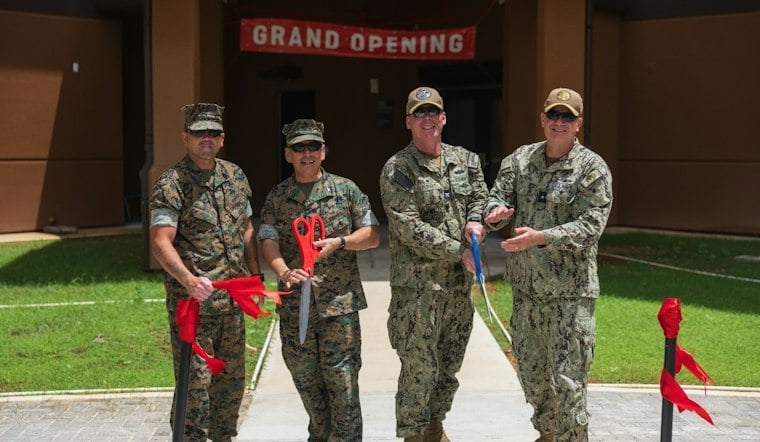
Thousands of Marines at Camp Lejeune and MCAS New River are living in barracks that are either getting gutted, rebuilt, or watched more closely than ever, as the Marine Corps pours billions of dollars into fixing housing that's been showing its age. The latest update from Marine Corps Installations East shows crews have already completed roofing work on 24 buildings housing roughly 4,000 Marines, painting and flooring upgrades across 37 buildings serving about 8,000 more, and HVAC repairs in 32 buildings serving approximately 6,500 troops.
The numbers come from a new announcement detailing fiscal year 2026 spending, according to DVIDS. The Marine Corps awarded $665 million in contracts this fiscal year to replace nine aging barracks buildings at Camp Lejeune and Marine Corps Air Station Cherry Point, on top of $113 million in renovation contracts and $60 million for critical infrastructure improvements. Furnishings got their own line item too — about $4.3 million went toward refreshing furniture in eight barracks during 2026, with another $11.1 million projected for fiscal year 2027 to update 21 more barracks and restock warehouse inventories.
Renovations Already Underway, More on the Way
Twelve barracks renovation projects are currently underway at Camp Lejeune and MCAS New River, per the same DVIDS report. Since the Marine Corps first announced roughly $142 million in improvements to nine barracks back in April — work that benefited more than 1,300 Marines — crews have completed three additional barracks renovations and a separate painting and flooring project, according to The Daily News.
Looking ahead to fiscal year 2027, the construction numbers get even bigger. MCIEAST plans approximately $1.16 billion in new barracks construction at Camp Lejeune and $667 million at MCAS New River, the same report notes. By October 2028, the command anticipates replacing 18 barracks buildings across both installations while renovating another 15.
New Barracks Design Swaps Communal Bathrooms for Private Ones
The buildings going up under this plan won't look like the barracks Marines have lived in for decades. New construction will feature a standardized room layout housing two Marines who share a private bathroom, moving away from the communal-bathroom setup common in older buildings. Common kitchens and shared gathering areas are also part of the design, intended to give Marines more livable space beyond their individual rooms.
Marine Corps Installations East currently oversees more than 31,000 beds spread across 120 barracks buildings, with 50 contracted managers handling day-to-day operations. Those contracted managers remain the primary point of contact for Marines living in the facilities, but the command is adding another layer of civilian oversight on top of that system.
New Housing Specialists Added to Track Repairs
MCIEAST hired seven government-employed housing management specialists in October, with six more expected to join the program, the command said. Those specialists are tasked with monitoring contractor performance, working alongside military leadership, and tracking maintenance issues through resolution. The updated barracks management system also includes regular inspections meant to catch maintenance problems early, before they become bigger repair jobs.
Bob Syre, assistant chief of staff for facilities and environment at MCIEAST, said the investments mark a turning point. “We are making historic investments and taking significant, tangible steps to transform our barracks,” Syre said, describing the investments as supporting Marines' readiness and ability to focus on the mission. Andre M. Ingram, commanding general of MCIEAST-MCB Camp Lejeune, framed the push in terms of responsibility, saying the investments reflect the Marine Corps' obligation to provide adequate housing and that modernizing barracks protects Marines' dignity and readiness while giving them an environment to train and prepare.
Part of a Broader Service-Wide Push
The Camp Lejeune and New River work fits into a larger pattern playing out across Marine Corps installations. At MCAS Cherry Point, five aging barracks buildings are being demolished and replaced with three new multistory buildings containing more than 700 rooms, while at Camp Lejeune, four existing buildings are giving way to two new ones with more than 380 rooms, according to a separate DVIDS report on contracts awarded by NAVFAC. Those two replacement projects alone represent an investment of more than $600 million.
Similar construction is moving forward elsewhere in the Corps. At Marine Corps Base Hawaii, construction of two new barracks buildings has passed the halfway mark, with structural work complete and crews now installing building systems and finishing interiors, the U.S. Department of War reported.
The investment comes against a backdrop of mounting federal scrutiny over military housing conditions nationwide. A Government Accountability Office report found an estimated $285 billion in Defense Department maintenance backlogs in fiscal 2025, and according to Military Times, the Marine Corps' own requested maintenance funding fell from 80% of estimated needs to just 40% over the past five fiscal years. As of April, the Defense Department had implemented 19 of 31 recommendations from an earlier GAO review that found insufficient oversight of barracks housing programs. The Marine Corps' broader Barracks 2030 initiative, launched in 2024, called for service-wide inspections followed by modernization and improved management practices, as reported by Marine Corps Times.




