

























































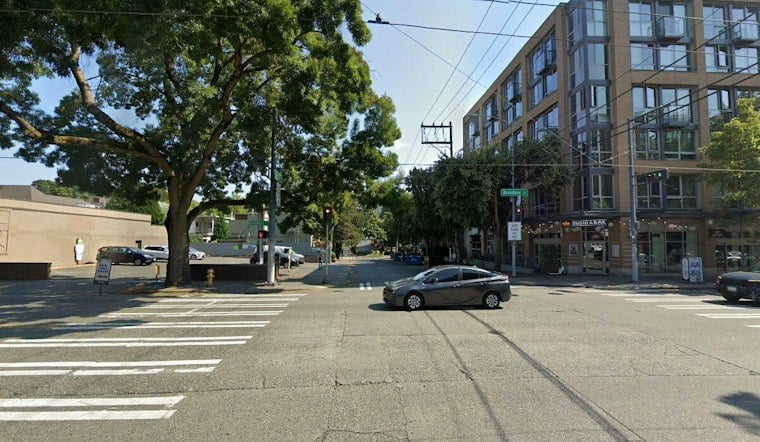
A man found dead behind the Capitol Hill Safeway earlier this month has been identified as 35-year-old Seattle resident Elijah J. Coolshaun Goodall, and the King County Medical Examiner has determined he died of an accidental drug overdose. Seattle Police and Seattle Fire were called to the store's E Thomas side just after 11:30 a.m. on Nov. 9 after someone reported a man down and blood there.
According to CHS Capitol Hill Seattle News, responders closed off the area behind the grocery store while medical investigators were called in to examine the scene. The medical examiner later determined that Goodall died of acute combined drug intoxication involving fentanyl and methamphetamine, ruling the death an accidental overdose.
A Death That Fits a Grim Countywide Pattern
Goodall's death adds to a toll that has climbed sharply across King County in recent years. The county recorded 914 fatal overdoses in 2025, with fentanyl involved in 78% of those deaths and methamphetamine in 56%, according to KOMO News. KOMO reported that Public Health — Seattle and King County had confirmed 191 fatal overdoses through April 2026.
The combination of fentanyl and methamphetamine found in Goodall's system has become increasingly common in the county's overdose deaths. More than 1,050 of King County's nearly 1,300 fatal overdoses in 2023 involved fentanyl, and about half of that year's overdose deaths involved both fentanyl and methamphetamine together, per the Seattle Times.
Capitol Hill's Place in a Decades-Long Crisis
The scope of the crisis long predates the current fentanyl era. From 1997 through 2015, King County recorded 4,584 drug-involved deaths, with cocaine, methamphetamine, or opioids involved in 3,988 of them — 87% of the total — according to data compiled by the Alcohol & Drug Abuse Institute at the University of Washington.
That same research identified a high-rate cluster of major drug deaths concentrated in 48 block groups across downtown Seattle throughout those years. Parts of Capitol Hill were among the central Seattle neighborhoods flagged as having statistically high rates of major drug deaths relative to their population, per the Alcohol & Drug Abuse Institute.
No further details about Goodall's death have been released beyond the scene response and the medical examiner's finding.





