

























































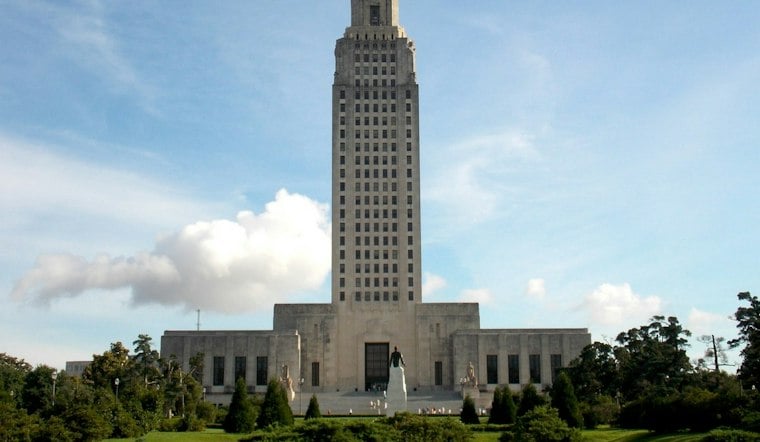
CapturePoint has asked Louisiana's Department of Conservation and Energy for permission to build and operate a 125-mile carbon dioxide pipeline that could cut across seven northwest Louisiana parishes, and the company is already seeking a right-of-way on 75 acres of a small Bienville Parish tree farm owned by Larry Garrett and his brother. A public hearing on the request is set for November 17 in Baton Rouge, and Garrett says he plans to be there even though he worries he cannot afford a lawyer to represent him.
The proposed Red River Pipeline Louisiana would run from southwest Arkansas to the Robeline Gas Treating Facility in Natchitoches Parish, carrying carbon dioxide from the Midway Unit oil field in Lafayette County, Arkansas, according to the Shreveport-Bossier Advocate. CapturePoint has told dozens of landowners across the region about the project, and the company says its purpose is transporting carbon dioxide for enhanced oil recovery. The route could require negotiating for, or potentially expropriating, property in Sabine, DeSoto, Red River, Bienville, Webster, Claiborne and Natchitoches parishes.
A Family Tree Farm in the Path
Garrett and his brother grow pine trees on their acreage near Fryeburg, and Garrett fears that running a CO2 pipeline through the property could endanger family members who live nearby. Dozens of other local landowners should have received project information from CapturePoint in October, the outlet's report noted. Garrett said a lawmaker advised him to hire an attorney, but he says he simply lacks the money to do so.
CapturePoint has requested a certificate of public convenience and necessity for the project, arguing the pipeline would allow for greater recovery of hydrocarbon reserves from mature fields while incrementally lessening the United States' dependence on foreign oil. The company has provided a map of the proposed route, and a photograph from September showed pipeline being laid in Red River Parish. A filing for Red River Pipeline LLC was updated on November 2.
Not Everyone Is Convinced It's for Public Use
David Fite, a Shreveport oil and gas operator and producer, opposes the project because he says it is not for public use. He believes the certificate CapturePoint is seeking is only the first step toward potential land expropriation, and he argues that any certificate language should require open access for pipeline transportation at a reasonable rate. Fite has said CO2 injection could double ultimate reserve recovery in the Midway and Magnolia oil fields in southern Arkansas, since carbon dioxide works by loosening oil trapped in rock.
State Rep. Danny McCormick, a Republican representing Oil City who is also an oil and gas businessperson, has said enhanced recovery projects open a pathway for private expropriation in Louisiana. The Louisiana Constitution limits expropriation to public purposes, and a Louisiana statute excerpt reviewed from the Louisiana State Legislature states that certificate holders may possess expropriation rights under the state's general expropriation laws. A related excerpt from the legislature indicates that whether a proposed taking serves a public purpose and necessity is ultimately a judicial question.
A Statewide Pattern of Carbon Fights
CapturePoint's pipeline request lands amid a broader wave of carbon capture and storage proposals across Louisiana. As of late 2025, a state Department of Conservation and Energy official said 31 carbon capture and sequestration projects were awaiting approval, with 101 proposed storage wells spread across 18 parishes, according to the Louisiana Illuminator. At that time, only one well, operated by Hackberry Carbon Sequestration in Cameron Parish, had received approval. By the following spring, the same outlet reported the state still listed 31 carbon-storage applications, each representing anywhere from one to eight wells, and noted that lawmakers had introduced more than a dozen bills that year to curb such projects or require local approval.
One of those efforts, a bill that would have blocked companies from taking private property for CO2 pipelines and underground storage, failed in committee on a 12-7 vote, according to a separate report from The Advocate. Similar tension played out in Ascension Parish, where Blue Sky Infrastructure sought a permit for the first of seven planned carbon-storage wells and drew a crowd of more than 60 residents and project proponents to a Donaldsonville hearing to debate the plan.
Garrett Plans to Make His Case in Baton Rouge
Garrett intends to tell hearing attendees that he is not the only Louisiana resident who opposes having land confiscated for a project he sees as benefiting a private company rather than the public. The Shreveport-Bossier Advocate's report also pointed to a 2020 CO2 pipeline rupture near Satartia, Mississippi, that hospitalized 45 people and forced the evacuation of 200 others, a case landowners like Garrett have cited amid their concerns about safety near their property.
For now, the Department of Conservation and Energy has not acted on CapturePoint's request, and the November 17 hearing in Baton Rouge remains the next scheduled step in the process. Garrett says he plans to attend regardless of whether he can secure legal help beforehand.



