

























































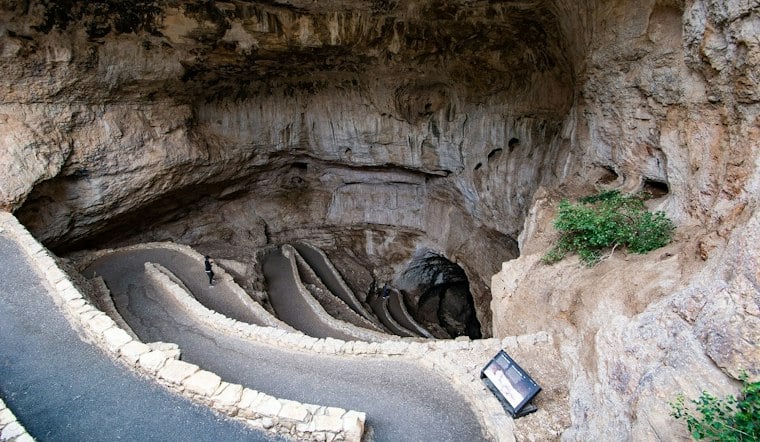
A federal land-use plan that could open 97% of public lands managed by the Bureau of Land Management's Carlsbad field office to energy and mineral leasing is facing formal pushback from conservation groups who say regulators never seriously weighed the risks to one of New Mexico's most treasured landscapes. The revised Carlsbad Resource Management Plan touches ground that includes Carlsbad Caverns National Park, a sprawling network of caves tied to underground water supplies that southeastern New Mexico communities rely on.
Six conservation groups filed a formal protest addressed to BLM Director Stevan Pearce, arguing the plan violates the National Environmental Policy Act's requirement that agencies take a hard look at environmental consequences before acting, according to Source New Mexico. The groups specifically allege the agency failed to consider and minimize the plan's impacts, a claim central to their objection. As SFGATE reports, the plan has not been formally approved, and BLM has a final decision pending. October 13, 2026, was the deadline for filing formal protests; revisions since the 2018 draft comment period had gone without public comment.
What Caves and Aquifers Could Be at Stake
A National Geographic investigation found that federal leasing for energy exploration puts Carlsbad Caverns, scores of other caves in New Mexico, and aquifers that supply drinking water to tens of thousands of homeowners at risk of contamination, according to National Geographic. Scientists suspect Lechuguilla Cave, documented at more than 150 miles long, may extend beyond its protection zone — meaning its full footprint could reach areas not currently shielded from development. The outlet also notes Parks Ranch Cave, a 4.3-mile gypsum cave in southeastern New Mexico, ranks as the second-longest of its kind in the Western Hemisphere, underscoring how much subterranean terrain sits beneath the region's drilling footprint.
Air Quality Already Under Strain
The concerns over the Carlsbad plan arrive alongside mounting evidence of air pollution tied to Permian Basin oil and gas activity. An air-monitoring station that operated in nearby Loving from May 2023 through May 2024 fed data into two separate studies examining pollution linked to drilling, the same Source New Mexico report found. One study measured airborne radiation levels in Loving rising to as much as five times normal background levels depending on wind direction, though researchers cautioned that measurements from a single monitoring location could not pin the readings to one specific source. That study concluded the radiation exposure could lead to a small but measurable increase in lung cancer risk.
A preliminary ozone study cited in the same report found weighted ozone measurements in Loving exceeded those recorded in Houston and Dallas. Separately, New Mexico Environment Department data showed the Carlsbad monitoring site exceeded the National Ambient Air Quality Standard every year from 2019 through 2023, per KUNM. That outlet also reported that ozone levels at the Carlsbad monitoring station actually increased after the state's methane waste and ozone precursor rules took effect.
Flaring and Regional Emission Trends
Flaring is another issue associated with oil and gas activity in New Mexico. A 2022 New Mexico Environment Department report, meanwhile, found that communities in Eddy County had seen dramatically increasing ozone since 2017, according to The Santa Fe New Mexican. Separately, a 2026 research abstract reported that Carlsbad Caverns National Park had recorded more than 100 ozone-standard exceedances since 2018, according to findings published in ACS Publications.
Federal inspectors have also flagged compliance problems at facilities across the region. The U.S. Environmental Protection Agency reported that EPA and New Mexico inspectors found emissions of volatile organic compounds at 75 of the facilities they inspected — 60% of the total — meaning those sites could face penalties and other consequences, according to an EPA news release.
Where the Plan Stands Now
The dispute over the Carlsbad plan comes down to a formal administrative process that is still unresolved. A BLM notice of availability for the proposed resource management plan and final environmental impact statement indicates that a final decision will follow the resolution of protests like the one filed by the six conservation groups, per the Bureau of Land Management. Until that process plays out, the scope of what gets opened to leasing — and under what conditions — remains unsettled, even as the underlying air and water concerns documented by researchers and journalists continue to accumulate.





