

























































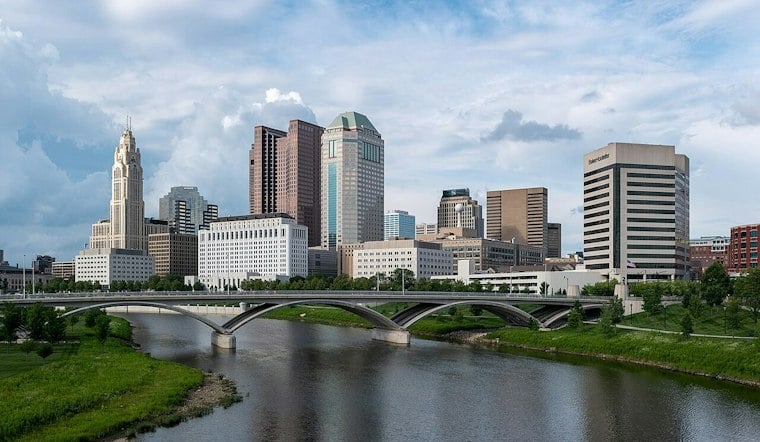
Central Ohio's population could climb to as much as 3.12 million people by 2055, according to a new regional projection, with officials pointing to migration — not births — as the engine behind future growth. The Mid-Ohio Regional Planning Commission released the forecast Tuesday afternoon, estimating the 15-county region will land somewhere between 2.7 million and 3.12 million residents three decades from now, with a median estimate of about 2.9 million.
The new figures, first reported by WOSU Public Media, suggest the region's growth could be slower than MORPC projected four years earlier. That earlier outlook, built into the agency's 2024–2050 Metropolitan Transportation Plan, had the region growing from 2.4 million residents to a projected population of 3.1 million across the 15 counties, a forecast developed in early 2023. The agency's own documents show the figures shifting over time: a September 2025 presentation had the region on track for 3,147,011 people by 2050, a separate forecast vintage from Tuesday's 2055 projection.
Why Migration Now Carries the Load
MORPC expects deaths in the region to exceed births starting around 2040, according to WOSU's reporting on the agency's findings. From that point on, officials say, every additional resident the region gains will come from migration rather than natural increase. The agency's median projection assumes migration trends from the prior 15 years continue consistently, and MORPC's own materials echo that shift, with its 2026 estimates presentation stating plainly that migration is contributing more to regional growth than in the past while natural increase contributes less.
International migration has done most of that work recently. Per WOSU's account of MORPC's findings, international migration accounted for 96% of Central Ohio's net migration from 2020 to 2025, representing about 68,000 people, while domestic migration was flat or negative over that same stretch. Still, the region has drawn newcomers from elsewhere in Ohio too — MORPC said Central Ohio gained around 30,000 households from other parts of the state between 2011 and 2023.
A Region Still Adding People, Just More Slowly
The region added a little more than 100,000 residents from 2020 to 2025, with about two-thirds of new residents having moved in from other places over that period, according to WOSU's reporting. MORPC's own updated numbers put the 15-county region's population at 2,536,115 as of January 1 this year — a 0.67% increase over the prior year, per the agency's 2026 population estimates. Those same estimates show MORPC's member jurisdictions gained 114,500 residents since April 2020, while all jurisdictions in the estimate gained 116,900.
That steady climb isn't new to Central Ohio. The region's population has grown more than 29% since 2000, compared with roughly 21% growth nationally and 4.7% growth statewide over the same period, according to WOSU's report. Without growth in Central Ohio, the article notes, Ohio's overall population would have decreased. MORPC characterizes the region's trajectory as steady and positive growth, even as officials caution it isn't guaranteed to continue at the same pace.
Growth Won't Reach Every County Equally
MORPC is warning that population growth will not be distributed evenly across the 15 counties in its report, which spans Delaware, Fairfield, Fayette, Franklin, Hocking, Knox, Licking, Logan, Madison, Marion, Morrow, Perry, Pickaway, Ross and Union counties. Fayette, Hocking and Logan counties are each projected to lose population regardless of migration into the larger region, the agency says.
Franklin County, by contrast, is expected to exceed 1.5 million residents by 2055 even under MORPC's most conservative projection. Delaware County, which had about 242,000 residents in 2025, is projected to reach at least 314,000 by 2055. MORPC's middle and high population estimates both come in above projections the Ohio Department of Development made in 2023, according to the agency's findings cited by WOSU.
What Officials Say Communities Should Do Now
MORPC says the region needs more housing to accommodate the growth it expects, along with attention to affordability, education and quality of life to attract and retain residents. The agency also recommends that local and regional governments develop policies to navigate national migration policy and AI-related workforce changes as they plan ahead.
Officials framed the lower long-range growth numbers as an opportunity rather than a setback. According to MORPC, projecting slower growth now gives communities and businesses time to prepare for demand rather than scramble to react once it arrives. That logic echoes the broader pattern the region has already lived through — Central Ohio saw an increase of 43,000 residents in 2018 alone, what 1808Delaware described at the time as the region's largest single-year gain, back when MORPC estimated the area's total population at 2.4 million and forecast it reaching 3 million by 2050.





