

























































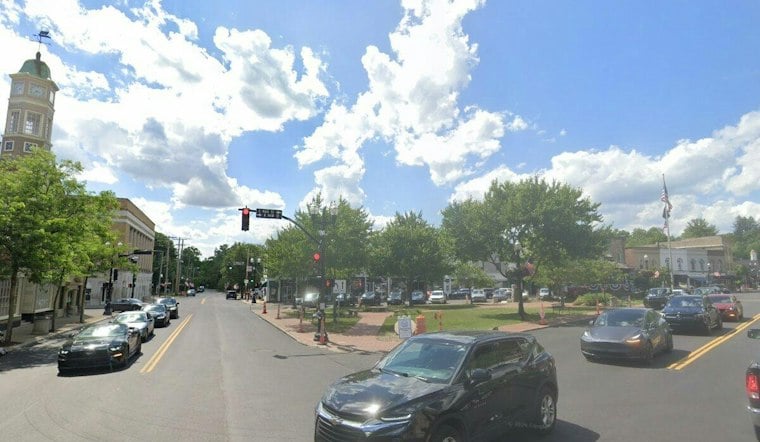
A Chagrin Falls High School senior has built an app designed to help people figure out whether they qualify for lung cancer screening and, if so, where to go get it. Syna Bhattacharya developed the tool, called PulmoSmart AI, as part of her AP Research project, and it has since become a Phase 2 finalist in a national innovation competition.
The app asks users for basic information like their age and smoking history, then helps them find nearby screening centers, according to Cleveland.com. Beyond eligibility information, the app's built-in AI explains what the screening information means, suggests next steps, and even drafts a message that a user can review and send along to their own clinician. Bhattacharya said the idea took shape after she kept coming across the same kind of story. “I had heard news stories about lung cancer where people wondered how different their lives would been if it had been detected earlier,” she told Cleveland.com.
To build something clinically grounded, Bhattacharya reached out beyond her own high school network. She connected with a Harvard Medical student who was involved with the American Lung Cancer Screening Initiative, the outlet reported, a relationship that helped steer the project as it grew from a classroom assignment into a working app.
Testing PulmoSmart With Real Users
Bhattacharya didn't just build the app in isolation. She tested PulmoSmart with 14 student ambassadors, who together helped reach more than 500 people in the community, according to Cleveland 19. The station reported that Bhattacharya, 17, was finishing her senior year of high school while developing the app on the side.
That hands-on outreach reflects the scale of the problem Bhattacharya says she's trying to address. She told the station that research from the American Lung Cancer Screening Initiative found that over 80% of eligible lung cancer patients who can get screened don't actually get screened. The initiative's own Innovation Challenge page separately states that only 20% of eligible adults currently receive lung cancer screening, underscoring just how wide the gap between eligibility and actual screening appointments tends to be nationally.
A National Finalist Among Thousands of Students
PulmoSmart AI is now a Phase 2 finalist in the ALCSI Innovation Challenge, per Cleveland.com's reporting, putting Bhattacharya among a small group selected from a much larger field. Cleveland 19 reported that she became one of 20 students nationwide to reach Phase 2 finalist status with the initiative. The broader 2026 challenge brought together more than 1,000 middle and high school students from around the world, and 10 finalist teams were invited to Boston to present their projects live at the 2026 ALCSI Summit, according to the initiative's own program description. Among the other entries recognized was a project called LungFACTS, which paired an AI-supported patient navigator with a system for tracking lung cancer screening.
The stakes behind all these youth-built tools are not abstract. Research reviewed in a published analysis found that lung cancer screening with low-dose CT scans has been shown to reduce lung-cancer-related mortality by at least 20%, with all-cause mortality reduced by 6.7%. That same review counted just seven national lung cancer screening programs worldwide — one in North America, three in Europe, and three in Asia — and noted that combining screening with smoking cessation counseling improves outcomes beyond what either approach accomplishes alone.
Still, the same research cautions that AI tools like Bhattacharya's belong to a category of “promising” innovations in lung cancer screening that includes refined risk models and biomarkers — but one that requires further study and clinical validation before routine implementation. It's a reminder that student-led tech, however well-intentioned, operates in a space where medical oversight and rigorous testing still have to catch up.
Looking Ahead to College
Bhattacharya isn't stopping with high school. She plans to attend college in the fall of 2027 and major in computational biology, Cleveland.com reported, a path she sees as a natural extension of what she's already building. “Biology and computing can belong in the same career,” she said, framing PulmoSmart as proof of concept for the kind of interdisciplinary work she wants to keep doing.
Her father, Sujoy Bhattacharya, publicly celebrated the Cleveland 19 coverage of his daughter's project on LinkedIn, thanking the station “for featuring my work to improve access to Lung Cancer Screening and giving me the opportunity to share the story behind my app.” For a Chagrin Falls senior still finishing her coursework, the recognition marks an early milestone in a project aimed squarely at one of the more persistent gaps in cancer prevention.



