

























































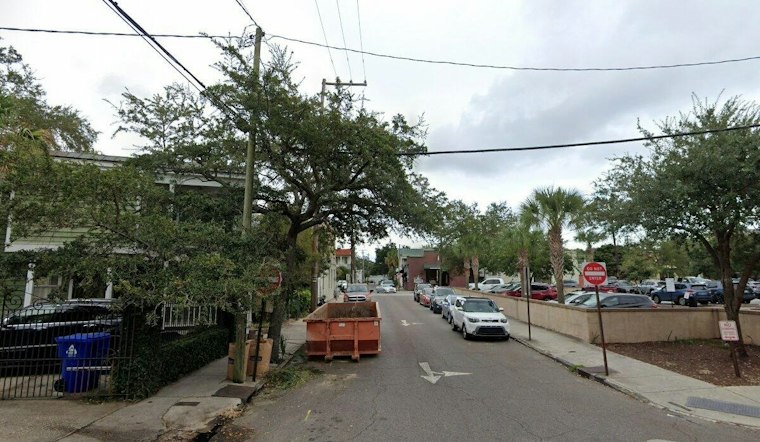
Charleston officials are moving to tighten the rules around commercial filming and photography downtown, with a proposal that would stretch the advance-notice window for high-impact shoots from as little as 72 hours to as long as 21 days. The city's Traffic and Transportation Committee unanimously approved changes to the special events ordinance, sending the amendment to City Council for consideration, as tourism concerns and neighborhood complaints continue to shape how the Holy City manages its screen-industry spotlight.
From Three Days to Three Weeks
According to The Post and Courier, the proposed ordinance would increase the application lead time for high-impact events and film and photography activity from 72 hours to 21 days. A separate account of the same debate described proposed notice periods of 15 to 21 days depending on the level of impact, with production teams also required to send a notification letter directly to residents and businesses within a one-block radius. Another earlier report put the filmmaker requirement at three weeks ahead of time, with an appearance before the city's Special Events Committee required as well. The city's current request window, by comparison, has been reported at 15 days.
The changes are centered around large-scale projects that require a special events permit, not casual photo sessions. City officials have said the revised guidelines would exclude photographers without standalone equipment who hold a session downtown in a fluid manner that allows pedestrians to pass, and ABC News 4 reported that family photos and wedding photos around town would not be affected by the changes.
What Counts as High-Impact
Under the proposed guidelines, a permit would be required for filming or photography that disrupts pedestrian or vehicle traffic, interferes with access to public property, or creates disruptive lighting or noise for neighboring properties. A commercial photo shoot at White Point Gardens, for example, would need both a film and photography permit and a park permit if it affects public use of the park, while production on private property could require a permit if it creates extensive lighting or sound disruptions for nearby residents. Ordinary family portraits would require no permit, and wedding photography would be treated the same way as long as it does not impede the public right-of-way or public property.
High-impact activity is defined to include substantial street closures, traffic rerouting, on-street parking restrictions, or disruptions to city services. More specifically, that covers filming between 11 p.m. and 7 a.m., requests to displace on-street parking, pyrotechnics, extensive nighttime lighting and noise, multi-day productions, and large base camps — all of which would trigger the need for a special events permit and face additional regulations under the plan.
Parking Plans and Neighborhood Notice
Special event applications would now need to include a parking plan and a telephone contact for complaints, and productions would be barred from relying on neighborhood street parking, instead needing to provide off-street parking for cast and crew in private or public lots. The Special Events Committee would have authority to impose additional notification requirements when warranted, and the city's director of livability and tourism would be authorized to revoke permits when established standards aren't met.
Permits at four of the city's most photographed spots — Rainbow Row, White Point Gardens, Colonial Lake and Waterfront Park — would be limited to one every 14 days. Neighborhood representatives, businesses and council members would also receive more advance notice of permitted filming and photography activity. Under the proposed ordinance, City Council could prohibit film and photography permits in residential areas on Sundays and city-recognized holidays altogether, with Sunday and holiday restrictions based on the peninsula's residential parking districts. Those restrictions build on an earlier draft that would have limited Sunday filming permits to after 1 p.m., a compromise Councilman Mike Seekings questioned, wondering aloud whether Sunday filming should be banned outright rather than merely delayed.
Officials Frame It as a Quality-of-Life Fix
Seekings, a Charleston City Council member, said the ordinance changes address residents' concerns, and he has pointed out that peninsula neighborhoods can see upwards of 25,000 tourists a day. Mayor William Cogswell said the ordinance aligns with the Charleston Standard draft and the Peninsula Plan, part of the city's broader Charleston Standard tourism management effort. City staff have said the latest revisions prioritize residents' quality of life, a shift from earlier drafts that the film industry and local photographers criticized in 2025 as too vague or restrictive. The plan had already received approvals from the Tourism Commission and its Quality of Life Subcommittee back in February 2025, before the Traffic and Transportation Committee's unanimous vote sent the amendment on to full City Council for consideration.
Film Industry Warns of a Cooling Effect
Matt Storm, director of the S.C. Film Commission, said increased lead time may limit productions, even as he acknowledged the tension at the heart of the debate: residents need time and notice, and crew-car and base-camp clutter can harm local goodwill. Storm has said clear rules help producers plan but conceded the requirements could still prove troublesome, adding that clarity about city expectations helps keep the area a film-friendly market. It's not the first time the industry has raised alarms — when tighter rules were first floated in 2024, opponents warned the changes could dull Charleston's competitive edge for film projects, according to a separate Post and Courier report.
The stakes for Charleston's film economy are substantial. Over the past decade, film operations in the Charleston area have spent more than $574.5 million locally, generating more than 275,727 hotel nights and 30,945 local jobs, according to figures cited from the S.C. Film Office. In 2024 alone, the city issued 147 film and photography permits, up from 76 the year before, including four special-event permits for larger projects — three for Netflix's “Outer Banks” and one for HBO's “The Righteous Gemstones,” both filmed in Charleston.
The Outer Banks Factor
“Outer Banks” has become something of a case study in what's at stake. The show filmed on Pinckney Street in Charleston in August 2025 and released its final season in 2026, capping seven years of production in the city alongside shoots in Barbados, Croatia and Morocco.
Television productions typically work on tighter schedules than feature films, which generally receive more scheduling lead time — a distinction that could shape how different types of productions experience the new rules if they take effect.
For now, the measure remains a proposal. The Traffic and Transportation Committee approved the amendment on Nov. 10 and sent it to City Council for consideration, meaning the final shape — and timeline — of Charleston's film permitting overhaul is still being written.




