

























































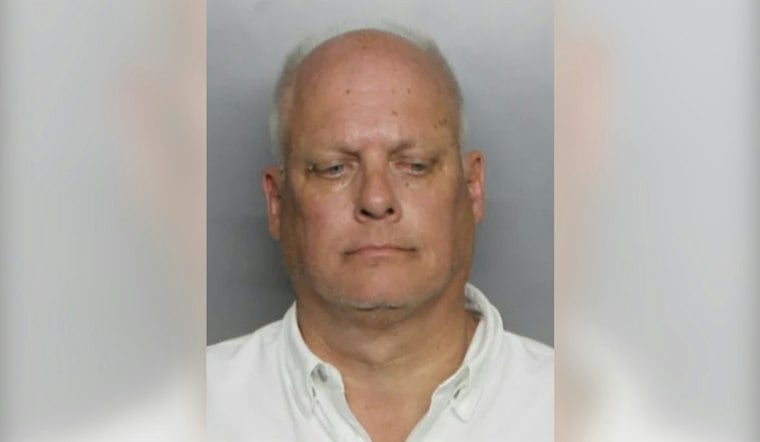
Brian White was sentenced to seven years in prison followed by 23 years of probation after pleading no contest to fraud charges related to post-Hurricane Ian contracting work. Prosecutors say the scheme affected roughly 40 people in Charlotte County and 25 in Sarasota County.
The State Attorney's Office says White was adjudicated guilty and sentenced to “7 years in prison, followed by 23 years of probation,” according to a statement from the State Attorney's Office. As reported by WINK News, White was ordered to pay $316,000 in combined restitution. Prosecutors say White took customers' money knowing his company could not or would not fulfill their orders, and court records show he faced multiple charges in Sarasota County of theft from victims over age 65.
A North Port Homeowner's 2023 Nightmare
Allie Marcus hired White in 2023 to install motorized storm-shutter shades at her North Port home. She paid a $4,600 deposit and was told the work would take 12 to 14 weeks. Marcus had found favorable reviews for Harper's 1980 and received a neighbor's recommendation; WINK News reported that White bought the company after those reviews were posted.
More than a year later, Marcus had received neither the shades nor a refund, though a subcontractor had done some electrical work at the home, according to WINK News. Marcus eventually took White to court with the help of an attorney. “You just feel this sense of, you know, emptiness,” she said.
How the Case Came Together
White was arrested in 2024 after customers contacted law enforcement about his contracting business, which was intended to supply pool cages and hurricane shutters. An arrest report cited by WINK News said White deposited a customer's down-payment check at a bank in Tampa. Prosecutors say he took as much as $10,000 from one Sarasota County victim; the station described the overall losses as hundreds of thousands of dollars.
Earlier reporting from YourSun said White was arrested in Charlotte County in July 2024 on six counts each of grand theft and accepting contractor payment without performing the work, tied to alleged jobs from 2023. He separately faced 14 counts in Sarasota County of accepting payment as a contractor without performing work. White was sentenced in October 2026.
Other Customers Describe Stalled Projects
Marcus was not the only customer who said she was left waiting. A Rotonda West resident told NewsBreak she agreed in 2023 to pay $21,300 for a lanai replacement and put down an $8,200 deposit, but said no further work took place after an electrician installed a power box. Another customer in Port Charlotte paid Harper's a $5,000 deposit in March 2023 for a pool cage job that, by May 2024, still had not begun, according to the same report.
Separately, Gulf Coast News Now reported that Louise and Ric Goodwin reported White to the Charlotte County Sheriff's Office along with four other people, and that those reports led to his arrest. WINK News said it did not receive a response from White's Sarasota County attorney.
Bracing for a Wave of Storm-Repair Fraud
The case fits a pattern Southwest Florida law enforcement anticipated not long after Hurricane Ian struck. A North Port detective told the Herald-Tribune that it could take up to five months for hurricane-related fraud complaints to reach police, in part because homeowners may not realize they've been defrauded until after paying upfront. North Port had assigned two veteran detectives to a dedicated hurricane-fraud task force in anticipation of exactly this kind of case.
Options for homeowners who lost money
Homeowners who suffered losses from the financial mismanagement of a licensed contractor with whom they signed a construction contract may be eligible for Florida's Homeowners’ Construction Recovery Fund, according to the Florida Department of Business and Professional Regulation. The fund is a last resort, available only after civil remedies have been exhausted. The department also says its complaint process cannot recover fees paid or pursue civil remedies for injured consumers, according to its consumer complaint guidance.





