

























































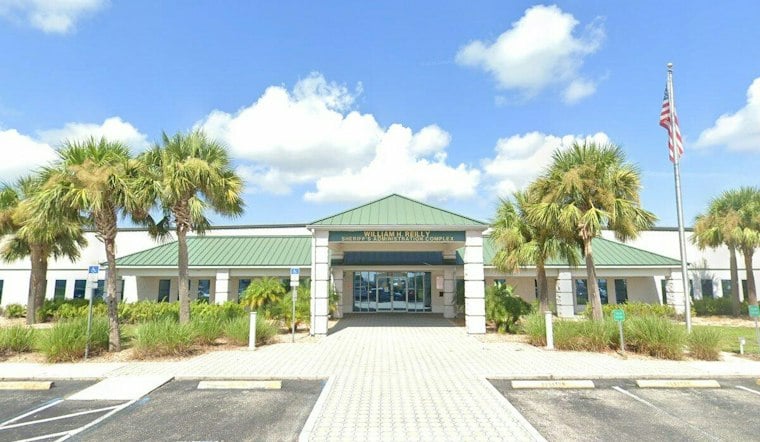
Charlotte County Sheriff Bill Prummell is sounding the alarm over Florida's newly passed Amendment 3, projecting the property tax measure could slash his office's available funding by roughly $26 million in fiscal year 2028 and $47 million the following year. That second figure, he says, is roughly equivalent to the cost of 275 deputy positions, though he stresses that does not mean 275 deputies would actually be laid off.
The warning came in a message Prummell posted to the Charlotte County Sheriff's Office blog, where he laid out just how exposed his agency is to swings in property tax revenue. He wrote that personnel costs make up 84% of the Sheriff's Office budget this fiscal year, meaning any major revenue loss would almost certainly have to come out of staffing somewhere down the line. Prummell also said more than 99% of the Sheriff's Office budget is funded through ad valorem, or property, taxes — though a separate report from WINK News put that share at more than 90%.
Prummell's math leaves little room to maneuver. He noted that even if the office eliminated approximately $4 million in specified expenditures, it would still face a projected $43 million funding gap heading into fiscal 2029.
What Amendment 3 Actually Changes
Florida voters approved Amendment 3, raising the homestead exemption for non-school property taxes, with the exemption climbing to $150,000 in 2027 and $250,000 in 2028, per the same WINK News report. The measure also lowers the annual cap on assessment increases for non-homestead properties from 10% to 5%, and the changes take effect January 1, 2027. The amendment does not eliminate homeowners' property taxes altogether, and it does not touch school district property taxes.
Charlotte County's current budget was already tight before Amendment 3 passed. Commissioners unanimously adopted a $1.79 billion net budget for fiscal 2026-27 at their final hearing on September 28, according to Gulfshore Business. That budget included a millage rate of 6.1275, about 1.46% higher than the prior year's 6.0394 mills, and the Sheriff's Office budget itself was trimmed by another $1.18 million before final adoption.
A Statewide Pattern Among Sheriffs and Fire Agencies
Charlotte County is far from alone in bracing for impact. Economists estimate Amendment 3 will cut local property tax revenue statewide by $4.9 billion in its first year, growing to $11.8 billion by 2031, according to the Florida Trident. State economists cited by Suncoast Searchlight similarly projected a $4.95 billion shortfall statewide in the first year alone, climbing to $11.86 billion by fiscal 2031-32.
The Florida Sheriffs Association, the Florida State Fraternal Order of Police and the Florida Fire Chiefs Association all warned ahead of the vote that the amendment would leave local governments without replacement revenue for police and fire services, the Trident reported. Nearby, the Manatee County Sheriff's Office said it expects to lose more than $50 million by the 2028 budget cycle, while Sarasota, Manatee and DeSoto counties combined are projected to lose $1.6 billion over five years, per Suncoast Searchlight's reporting.
How Other Florida Counties Are Responding
Some counties have already begun sketching out contingency plans. Sarasota County Commissioner Tom Knight said he intends to treat the coming budget cycle like a recession, telling Suncoast Searchlight, “I'm certain we won't be filling positions,” and that layoffs remain possible. An independent statewide research institute projected Sarasota County alone would face $241 million in shortfalls over its first two years under the amendment, the outlet reported.
Wakulla County has gone further, estimating a $6.5 million to $7 million shortfall in its general fund, according to WTXL. That county's August contingency plan floated cuts to extension and 4-H programs, nonprofit funding, animal control and parks and recreation, along with raising other taxes and shifting general fund expenses, including a new EMS fee, the station reported.
For Charlotte County, the exact path forward remains unclear. What Prummell has made plain is the scale of the problem: a budget that leans almost entirely on property taxes, a workforce that eats up the vast majority of that money, and a funding gap that doesn't close even after trimming millions in other spending.




