

























































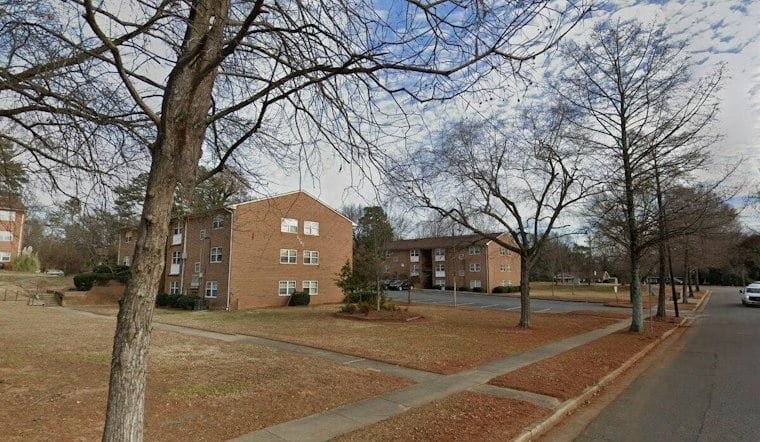
Thousands of Charlotte residents are stuck on affordable housing waitlists that stretch years into the future, and for one mother searching for a safe place to raise her kids, that wait has meant moving her family into an extended-stay hotel. She has pending applications at more than two dozen INLIVIAN properties, but as of October she ranked No. 265 on the waitlist for Little Rock Apartments near Charlotte Douglas International Airport and No. 500 on the waitlist for The Gaston at North End near NoDa.
As of this summer, INLIVIAN said 547 people were on its Housing Choice Voucher waitlist, with an average wait of 6.5 years, according to WSOC-TV. That program, commonly known as Section 8, provides assistance for privately owned units, while a separate Project-Based Voucher Program ties assistance directly to roughly 2,800 units INLIVIAN manages itself. Another 6,488 people are on that project-based waitlist, facing an average wait of 3.1 years.
The numbers mark a steep drop from 2014, when INLIVIAN said 31,000 applicants sat on the Housing Choice Voucher waitlist, but the wait times remain brutal for families trying to find stable housing today. INLIVIAN spokesperson Cheron Porter said demand for affordable housing has always been high in the city, and advised applicants to stay connected with the agency and try other communities while they wait.
A Family's Life in an Extended-Stay Hotel
The mother profiled by the station moved into an extended-stay hotel weeks ago while searching for safe, affordable housing for her family. She said she fears her children could end up experiencing homelessness as her search drags on, and that she can see the affordable housing situation in Charlotte getting worse. The hotel room lacks a full kitchen, but it spares her family separate bills for electricity, gas and water.
“You don't have a full kitchen, but you don't have to worry about paying the light bill,” she said. “You don't have to worry about paying the gas bill. Don't have to worry about paying the water bill.” She is one of several Charlotte families relying on extended-stay hotels as a stopgap while they search for permanent housing, the station's report notes.
City Funding Aims to Add Hundreds of Units
Earlier this year, Charlotte City Council approved $26 million for 13 affordable housing developments across the city, with a goal of adding 816 affordable units — 214 for purchase and 602 for rent, per the same account. A separate city webpage lists the investment as $26.4 million, and the available information does not clarify whether that figure reflects simple rounding or a different total. INLIVIAN said it remains unclear whether any of those approved developments will include properties the agency manages.
Porter said affordable housing matters as Charlotte continues to grow because workers need to be able to afford living in the city where they work. The current funding round echoes a similar effort five years earlier: in April 2021, Charlotte City Council approved $25.8 million for 14 affordable housing developments that could have produced up to 1,400 units, according to The Charlotte Observer. Six of those 2021 developments were located in west Charlotte's District 3, while none were located in the more affluent Districts 6 or 7, and estimates at the time put the city's overall affordable-housing shortage between 24,000 and 34,000 units.
A Regional Shortage Beyond City Limits
The scarcity extends well past INLIVIAN's own waitlists. The 2026 Gap Report found the Charlotte-Concord-Gastonia region short by 51,695 affordable and available rental homes for extremely low-income renter households, according to the Mecklenburg County Housing & Homelessness Dashboard. The region has just 31 affordable and available rental homes for every 100 extremely low-income renter households, and 83% of those renters are severely cost-burdened. When the threshold widens to households at or below 50% of area median income, the shortage expands to 67,419 homes.
INLIVIAN's own budget documents point to similar pressures closer to home. A 2024 Charlotte-Mecklenburg report cited in the agency's FY2026 budget book found 61% of moderate-income households were spending more than 30% of their income on housing costs, alongside a year-over-year increase of 3% in people experiencing homelessness and 10,000 more eviction cases. For now, families like the one profiled by WSOC-TV are left navigating long odds, one waitlist number at a time.





