

























































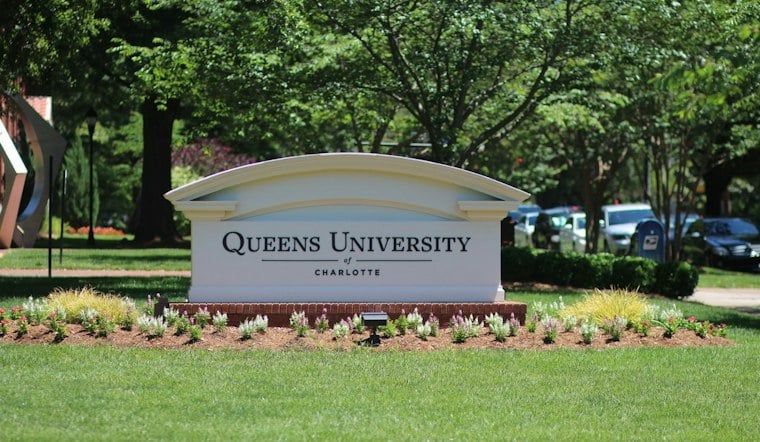
Students at Johnson C. Smith University and Queens University told WBTV that this fall’s midterm felt personal: they connected voting to representation, economic pressures and the issues shaping their lives. Johnson C. Smith sophomore Damarrion Freeling said seeing young people participate made him feel included and important. The students’ accounts offer a view of how some Charlotte college students experienced the election, but they are not, by themselves, a measure of youth turnout.
The longer local record gives that reaction useful context. In Mecklenburg County’s 2022 midterm, turnout among registered voters ages 18 to 25 was 24.1%, compared with 34.2% among those ages 26 to 40. In 2024, those rates rose to 57.4% and 61.1%, respectively, according to WFAE. Even in 2024, WFAE reported, the two groups had the county’s lowest turnout rates of any age group.
Those figures track participation among registered voters in specified age bands; they do not establish how many young people voted in 2026 or why turnout changed between elections. Nor should they be confused with young voters’ share of all ballots. CIRCLE at Tufts University estimated that people ages 18 to 29 cast 11% of votes in the 2026 midterms, down from 12% in 2022. That is a share of the overall vote, not the percentage of young people who turned out.
Participation and candidate choice are different measures
Nationally, young voters’ preference for Democratic U.S. House candidates was pronounced in 2026. CIRCLE reported that voters ages 18 to 29 favored Democratic candidates 66% to 31%, a 35-point margin. The organization said that was a sharp change from 2024, when the margin was 14 points. These figures describe candidate choice among young voters, not turnout in Mecklenburg County.
The distinction matters when college students speak for themselves: campus accounts are not a proxy for all young people. In its analysis of 2022 voting, CIRCLE found that 12% of young voters had no college experience, while 40% of young U.S. citizens ages 18 to 29 had no college experience in 2021 Census data. The figures describe different populations and years, but underscore why interviews at two universities cannot stand in for the full youth electorate.
The issues students raised were concrete. WBTV reported that Johnson C. Smith student Amyis Johnson pointed to gas and grocery costs as burdens during the semester. Queens student Carla Cerbante Montoya described stable income, housing, transportation, education and equality as needs for the future. These are their accounts of what shaped their views; the available figures do not establish that any one concern drove turnout.
Rules and history shape the campus-voting context
North Carolina’s registration rules allow college students to register in the county where they live while attending school if they do not intend to return to their former home after graduation. Students unsure where they will live after college may register in their college community or at their former home, according to the North Carolina State Board of Elections. The board also says student IDs it has approved are acceptable statewide as voting photo identification through Dec. 31, 2026.
A separate North Carolina case shows that campus voting access has been contested before. In 2014, students at Appalachian State University challenged the removal of an on-campus early-voting site in Watauga County. Carolina Public Press reported that a Wake County Superior Court judge ruled the removal was intentional discrimination against student voters based on the evidence presented. That case involved a different university, county and election; it does not show that access issues affected Charlotte students in 2026.
For Freeling and the other students interviewed by WBTV, participation itself carried meaning. The county’s recent age-specific figures show that turnout among registered young adults was substantially higher in 2024 than in 2022, while the available context here does not establish a comparable 2026 Mecklenburg rate. The students’ sense that their voices mattered is a report of their experience, not a substitute for that still-distinct turnout measure.



