

























































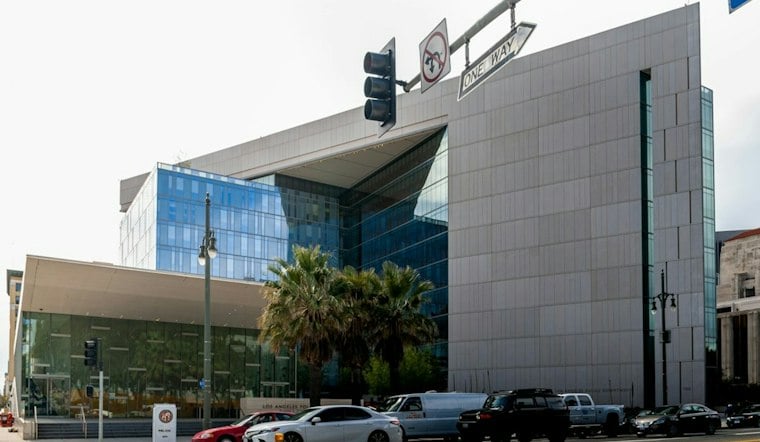
Stephanie Orlando was just 16 months old when her birth mother, who was struggling with drug addiction, handed her over to a stranger on Skid Row in late April or early May of 1992. That unidentified woman carried the toddler straight to the LAPD Central Division station, setting off a chain of events that would define the rest of Orlando's life. Now 35 and living in Chatsworth, Orlando says she owes everything to the people who stepped in that day and the woman who later became her mother.
The handoff happened amid the Los Angeles riots, according to The San Fernando Valley Sun, which first told Orlando's story. From there, Orlando entered the foster care system, and what followed was anything but stable. She says she was moved through 15 different foster homes between the time she was 16 months old and about 7 and a half years old, telling the outlet, “I went through 15 foster homes, from the time I was 16 months old to about 7 and a half.”
A Childhood Marked by Repeated Harm
Orlando recounted enduring abuse in multiple placements during those years, according to the same report. She said that when she was 4, her foster father slammed her head into a wall multiple times in a fit of rage, fracturing her skull. At age 6, she said, she was sexually assaulted. The accumulation of trauma reportedly led a therapist evaluating her case to conclude she was unlikely to form meaningful relationships as an adult.
It was a psychologist overseeing her case, Christine Jacobson, who changed that trajectory. When Orlando's latest foster placement was ending and she faced the possibility of being sent to a group home instead, Jacobson petitioned to adopt her. Orlando moved into Jacobson's home in Sherman Oaks at nearly 8 years old, and the article notes that Jacobson became the mother Orlando had always wanted.
Finding Prayers Left Behind
Jacobson died four years before the article published. Going through her mother's journals afterward, Orlando discovered prayers Jacobson had written for her and for Orlando's son. Orlando was told that her biological parents had both struggled with substance use disorder and had spent time in and out of prison; she finally tracked down her biological father, only to learn that he had already died.
Orlando did manage to find her birth mother before her mother's death. But the phone call that followed did not bring the reunion she may have hoped for, per the same account — she quickly realized there would be no happy ending to that part of her story. Orlando also wrote a letter to LAPD Central Division thanking the people who helped save her as a baby, and she received a reply. The department, however, had not located any of the officers who were at the station on that day, the outlet reported.
Building a Life — and Helping Others
Orlando went on to work for 12 years as a certified nursing assistant before stepping away to spend more time with her family, particularly her autistic son. She now has a son named Oliver, age 11, and a 10-year-old stepdaughter. Earlier this year, that instinct to help resurfaced in an unexpected moment: Orlando stepped in when an autistic, nonverbal woman was having a crisis at a shopping center near her home, after workers there told her the woman could not speak for herself. Orlando said she was able to stop the woman from banging her head on the ground.
Orlando says her past does not determine her future, and that she wants her story to continue through helping others — she has said she hopes to work or volunteer with an organization that supports foster children. Her case echoes patterns documented more broadly in the child welfare system: Casey Family Programs has found that among children who had been in foster care for two years or longer in 2020, 59% experienced three or more placements, and that children first placed in group or residential settings tend to experience more moves than those placed with relatives. The organization has also noted that repeated placement changes can raise safety risks, delay permanency, and hurt children's educational outcomes.
Foster care in Los Angeles County looks different today than it did in 1992. The Imprint reported that the county's foster-care population has fallen to 11,745 young people age 20 and younger, down from 21,637 in 2020 — a drop described as a 46% decline over five years, alongside a statewide decline of 33% over the same period. Those interviewed for that reporting offered no single explanation for the decline and noted it hasn't come with a rise in child fatalities or maltreatment reports after children leave care.




