

























































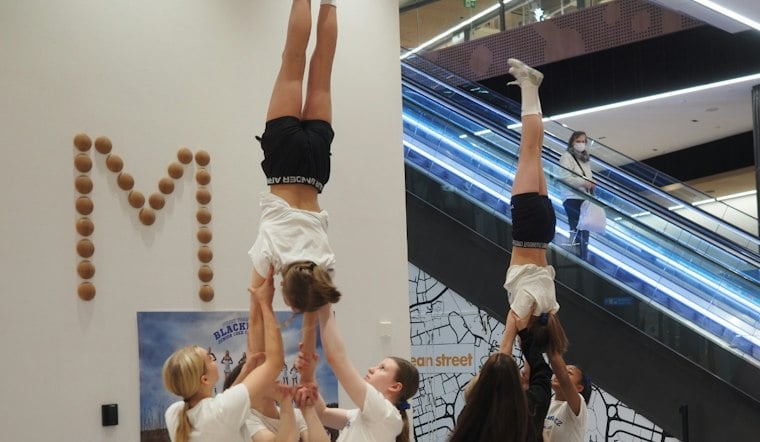
Shae Eichele-Gawry was 18 years old when an advanced cheerleading stunt went wrong, injuring her leg and ankle and setting off a cascade of pain that would take years to understand. She underwent major reconstruction surgery on her left leg and completed physical therapy along with a typical orthopedic recovery plan, but instead of healing, her pain only got worse.
According to a report from rockfordnewsfirst.com, Eichele-Gawry hurt herself in 2018 after performing an advanced rewind stunt as a flyer. It took more than two years before doctors landed on a diagnosis: Complex Regional Pain Syndrome, or CRPS, which she received in 2020. She has described the sensation in her leg as feeling like someone had set it on fire with gasoline.
CRPS is a condition that can cause severe, ongoing pain well beyond the expected healing period after an injury or surgery, and it usually affects just one limb, according to the National Organization for Rare Disorders. Symptoms can include burning pain, skin discoloration, swelling, tingling, and unusual sensations near the affected area.
A Years-Long Search For Answers
Before she found relief, Eichele-Gawry tried medication and injections, treatments that are common first steps for CRPS patients but that didn't resolve her pain. That tracks with what the medical literature says about the condition: an American Family Physician article notes there is no single proven treatment modality for CRPS, and that no large randomized controlled studies of CRPS treatments have been conducted, making functional improvement the main goal of care rather than a guaranteed cure.
Nearly three years after her injury, in 2021, Eichele-Gawry's doctor recommended something new: the Abbott Proclaim DRG System, as reported by Yahoo. Burton has explained that the device uses a small wire placed near the dorsal root ganglion to deliver a gentle electrical pulse that quiets irritated nerves.
80% Relief, And A Return To Competition
For Eichele-Gawry, the results matched that pattern. She has reported that her pain decreased by about 80% after starting DRG therapy, and she has said the treatment gave her a second chance at the life she loves. She has since competed in four bodybuilding competitions, placing second in two of them, per the same Yahoo account of her recovery.
Rockford News First reported that CRPS affects more than 200,000 people in the United States each year. The American Family Physician review cites incidence studies estimating five to 26 cases per 100,000 people per year, and notes the condition is three to four times more common in women than men, with peak onset between ages 50 and 70.
What The Research Says About DRG Therapy
Earlier research cited in a study hosted on PMC pointed in a similar direction: initial evidence from eight CRPS patients suggested DRG stimulation might succeed in a larger proportion of subjects than spinal cord stimulation, 71% versus 50%. That early signal helped prompt the ACCURATE trial, a randomized, multicenter comparative study of 152 people diagnosed with CRPS or causalgia in the lower extremities, which tracked DRG and spinal cord stimulation outcomes through 12 months, according to research indexed on PubMed. None of this research establishes that DRG therapy works the same way for every patient, but for Eichele-Gawry, it marked the turning point after years of searching for an explanation and a fix.
A 41NBC interview featured both Eichele-Gawry and Burton.





