

























































Eight years after collapsing during a tug-of-war competition at Monacan High School and flatlining three separate times in the back of an ambulance, teacher Adrian Murray got to do something few cardiac arrest survivors ever do: look the paramedics who brought him back to life in the eye and say thank you, in person, in his own classroom.
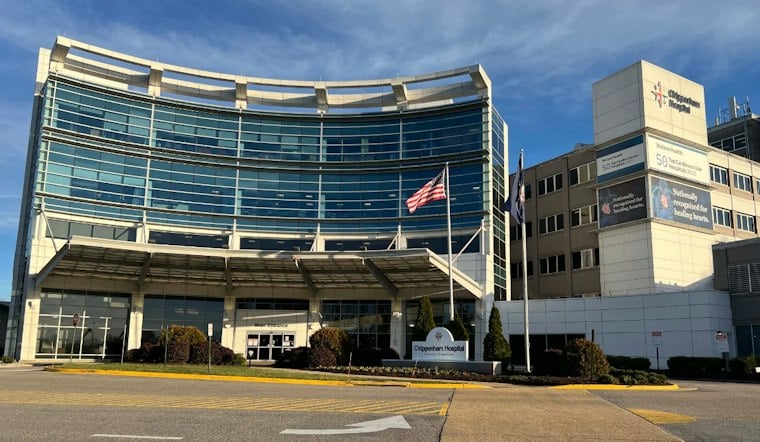
Murray collapsed on Oct. 10, 2018, and went into cardiac arrest three times during the ride to the hospital, according to WTVR.com. Chesterfield Fire and EMS Captain Bo Britton and Lt. Chip Loving were among the responders on scene that day, and the pair recently walked into Murray's classroom for a surprise reunion, the outlet reported. Murray suffered multiple cardiac arrests while being transported to Chippenham Hospital, and the responding crew placed him on a cardiac monitor as Britton called for additional emergency resources.
Doctors later diagnosed Murray with arrhythmogenic right ventricular cardiomyopathy, or ARVC, an inherited heart muscle disease, per the same account. He spent eight days in the hospital and woke up already intubated. Loving, reflecting on that day, said responders persisted and did their best according to their training.
From Patient Back to the Front of the Classroom
Murray eventually returned to the school where he collapsed, even though he had considered transferring elsewhere first. At Monacan, he now serves as the school's success initiative educator, teaching a class called Success that covers goal setting, study habits, relationships, college, careers and military service — subjects he and a colleague shaped to support and celebrate students, the station's report notes. He said students' progress is the most meaningful measure of his work, and has pointed to one former student now studying to become a history teacher as an example. Murray was later named Monacan's Teacher of the Year.
His cardiac emergency, Murray said, pushed Monacan to strengthen its emergency preparedness. The school became a Project ADAM Heart Safe School, and staff are now more aware of AED locations throughout the building. Murray also earned his Red Cross certification so he could teach others CPR and AED skills, and he now teaches students how to respond to cardiac emergencies as part of that preparedness education.
Living With an Implanted Defibrillator
Murray takes medication and has an implanted cardioverter defibrillator, or ICD, though he initially relied on a wearable defibrillator instead. He has said he wanted another layer of protection after his daughter's birth in 2020, which changed how he considered getting an implanted device. His heart condition had led him to fear he would no longer be able to play tennis with his wife, Krys, and he has credited her support with helping him regain a sense of normal life — Krys has said doctors feared he would not survive at all. Murray has described his survival as a second chance at life, and he has been able to continue playing tennis while restricting other competitive activities.
The reunion with Britton and Loving took place during an interview with CBS 6 anchor Genienne Samuels, who also introduced Murray as an honored survivor at the American Heart Association's 2026 Central Virginia Heart Walk, where he beat a drum to mark the occasion. Murray has said he considers the EMS responders the real heroes of his story, not himself.
A Tennis Court Romance Turned Nonprofit Mission
Murray and Krys had their first date on a tennis court, and the couple now leads T.R.I.N.I.T.Y., a nonprofit they founded that combines tennis instruction with mentorship, encouragement and life lessons aimed at supporting young people spiritually, mentally and physically. T.R.I.N.I.T.Y., whose name stands for Teaching, Reaching, Inspiring, Nurturing and Igniting Today's Youth, was envisioned in 2017 and officially founded on March 3 of that year. Its programming includes beginner-friendly red ball tennis that uses smaller courts and slower balls, and its Tennis for All initiative offers free or low-cost programming and equipment to families in need.
According to a WWBT 12 On Your Side report from earlier this year, Murray and Krys also launched T.R.I.N.I.T.Y.'s Heart Strong Initiative, built around four pillars: awareness, education, movement and preparedness. The initiative includes heart health awareness, CPR and AED education, and youth and family wellness programming, and it provides hands-only CPR and AED demonstrations to the community.
Why Bystander Response Matters So Much
The stakes behind that mission are stark. The American Heart Association says about nine in 10 people who experience cardiac arrest outside a hospital do not survive, and its data show that in 2021, just 9.1% of adult patients with non-traumatic out-of-hospital cardiac arrests treated by EMS in the United States survived to hospital discharge, according to the American Heart Association.
Bystander intervention can shift those odds dramatically. The same organization reports that immediate CPR can double or triple a person's chance of survival after cardiac arrest, and in 2023 just 40.2% of out-of-hospital cardiac arrest patients received bystander CPR at all. A study examining 198,869 witnessed out-of-hospital cardiac arrests from 2013 to 2022 found that bystander CPR administered within two minutes was associated with an 81% greater chance of surviving to hospital discharge compared with no bystander CPR, the American Heart Association found.
Monacan's heart-safe designation places it among a growing list of schools statewide making that kind of rapid response more likely. VCU Health reported that 136 Virginia schools have now been designated heart safe, with more designations in progress. For Murray, who now marks Oct. 10 every year as what he calls his rebirthday, that groundwork is personal — built from the same emergency that very nearly took his life inside Monacan's auxiliary gym eight years ago.





