

























































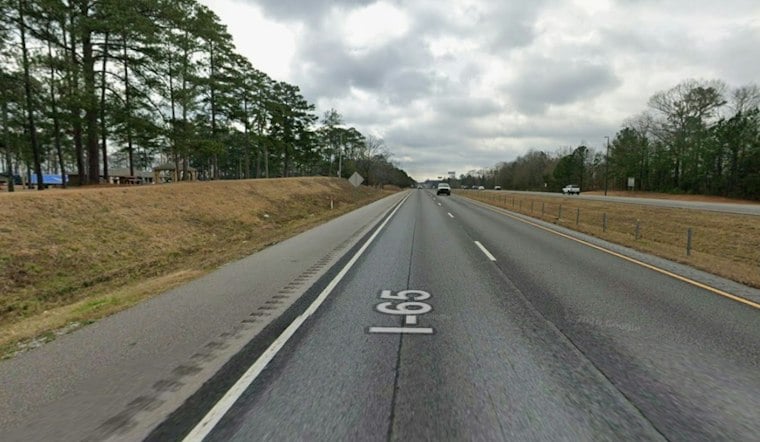
Drivers cruising through the I-65 work zone near milepost 209 in Chilton County are about to face a new kind of speed trap: cameras. The Alabama Department of Transportation and the Alabama Law Enforcement Agency are rolling out a photo speed-enforcement pilot at the Walnut Creek Bridge replacement project, with civil citations carrying a $250 fine for anyone caught going more than 10 mph over the posted limit.
The pilot stems from the Alabama Work Zone Safety Act, known as Act 2026-475, which according to ALDOT News Hub established the pilot to evaluate whether photographic speed enforcement can reduce excessive speeding and improve safety in an active interstate work zone. ALDOT is handling the transportation and work-zone side of the project, while ALEA will review evidence of potential violations and manage the civil citations and hearing process, the agency says. Civil citations will not begin before November 16, according to AL.com, which also reported that citation processing will be limited to periods when workers are actually present at the site.
Signs posted in the area will let drivers know the speed limit is photo-enforced, per the same report. Once a violation is captured, the registered vehicle owner will receive information by mail detailing the alleged speed, date, time and location, along with recorded images, the amount due, and options to pay or contest the notice. ALDOT emphasizes that these are civil penalties only — they will not add points to a driver's license or trigger suspension or revocation.
Who's Running the Cameras, and When
To operate the program, Alabama will work with Elovate, a vendor that provides automated traffic-enforcement programs to municipalities and state agencies, ALDOT spokesperson Josh Phillips told AL.com. ALEA has not yet released the exact date citations will start or details about any warning period before enforcement begins, though ALDOT says that information is coming. In the meantime, ALDOT is urging motorists to follow posted signs, obey the speed limit, stay alert and allow extra following distance through the work zone, per the agency's release.
Why Alabama Is Trying This Now
The push for camera enforcement follows a rough year on Alabama's highways. There were 2,543 crashes in highway work zones statewide last year, along with about 11 fatalities and 709 injuries, according to figures from Gov. Kay Ivey's office cited by AL.com. Those numbers help explain why lawmakers built reporting requirements into the law itself — the Department of Transportation and ALEA must submit an interim report to the Legislature by March 1, 2027, and the act's provisions are set to expire on September 30, 2028, according to the enrolled version of Alabama Legislature, enrolled SB341.
At least two warning signs are to be placed at least 500 feet before a work-zone entrance. ALEA is required to mail any citation notice no later than 30 days after a violation is recorded.
What Kentucky's Pilot Suggests — and What It Doesn't
Alabama isn't the first state to试 try this approach. Kentucky ran a similar pilot at five work-zone sites, and its transportation center found that average speeds dropped 1.0 to 7.5 mph during active enforcement, while the share of vehicles going more than 10 mph over the limit fell between 6% and 23%, according to the Kentucky Transportation Center research report. After accounting for changes at comparison sites, researchers found the net speed effects were modestly positive at interstate locations but not clearly effective at urban arterial or rural highway sites. The same report found injury crashes fell at most sites after cameras went up, though the injuries that did occur skewed more severe — and researchers cautioned that the short enforcement window required a cautious, preliminary crash analysis.
Kentucky has since expanded the program statewide after its five-site pilot recorded lower speeds and fewer severe speeding violations, according to the Lane Report, citing data from vendor Acusensus. That outlet reported severe speeding violations at monitored Kentucky sites fell between 31% and 61%, while average speeds across the five work zones dropped 15%. One notable difference from Alabama's setup: Kentucky's system routes detected speeding images to a nearby officer who decides whether to make a stop, meaning every citation there is issued in person rather than automatically by mail. None of these Kentucky findings indicate what results Alabama's own pilot will produce, since the two programs differ in design and enforcement method.



