

























































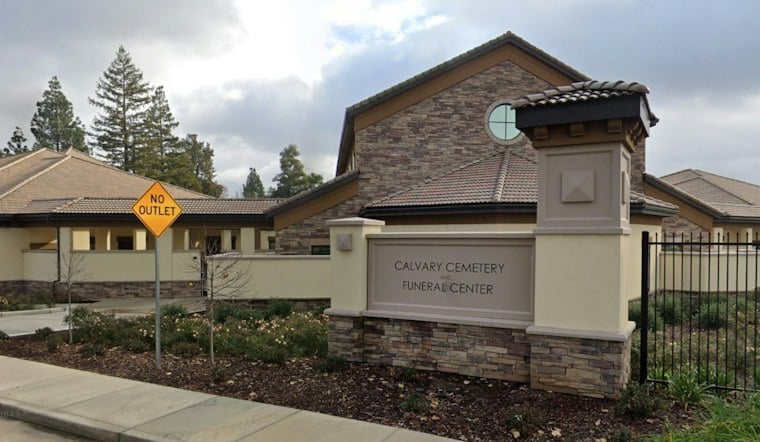
A nonprofit group in Sacramento County wants to build a permanent, near-full-scale replica of the Vietnam Veterans Memorial at Calvary Catholic Cemetery in Citrus Heights, located between Greenback Lane and Antelope Road east of Interstate 80. Construction plans have already been approved, but ground won't break until every dollar is raised.
The Citrus Heights Veterans Memorial Project is working toward a 95 percent replica of the Washington, D.C. monument, according to KCRA. The planned wall would be built from the same black granite used at the original memorial and would carry the same 58,281 names as the Washington, D.C. wall, per that report — though a separate Citrus Heights Sentinel report earlier this year quoted the nonprofit describing 58,318 names listed on the planned wall, so the exact count remains unsettled between the two accounts. The Sentinel's February report also described the wall as crafted from 470 linear feet of India black granite, standing nearly nine and a half feet tall at its apex.
The project is being carried out under a memorandum of understanding with the Vietnam Veterans Memorial Project in Washington, D.C., the station's report notes. If completed, organizers say the Citrus Heights wall would be the first of its kind west of Missouri.
A Veteran's Long Road to the Wall
Kermit Schayltz, a Vietnam veteran and organizer of the project, said the effort is deeply personal to him and to many others. He told the station he could not look at the wall for 50 years without breaking down, and that bringing a traveling Vietnam exhibit to Citrus Heights in 2023 helped him find peace with the memorial. Schayltz said thousands of people visited that traveling exhibit, and that traveling all the way to Washington, D.C. simply isn't feasible for many West Coast veterans.
Ray Riehle, another member of the Citrus Heights Veterans Memorial Project, said visits by West Coast veterans and their families can help put the war in perspective and support healing. In an earlier KCRA report, Riehle said the memorial could offer veterans an opportunity to gain some degree of closure for their wartime experiences.
Fundraising Figures Still in Flux
Money remains the project's central obstacle. KCRA's latest report puts the total raised at approximately $5 million of the $7 million needed to begin construction. Months earlier, the Sentinel reported that more than $4 million had been raised through financial commitments and donations, with $3.1 million still to be raised toward a project estimated to cost over $7 million.
Earlier fundraising updates show how much the total has shifted over time. A KCRA report from October 2025 said the nonprofit had raised roughly $200,000 to date and was pushing to complete the memorial by the end of 2026. By February, the Sentinel reported more than $4 million had been raised through financial commitments and donations, with the project estimated to cost over $7 million. The group has said it hopes a company or private donor will step forward to help close the remaining gap, adding that every contribution helps its effort to realize the project.
Modeled on a National Landmark
The original Vietnam Veterans Memorial in Washington, D.C. was dedicated on Nov. 13, 1982, and draws nearly 5 million visitors each year, according to the Vietnam Veterans Memorial Fund. Its walls are built from black granite quarried near Bangalore, India, with each wall measuring 246 feet, 8 inches long and standing 10 feet, 1.5 inches high at the apex. The fund's own materials list differing historical name counts for the wall — 58,281 as of May 2021 on one page, and 58,318 as of 2017 on another — a discrepancy that mirrors the conflicting figures surrounding the Citrus Heights plan.
Citrus Heights wouldn't be the first community to build a replica. The National Infantry Museum & Soldier Center's Dignity Memorial Vietnam Wall, a three-quarter-scale replica, was permanently installed on the museum's grounds in Georgia in 2014. That version stands 8 feet high and runs 240 feet long, with a black, faux-granite reflective surface bearing the names of more than 58,000 service members, according to the museum.
For now, the Citrus Heights project remains in a holding pattern familiar to many large memorial efforts: the design is locked in, the site is set aside, and the only thing standing between blueprint and groundbreaking is the remaining money still being raised.





