

























































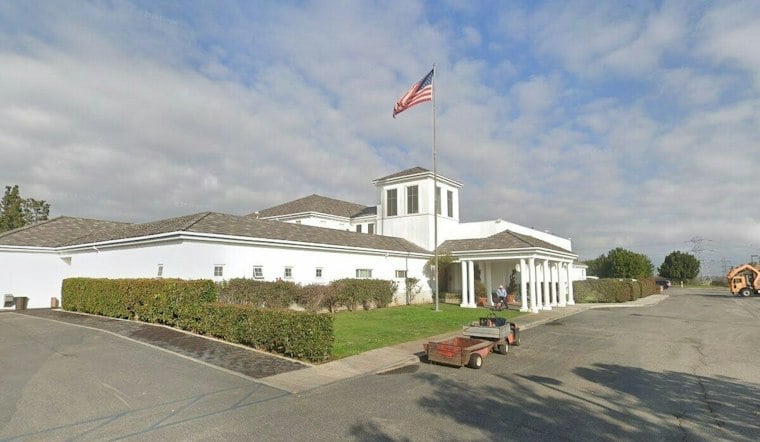
A City of Industry golf course could soon look a lot different, with nine fewer holes and a sprawling bank of servers where fairways used to be. Ramus Development has announced plans for the Los Angeles Recreation and Technology Park, a proposal to redevelop 18 acres of the California Country Club property at 1509 Workman Mill Road with a data center and a reconfigured nine-hole golf course.
The 124-acre club currently operates as a full 18-hole course, and according to The Real Deal, Birtcher Development is spearheading the project's entitlement process. The project website, Los Angeles Recreation and Technology Park, describes a plan to reconfigure the club to incorporate a nine-hole golf course alongside a technology campus development featuring a data center on roughly 18 acres. Separately, Bloomberg has reported that the California Country Club's owners submitted plans for a 99-megawatt data center on the site.
Jobs, Labor Deal and a Community Board
Ramus Development and Birtcher Development have signed a project labor agreement with the California Building Trades, the project's report notes. The project's own materials project 1,500 high-skill, living-wage jobs during construction and 200 permanent technical and maintenance positions once the facility is operational.
Brooke Birtcher Gustafson said the data center is designed to use energy-efficient building systems, incorporate resilient power infrastructure, and reduce both water and energy usage. She also said the developers plan to create a formal channel for public input, stating: “We intend to establish a process, through a community benefits board, where residents' voices will be heard.”
The Water Math Behind the Pitch
Project backers say the facility is expected to use air-cooled chiller technology to reduce water consumption at the site, and they estimate that water use at the golf course could fall 13 percent from its current level. The project website makes the same projection, stating that the project is anticipated to reduce the property's current water consumption by 13 percent — though that figure remains a developer estimate rather than a verified outcome.
The tradeoff between water and energy use is not unique to this site. The Public Policy Institute of California has noted that if a facility uses less water, it typically consumes more energy — a dynamic that complicates any single-number pitch about water savings. Separately, reporting from CalMatters found that a patchwork of state, federal and local policies allow data center operators to avoid publicly disclosing their actual water use, and that researchers reviewing planning documents found project details were often missing, contradictory or vague.
City of Industry's Zoning Backdrop
The proposal also lands against a broader policy shift in the city. According to the Los Angeles Center for Investigative Journalism, the City of Industry voted in December to advance zoning changes allowing data centers in its Planned Development Overlay, subject to later site-specific approval. The outlet's report characterized the city's energy-infrastructure and land-use decisions as moving in tandem, a dynamic critics say could make future data-center approvals easier.
As part of the required permitting process, the Los Angeles Recreation and Technology Park is subject to a full environmental impact report. The project's own site describes undergoing preparation and public review of that environmental impact report, though that description reflects a planned process rather than a completed review.
A Statewide Fight Over Golf Courses and Servers
City of Industry is far from the only California community wrestling with this exact tension between golf turf and server farms. In Pittsburg, a proposed data-center project at the Delta View Golf Course site prompted the city to enact a temporary data-center moratorium after community pushback, according to The Straits Times. And in Orange County, the Irvine Company is pursuing a very different path for its own golf-course land, planning up to 2,400 residential units at the Oak Creek Golf Club site rather than industrial infrastructure.
Pushback has already killed similar projects elsewhere in the region. A proposed data center in El Segundo was abandoned by its developers in July after facing local backlash. And in June, Monterey Park became the first city in the nation to permanently ban data centers after voters passed Measure NDC with 88 percent approval, a mandate covered by the Pasadena Star-News. Whether City of Industry residents respond to the Los Angeles Recreation and Technology Park with similar resistance, or whether the promised community benefits board and union labor deal ease concerns, remains to be seen as the environmental review process moves forward.




