

























































The Clark Conservation District says it could be forced to slash services to farmers across Clark County unless the county council approves a stable funding source at a public hearing scheduled for Tuesday. The agency, which has operated entirely on competitive grants and contracts for its 84-year history, is asking the council to adopt rates and charges of up to $22.37 per parcel plus 10 cents per acre, collected alongside property taxes.
According to Oregon Public Broadcasting, the district is requesting a 10-year parcel fee because it depends on federal and state grants that are drying up, per executive director Zorah Oppenheimer. The district recently lost a federal grant equivalent to more than 40 percent of its budget, OPB reports, and the county council has rejected the district's funding requests multiple times, including in 2018. The Clark Conservation District states on its website that it is currently funded entirely through competitive grants and contracts from local, state, and federal sources, and that its programs are at risk of being greatly reduced or cut entirely without stable funding.
The Columbian reports that only about 9 percent of the district's funding is considered reliable, according to Oppenheimer, and that the proposed fees are expected to generate $3.7 million annually against the district's $4.3 million budget. If the council approves the plan, the newspaper reports the charges would be added to property tax bills beginning with the 2027 tax year.
A Ridgefield Farm Built Around District Help
April Jones Thatcher bought a 24-acre property on the outskirts of Ridgefield in 2003 and later founded April Joy Farm with her husband, according to OPB. The farm keeps about 75 egg-laying hens and grows fruits and vegetables including asparagus, figs, pears, radishes, rhubarb and tomatoes, the outlet reports. Under the proposed fee, Thatcher would pay $24.52 a year, OPB reports, and she has said the value of a thriving conservation district outweighs that cost.
The conservation district worked with the Thatchers on a static aerated compost structure that helps safely convert manure and other organic material into crop compost, per OPB, a type of project that can cost tens of thousands of dollars. Thatcher called the compost project transformational and said it would benefit future stewards of the land, the outlet reports. She also started Farm to Heart with her husband, which purchases food from a network of 34 other local farms and distributes produce boxes to food-insecure families in southwest Washington, operating free markets at local elementary schools and a community-supported agriculture program, according to OPB. Thatcher has said Farm to Heart connects families needing food with farmers seeking equitable markets, and that she wants to leave the land better than she found it.
Development Pressure Meets a Funding Gap
Clark County has one of Washington's highest concentrations of farms and abundant fertile soil, OPB reports, but the county also faces farmland development pressure from population growth. The county adopted a 20-year growth plan that will open some farmland to development, according to the outlet, and Oppenheimer has said the local agricultural community is struggling. She has said a robust conservation district is the best way to support agriculture in Clark County and that the council discussed agriculture's importance during the comprehensive planning process, per OPB.
The conservation district provides free, voluntary natural-resource expertise and financial help to farmers and other land managers, and Oppenheimer has said its projects range from septic inspections to manure facilities and bridges, according to OPB. The district's own materials list more specific 2025 figures: more than 4,000 free trees distributed, more than 50 wildfire-risk assessments conducted, more than 600 septic inspections reimbursed, and storage funded for 39,000 cubic feet of manure. The district says roughly 90 percent of its budget goes toward those on-the-ground services rather than administration.
How Clark Compares to Other Washington Counties
Washington has 45 conservation districts working on water quality and habitat restoration, per OPB, and Clark County is the only one of the state's 10 most populous counties without stable funding for its district, the outlet reports. The district's own site similarly states that Clark is Washington's largest county without stable conservation funding, and that 13 of the state's 15 most populous counties support their districts through stable local funding. Oppenheimer has separately told The Reflector that Clark was the only one of the state's top eight counties by population whose conservation district lacked a stable funding source, and that changes to Washington Department of Ecology grant requirements had made that funding avenue impossible to rely on.
The county council has turned down fee proposals before. The Reflector reported that the council voted 4-1 against a $5-per-parcel annual charge, with forestland parcels set at $2.96, a plan the district estimated would have generated close to $700,000 a year; Councilor Marc Boldt cast the lone vote in favor. The Columbian reported a similar 4-1 rejection of new district fees in December 2017, after which the paper said the district faced an uncertain future and might reduce services.
Mixed Signals From the Council
Not every councilor has lined up cleanly behind the current proposal. OPB reports that Councilor Glen Yung expressed support for the agency but raised concerns about adding costs for property owners, questioned whether fee-based funding would be sustainable, and warned that a future council's failure to renew the funding could create problems for the district. The current proposed parcel fee would generate more than $3.5 million for the district next year, per OPB, and would charge most property owners less than $25 annually.
Oppenheimer has said a secure funding stream could let the conservation district help other farmers protect their land from development, OPB reports. April Joy Farm recently became a forever farm, protected from development and required to remain available for agriculture, with Washington Farmland Trust and the Clark County Legacy Lands Program helping establish the designation, according to the outlet. OPB reports it is the first farm in Clark County protected through that specific partnership between the trust and the county's legacy lands program.
What Happens Next
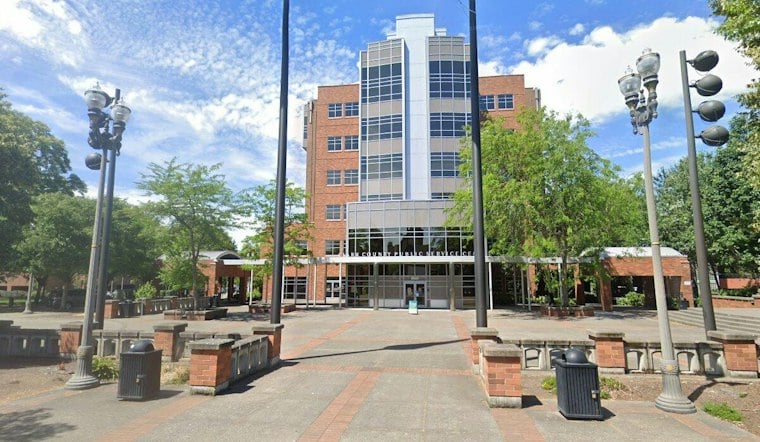
The conservation district's website urges residents to attend the Clark County Council meeting on Tuesday at 6 p.m. at the Clark County Public Service Center, where the rates and charges proposal is set for a public hearing. The Columbian has reported that the council is expected to adopt the plan at that meeting, though that remains a forecast rather than a confirmed outcome. Under Washington law, per an excerpt of RCW 89.08.405, a county legislative authority may approve revenues to a conservation district by fixing rates and charges, though the statute's broader application to Clark County's specific request is not detailed in the available excerpt.





