

























































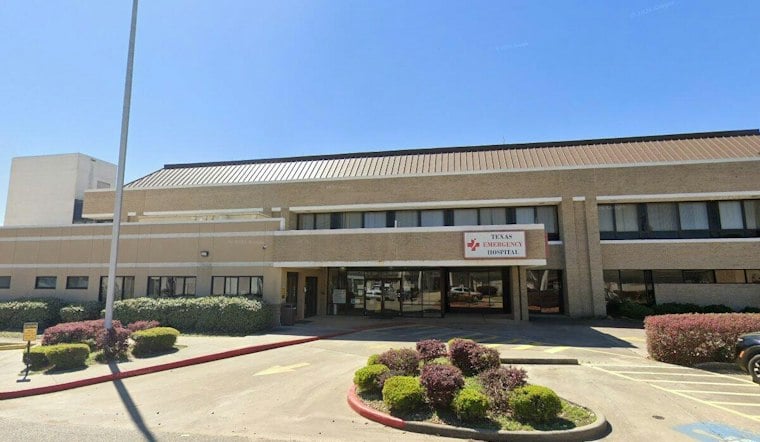
Cleveland General Hospital has spent the months since its September reopening pouring money into new scanners, lab equipment and X-ray systems, but the facility is still losing money and has yet to become financially sustainable, according to its CEO. The hospital, which serves Cleveland and the surrounding tri-county area, is treating roughly 10 to 15 emergency room patients a day — well below the 20 to 30 daily visits it needs to help support operations.
The upgrades include a new CT scanner, ultrasound equipment and X-ray systems, according to Bluebonnet News. CEO Paul McCutchen, a Houston-area real estate broker who became involved with the hospital while working with its prior owner family, said the goal is to replace aging infrastructure with equipment built to last for years. He secured financing with silent investors to purchase the hospital and restore operations, citing community need for medical services and regional population growth as factors behind the deal.
When the new ownership group took possession, much of the hospital's diagnostic equipment was missing, outdated or simply didn't work, and the building itself needed electrical, heating and air conditioning, and roof improvements, per the same account. Facing that scope of repair, the team prioritized the emergency department, radiology, laboratory services and the cardiac catheterization lab first, replacing outdated diagnostic gear with newer technology before tackling everything else.
Lab Now Handles Nearly All Testing On-Site
The hospital's laboratory has new testing equipment capable of performing most routine tests without sending samples elsewhere, handling an estimated 98 percent of testing needs locally. Both the lab and the emergency department operate around the clock, and a physician is on duty in the ER 24 hours a day, the outlet reports. The radiology upgrades also include portable X-ray equipment and a robotic X-ray system for patients who cannot move from their beds.
Not every planned addition is running yet. A permanent MRI machine is in the hospital's plans, but installing it will require renovations and electrical improvements that haven't happened. The hospital is also interested in expanding breast imaging and possibly adding further screening options down the line.
Inpatient Beds and Surgery Still Limited
Cleveland General is licensed for 12 inpatient beds, but generally only three to five are in use, a drop from the six beds it initially planned to operate when it reopened in late September, per the same account. The hospital provides inpatient medical-surgical care for patients who need continued monitoring or treatment, inside an 83,000-square-foot facility that has room for more beds and specialized services down the line.
Reopening the operating rooms will take additional equipment and facility improvements, including roof repairs, and McCutchen estimated that preparing the surgical facilities could cost between $800,000 and $1 million. If that happens, the hospital hopes to offer general surgery, orthopedic procedures, gastrointestinal services and other surgeries that don't require a larger medical center. For now, the facility maintains a transfer agreement with HCA Kingwood for complex surgery or higher-level trauma cases, and it has a helipad on-site for medical transfers when patients need care beyond what Cleveland General can provide.
Cardiac Program and Other Expansion Plans
Hospital owners have invested in equipment and personnel for cardiac procedures, setting an initial goal of two to four catheterization procedures per week. The hope, per the report, is that the cardiac catheterization lab could eventually cut down on the need for some patients to travel to larger Houston-area hospitals for that kind of care.
The hospital is also developing relationships with mental health providers and may expand into urology, gastrointestinal services and mental health care more broadly; one possibility under discussion is dedicating an entire wing to mental health services. McCutchen said he's also interested in restoring obstetrical services, though that would require significant construction and additional resources. He discussed the hospital's progress, financial challenges and expansion plans on Bluebonnet News' Headlines and Heartlines podcast.
Money Troubles Persist Despite the Upgrades
Despite the new equipment, the hospital is still operating at a loss, and the ownership group has been funding both operations and improvements while working toward financial stability. McCutchen hopes the hospital can reach a break-even point around March or April, though he's cautioned that the timing depends on patient volume and other factors still playing out.
Part of the path to stability runs through paperwork: the hospital treats Medicare patients and is working to complete the requirements to submit Medicare claims and receive reimbursement, while also rebuilding relationships with insurance companies, medical suppliers and ambulance providers. Some organizations remain cautious about Cleveland General because of its troubled history — the facility closed under previous ownership during the week of May 12, 2025, and was expected to reopen within the following week, a closure that followed a pattern Becker's Hospital Review once described in an earlier Cleveland hospital shutdown tied to funding shortages.
McCutchen said that rebuilding confidence will come down to proof rather than promises: patient care, improved facilities and consistent operations have to demonstrate what the hospital can actually do. He said the ownership group intends to keep reinvesting in the hospital as its financial position improves, and that the group plans to do so ethically, morally and financially. He's also emphasized building a workplace culture where employees feel valued and work together, and said the hospital's long-term success ultimately depends on whether residents choose to use the facility at all.
CEO Invites Residents to See the Changes Firsthand
McCutchen said the hospital will do its best work regardless of whether residents notice, but he's also hoping they will — and show up. He hopes to support community activities, local sponsorships and possibly community gatherings at the facility as part of rebuilding trust. McCutchen is inviting residents to visit the hospital and see its improvements and services for themselves, and those interested may contact the hospital to arrange a guided tour led by the CEO himself.




