

























































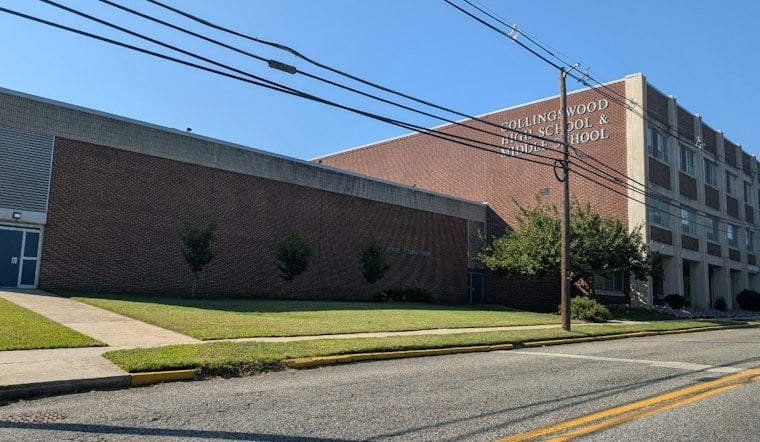
Collingswood residents narrowly voted down a $4.56 million school operating bond, 2,863 to 2,646, leaving the district bracing for what officials describe as significant structural budget cuts that could touch teaching staff, class sizes, electives, athletics and student mental health services.
The preliminary results, reported by The Philadelphia Inquirer, showed 51.97% of voters rejecting the measure against 48.03% in favor. District officials had said the bond was needed to help close a $3.3 million budget deficit for the current school year, according to the same Inquirer report. The vote remains unofficial until mail-in and provisional ballots are counted and the election is certified on November 18, per NJ.com.
Superintendent Fred McDowell said the outcome was not what the district had hoped for, but that its focus remained on delivering a supportive education for Collingswood students, according to NJ.com's reporting by Murjani Rawls. McDowell wrote in a public statement following the vote, “We deeply appreciate every community member who engaged in this process and made their voice heard.” He added that without the operational funds, the Board of Education will need to evaluate significant structural budget cuts, a sentiment also captured by the Courier-Post.
What Could Be On The Chopping Block
Potential budget adjustments may include reductions to teaching staff, increased class sizes, cutbacks in elective courses and athletic programs, and potential reductions to student mental health services, per NJ.com. McDowell said district leadership and the Board of Education would assess the path forward while awaiting official certification of the results. When NJ.com contacted McDowell about the referendum defeat and upcoming budget decisions, he responded by resending his earlier public statement.
The Board of Education voted unanimously on August 19 to put the referendum on the ballot, citing rising healthcare costs, inflation and state funding constraints as reasons for the measure, according to NJ.com. The district's own long-range financial analysis backs up those pressures, projecting state aid would decline 2.8% to $10,613,909 for the coming fiscal year, and modeling health-benefit increases of 22% to 28% that could add roughly $1.6 million to $2 million in costs, per the Collingswood Long-Range Financial Sustainability Analysis. The same analysis separately estimated a FY2026-27 local capacity gap of $3,574,937, describing it as a planning scenario rather than an adopted deficit.
A District Already Stretched Thin
Collingswood has struggled with a structural deficit that has worsened since 2013, according to NJ.com. The bond would have generated $4.56 million for the district and would have added roughly $1,324 a year to the tax bill for a home assessed at the borough average of $448,000, the Inquirer reported.
This isn't the district's first round of belt-tightening. After approving its 2026-2027 budget in April, Collingswood eliminated 30 full-time positions and raised taxes by about $300 a year for the average household, per NJ.com — though the Inquirer separately reported that the district cut 33 positions, raised property taxes 6.4%, consolidated campuses and shuttered James A. Garfield Elementary as part of those same budget measures. The Courier-Post reported that the Garfield school's closure was tied to the $3.3 million budget shortfall. Garfield Elementary, which first opened in 1915, closed on June 22, and the district reassigned around 113 students to its remaining four elementary schools for the fall term, according to NJ.com.
Athletics funding has already been a pressure point outside the bond fight. Collingswood administrators have said they were trying to close an estimated $150,000 gap in middle school athletics funding, according to The Retrospect.
Not An Isolated Case In New Jersey
Collingswood was one of four New Jersey districts that turned to operating bond questions this election cycle to add to their budgets amid declining state aid, the Inquirer reported. The outcomes were mixed: Burlington Township voters approved a $567,000 operating bond, 3,033 to 2,179, and Bordentown Regional voters approved an $86.1 million capital bond, 3,663 to 2,260, according to the same Inquirer account.
New Jersey school districts more broadly have raised fees or eliminated sports programs because of rising costs and budget struggles, per NJ.com. Cherry Hill Public Schools, for instance, faced a $29 million deficit and identified about 70 positions for reduction, with roughly 84% expected to be addressed through attrition, according to NBC10 Philadelphia. In Mercer County, Robbinsville voters rejected a ballot question that would have let the district raise an additional $5.03 million for its budget, and the Robbinsville Township School District approved plans to eliminate all junior varsity sports at the middle school level, according to nj.com.
For now, Collingswood families are left waiting. With certification set for November 18, McDowell has said district leadership and the Board of Education will assess the path forward once the results are final — a process that, based on the district's own warnings, could shape how classrooms, electives and athletic programs look for students next school year.





