

























































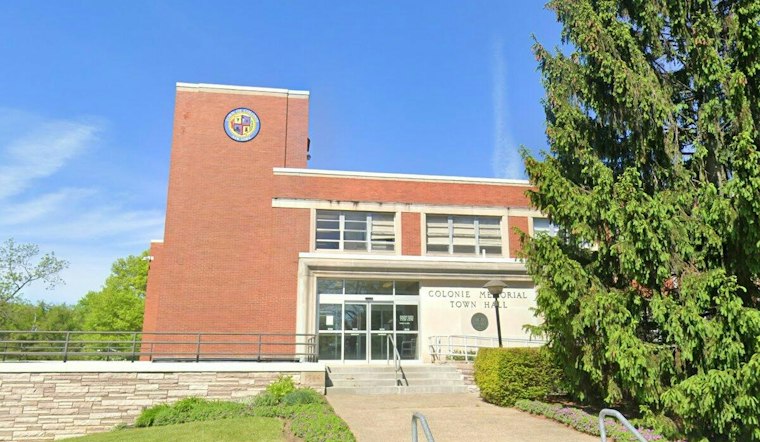
The Colonie Town Board unanimously approved a $138 million budget for 2027 on Thursday, delivering what Supervisor Peter G. Crummey called the town's first property tax decrease in three decades. A homeowner with a home assessed at the town's median value of $352,300 is projected to save $14.81 a year, or $1.23 a month, while water district users will see a 4% rate cut, paying $4.80 per 1,000 gallons next year.
A Modest Cut, A Big Milestone
The final plan differed from the preliminary budget Supervisor Peter G. Crummey presented October 1 by $106,700, following a correction to town court positions and salaries. Officials said the added amount would be funded through a 0.3% increase in budgeted sales tax. The board voted after a public hearing, according to The Daily Gazette.
Acting Comptroller Christopher Kelsey said the roughly $8 million increase over the town’s $129 million 2026 budget reflects inflation, union-contract wage increases, higher health insurance premiums and larger state retirement contributions. He said spending growth remains below both inflation and the state property tax cap. Kelsey also credited Crummey’s health insurance negotiations with limiting the rate increase to 4.91%.
Fund Balance Pays for the Tax Break
The budget uses $2.8 million from the town’s fund balance, which Kelsey said stands at about $15 million, to support the tax decrease. A policy adopted in February 2023 sets aside 5% of projected expenses annually; Kelsey said the resulting reserve exceeds the state comptroller’s recommendation. He said the town chose to return some of the funds to taxpayers rather than raise taxes. Crummey called the move taxpayer relief and said fiscal discipline need not prevent progress.
Fifteen residents spoke before the public hearing closed at 8:30 p.m. Thursday, according to The Daily Gazette. Two praised the town’s fiscal management, while two asked officials to hold budget workshops when new spending plans are issued. The board approved the budget immediately after public comments, without further discussion.
Residents Push Back on Water Rates, Debt and Fixed Costs
Residents also raised concerns about the trade-offs behind the plan. Joseph Petracca questioned reducing water rates while infrastructure needs repairs; Dr. Kevin Bronner urged officials to monitor electricity and gas costs; Daniel Hornick questioned rising debt service; and George Goodwin challenged the use of rainy-day funds to balance the budget.
Kelsey defended the town’s borrowing, using a $10,000 lawnmower as an example of a small purchase he said the town was not financing with debt. He referred to the use of long-term bonds, including a 30-year bond intended to spread costs over more time and households. The budget also comes after the town ended a $235,000 grant to the Colonie Senior Service Center in January 2026. The independent nonprofit supports town senior services; the grant had provided roughly $108,000 for transportation, with the remainder for meals.
What the Tax and Water Figures Show
The reported $14.81 reduction is a projection for the town property tax on a home assessed at $352,300. The figures in this account do not provide a breakdown of a homeowner’s total property-tax bill or the adopted town tax rate and levy, so they do not show what share of the total bill the town controls. Historical context is limited: the Office of the New York State Comptroller’s 2013 fiscal profile of Colonie noted a series of property-tax increases, including a one-time tax in 2009; that history does not establish a pattern for the years since. The town’s 2026 water-rate schedule listed metered charges of $5.00 per 1,000 gallons inside the district and $7.70 outside it, underscoring that rates vary by service area. The town says its Division of Latham Water maintains water mains and valves, but its description does not identify a specific repair project tied to the 2027 rate change, according to the Town of Colonie.
How Colonie Compares to Its Neighbors
A proposed 42% tax increase in Schenectady points in the opposite direction, though it is not a direct measure of Colonie’s tax burden.
Colonie’s adopted 2026 budget totaled $129,303,597, a 3.68% increase over 2025, and raised the median homeowner’s general property tax bill by roughly $13.88, according to Citizen Portal. The 2027 decrease reverses that one-year increase, but the figures alone do not establish a longer-term pattern.





