

























































The Town of Colonie Emergency Medical Services Department has secured $4 million in federal funding for a five-year initiative aimed at expanding advanced trauma care and evaluating a coordinated regional blood program intended to make prehospital blood transfusions more accessible to crash victims across New York's Capital Region. The money will support what's being called the Capital Region Integrated Roadway Safety and Post-Crash Care Initiative, developed under the leadership of Colonie EMS Deputy Chief Robbie MacCue.
The funding comes from the U.S. Department of Transportation's Safe Streets and Roads for All program, according to NEWS10 ABC. The initiative will serve Albany, Saratoga, Schenectady, Schoharie, Columbia, Fulton, Greene, Montgomery, and Rensselaer counties, bringing together EMS agencies, healthcare providers, law enforcement, transportation planners, and other public safety partners with the goal of improving emergency response capabilities and reducing preventable deaths and serious injuries following motor vehicle crashes, per the same report.
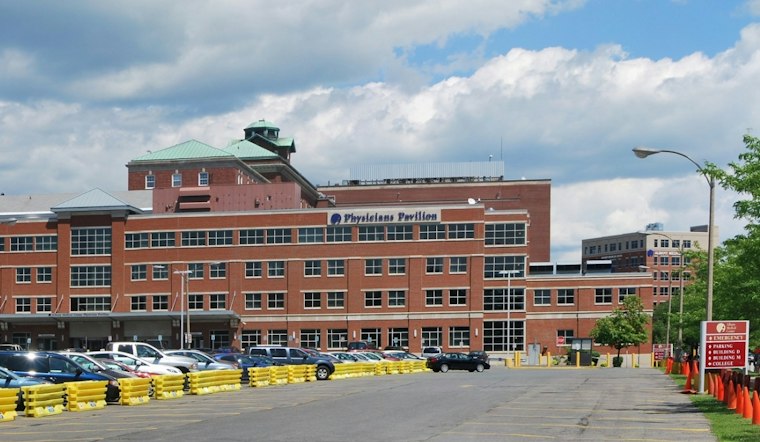
Chief among the initiative's priorities is evaluating a coordinated regional blood program intended to make prehospital blood transfusions more accessible. Prehospital blood transfusions allow specially trained paramedics to treat life-threatening blood loss before a patient reaches a hospital. Albany Medical Center's blood bank and its Division of Prehospital and Emergency Medical Services are partnering on the effort, alongside a regional emergency medical organization, the station's report states. Albany Medical Center EMS physicians are expected to provide specialized clinical expertise, consultation, and support for critically injured patients as the project evaluates building a coordinated regional blood program.
Why Blood on the Roadside Can Save Lives
The push toward field transfusions reflects a growing body of clinical evidence. A prehospital blood transfusion coalition guideline published in Trauma Surgery & Acute Care Open supports early resuscitation with blood products for patients experiencing hemorrhagic shock, regardless of its cause, though the guideline cautions that such programs require careful planning, appropriate training, quality control measures, adherence to regulations, close physician medical oversight, and coordination with regional blood suppliers.
Separate research cited by the federal EMS.gov office suggests the stakes are high: trauma patients who received whole blood in the field were four times more likely to survive than those who did not, according to the agency. A snippet from a study hosted on PMC similarly indicates that early blood administration by EMS crews to patients suffering from hemorrhagic shock improves outcomes, though that particular finding carries lower confidence in the available research.
Technology and Community Paramedicine Also on the Table
Beyond blood transfusions, the initiative will explore the expansion of physician-supported advanced prehospital care and evaluate technologies meant to improve responder safety, communication, and coordination. Those technologies under consideration include systems that alert motorists to approaching emergency vehicles, enhanced information sharing between dispatch centers and responders, and secure access to critical patient information, per NEWS10 ABC's reporting.
The initiative also aims to expand connections among EMS agencies, hospitals, and health information exchanges, which organizers say would support more informed clinical decisions and continuity of care. Community paramedicine and mobile integrated healthcare programs are also part of the plan, intended to help medically vulnerable residents access coordinated care, reduce preventable emergencies, and preserve ambulance availability for time-sensitive calls.
On the roadway-safety side, the project will analyze crash data to identify opportunities to reduce roadway risks and evaluate interventions to improve safety for motorists, emergency responders, and communities alike. Robbie MacCue said the federal investment recognizes EMS as essential infrastructure and that expanded regional capabilities could prevent deaths in the Capital Region. MacCue said Colonie paramedics protect roadways and deliver lifesaving care when minutes matter.
Building on an Earlier Roadway Safety Grant
This new initiative builds on a previous $2.4 million federal Safe Streets for All grant, with past partners including Guilderland EMS and Clifton Park-Halfmoon EMS. That earlier award, announced by Colonie EMS in December 2023, funded a Responder & Patient Safety Improvement Project done in partnership with the Colonie Police Department and the bordering Town of Guilderland EMS Department and Clifton Park Halfmoon Emergency Corps — agencies that together said they respond to more than 30 miles of high-speed roadways, including sections of the I-87 Northway, I-90, State Route 7, and I-787. Colonie EMS has said it responds to more than 14,000 emergency 911 calls annually.
That earlier project also explored systems for alerting drivers about nearby emergency vehicles at accident scenes and a platform for accessing specialized health registries. Local coverage of the grant has varied on its exact dollar figure: CBS6 Albany reported the federal grant for the four-community road-safety pilot was $2.3 million, with the state Assembly providing $650,000 to meet a required 20% state match, while EMS1 reported the same effort secured $2.4 million in SS4A funding for work including vehicle-alert systems, prehospital health information exchange, and groundwork for whole blood deployment. The available reporting does not clarify whether the two figures describe the same award or account for the discrepancy.
CBS6 Albany also reported that the four communities involved in that earlier pilot saw 118 roadway fatalities over the past decade across the same 30 miles of high-speed roads, including sections of the Northway, I-90, I-787, and Route 7. New York's traffic-injury toll is a long-documented problem statewide: the New York State Department of Health has described motor vehicle traffic injuries as the leading cause of injury-related death, the second-leading cause of injury-related hospitalizations, and the third-leading cause of injury-related emergency department visits statewide.




