

























































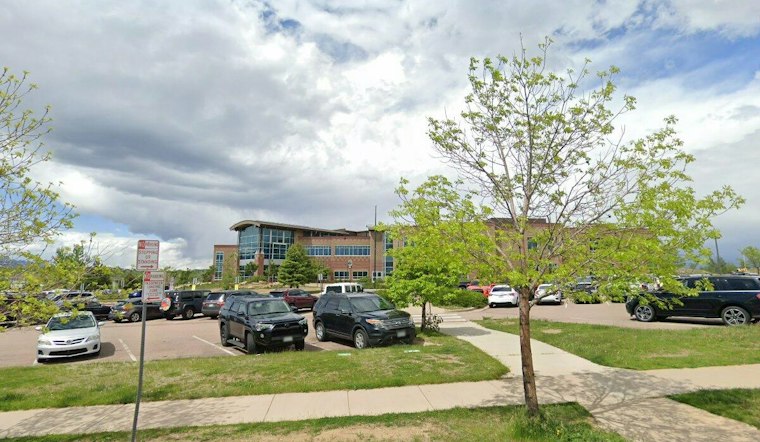
A patch of asphalt that used to be a basketball court at Mountain Vista Community School became the site of a groundbreaking Thursday for a village of tiny homes meant to help Harrison School District 2 teachers afford to live in the community where they work. The project, called Wendy's Village, is planned to include 40 compact one-bedroom units built as 20 duplexes on a single acre in southeast Colorado Springs. Organizers say the homes could begin welcoming teachers as early as next September.
According to the Colorado Springs Gazette, Shelley Jensen, founder and CEO of We Fortify, said she is still waiting on environmental study clearance before earthmoving, infrastructure work and utility-line installation can begin, and she expects those results within two weeks. We Fortify, which Jensen founded in 2019, launched a fundraising drive in 2024 to raise $6.2 million for the project, though the Gazette reports the village still requires $10.5 million in total funding to reach completion, with a few financing options still pending.
Other outlets covering the groundbreaking have reported differing cost figures for the project. FOX21 News put the price tag at $6 million, while KOAA quoted Jensen estimating a village like this runs about $6.2 million; KRDO reported an expected cost of $10.6 million, and KBTX described it as a $6.5 million project. The supplied reporting does not reconcile those numbers into a single confirmed budget.
What the Homes Will Look Like
Each unit will measure 352 square feet, per the Gazette, with room for a full-size bed and dresser, electric heat and air conditioning, a washer and dryer, appliances and a pullout sofa. Some of the duplexes will be stick-built against a street-facing berm, while others will be modular units constructed off-site and moved to the property, according to the same account. Colarelli Construction, the project's general contractor, describes the plan on its website as forty 352-square-foot duplexes on a one-acre parcel at one of the district's school grounds.
The village is also designed to include a community center, meeting space and raised garden beds, the Gazette reports. Leases will reportedly be renewable annually for up to three years, giving teachers a window to save money before eventually moving on. FOX21 separately reported that once Wendy's Village is financially stable, its net revenue is intended to support a local nonprofit's other housing programs for young adults experiencing homelessness or housing instability.
Rent, Eligibility and a Name With Meaning
The Gazette's reporting states that Wendy's Village rents will cost under $1,000 per month, with the exact amount still undetermined. FOX21 and KOAA, however, both reported a figure of $825 a month for residents. The village will target entry-level Harrison teachers who meet an income cap; the district sets a starting salary of $50,500 for a first-year teacher with a bachelor's degree, according to the Gazette.
Wendy's Village was named after Harrison School District 2 Superintendent Wendy Birhanzel, who told the Gazette that naming the village was the Board of Education's decision, not hers. Birhanzel also said a district survey found interest in affordable housing running at four times the number of units the district could offer. Jensen said Colorado has a workforce-housing problem affecting schools, recruitment, retention and community health, and called Wendy's Village one solution to people being unable to afford homes in the communities they serve.
Funding From Donors, Credit Unions and Congress
Per the Gazette, the offices of Colorado Senators John Hickenlooper and Michael Bennet coordinated a $1 million congressional spending grant for the project. Dean Weidner, who created Weidner Field and Weidner Apartment Homes in Colorado Springs, contributed $500,000 before his death in March. Wings Credit Union, formerly named Ent, presented $1 million in August 2025 toward Working Fusion at Mill Street's operations, with funds also earmarked for future projects such as Wendy's Village.
Jensen estimates teacher rents at Wendy's Village will eventually help fund $180,000 to $220,000 a year in ongoing operations at Working Fusion at Mill Street, the Gazette reports. That program offers 18 tiny homes for young adults ages 18 to 25 leaving homelessness or facing unstable housing, along with education, job and trauma-therapy assistance. Since opening in January 2022, Working Fusion has helped 63 residents, according to Jensen, who estimates it has saved $950,000 in homelessness services. The Wendy's Village property also lies in an enterprise zone, where Colorado charitable donations of $250 or more qualify for a 25% state tax credit, per the Gazette's reporting.
A Statewide Affordability Squeeze
The need behind projects like Wendy's Village is rooted in broader numbers. A 2021 analysis from the Keystone Policy Center found that fewer than 20% of Colorado homes were valued at or below its district-specific affordability threshold for teachers, and identified Colorado Springs-area districts among the least affordable regions in the state. A 2022 report from The Colorado Sun put it starkly for this region: just 14% of homes were affordable to Colorado Springs educators earning the average teacher salary in their district. A more recent Colorado Sun report found teachers in some districts statewide spending more than 40% of their salaries on housing, well above what the report describes as the threshold of affordability.
Harrison D2 teachers often need roommates and public transportation to afford housing in Colorado Springs, according to the Gazette's reporting. Mary Catelyn Mabida, who teaches seventh-grade math at Mountain Vista Community School through an international exchange program and is from the Philippines, said Wendy's Village will reduce commuting stress, increase privacy and safety, and let teachers focus on their work. Rubby Ann Camu, an exchange teacher specializing in seventh-grade science, said every teacher deserves an affordable, dignified home where they feel safe and comfortable, adding that a home close to school is a gift of time and belonging.
How Other Districts Are Tackling the Same Problem
Harrison D2 isn't alone in trying to solve teacher housing costs with bricks and mortar. Widefield School District partnered with Pikes Peak Habitat for Humanity on a plan for 41 affordable homes, with 14 reserved for district employees, according to Colorado Public Radio. Unlike Wendy's Village's rental model, Widefield's homes are for purchase, with payments capped at 30% of family income. The same report noted that the Aspen School District built tiny homes for employees back in 2016 to address its own lack of affordable housing.
At the state level, the Colorado Sun has reported on a proposed $1.2 billion BETER program that would help school districts build rental housing for employees, prioritizing communities where educator rents are significantly out of reach. A separate rural mortgage pilot, folded into a law passed the previous year, would invest $50 million and is expected to offer mortgages around 3.5% with no down payment required. Organizers of Wendy's Village say the goal is to create a model other school districts and communities can replicate, per FOX21's reporting.





