

























































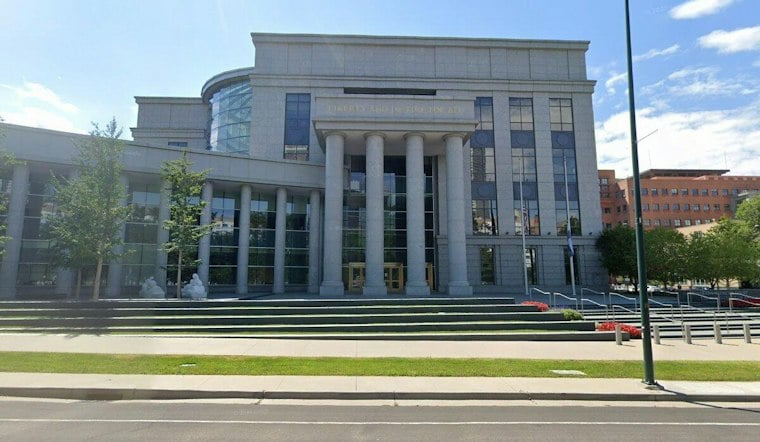
A 17-year-old facing delinquency charges tied to an alleged drugs-and-guns operation in Larimer County has won a fight over whether she’s entitled to her own day in court before a judge, even though a grand jury already weighed in on the broader case against adult co-defendants. The Colorado Supreme Court ruled Monday that the teen, identified in court records only as A.E.R., is legally entitled to a probable cause hearing on the charges against her regardless of what a grand jury found in the related prosecution.
A Case That Started With Adults, Not A.E.R.
The dispute traces back to April, when Larimer County prosecutors obtained a grand jury indictment against five adults allegedly involved in a criminal drugs-and-guns operation meant to benefit a street gang, according to Colorado Politics. That same indictment found that probable cause existed for offenses allegedly committed by A.E.R., then 17 years old, even though she herself was never indicted by the grand jury and, by law, could not have been.
The juvenile petition accused A.E.R. of participating in an alleged enterprise involving organized crime, marijuana-concentrate distribution and money laundering, and designated her an aggravated juvenile offender. The Supreme Court said the charges included class 2 and class 3 felonies, the categories that trigger a preliminary hearing right when a juvenile properly requests one. The petition arose from the same alleged enterprise as charges against five adults and two other juveniles, as detailed in the court’s opinion.
Both sides reportedly agreed early on that A.E.R. was entitled to a preliminary hearing of her own, the outlet’s report notes. But District Court Judge Joseph D. Findley ruled she wasn’t entitled to that hearing after all, reasoning that, as he put it, “the purpose of a preliminary hearing has been accomplished by the grand jury indictment.”
Dueling Arguments Over What the Grand Jury Actually Decided
Prosecutors argued that the grand jury’s finding, reached through what they called an independent but equally reliable mechanism, meant A.E.R. didn’t need a separate preliminary hearing. A.E.R.’s attorney pushed back, arguing that juvenile delinquency proceedings cannot be initiated by a grand jury indictment under the rules and procedures governing juvenile cases. When Findley sided with prosecutors, A.E.R.’s defense appealed to the Colorado Supreme Court.
The high court sided with the teen. Writing for the court, Justice Richard L. Gabriel said A.E.R. was not “a party” to the grand jury proceeding, so the probable cause determination from that process did not carry over to her. The justices also pointed to a basic legal fact underlying the whole dispute: A.E.R. was not indicted by the grand jury, nor, by law, could she have been.
What the Ruling Means Under State Law
The court held that state law grants a juvenile in a delinquency proceeding the statutory right to a preliminary hearing, when properly requested, upon being charged with a delinquent act that constitutes a class 1, 2, or 3 felony. According to the court’s reasoning as reported, A.E.R. met those statutory requirements, meaning the hearing entitlement applies no matter what the grand jury concluded about her adult co-defendants.
A preliminary hearing is not a trial on whether a juvenile committed the alleged offenses. Colorado law gives the prosecution the burden of showing probable cause; the juvenile may cross-examine prosecution witnesses and present evidence. If the judge finds probable cause, the case proceeds to an adjudicatory trial; if not, the delinquency petition must be dismissed. Those procedures are set out in Colorado’s Children’s Code.
The decision effectively confirms that a juvenile defendant’s procedural rights don’t bend just because an adult case against alleged co-defendants moved forward through a different legal mechanism. For A.E.R., it means the probable cause hearing that was initially promised to her, then taken away by Findley’s ruling, is back on the table under the Colorado Supreme Court’s read of the law.
The Supreme Court heard the dispute through an extraordinary procedure known as a C.A.R. 21 original proceeding, rather than waiting for a conventional appeal. The justices said the question could affect other juveniles charged in cases involving adult co-defendants, and that ordinary review after trial would come too late because the hearing right would then be moot. The opinion also warned that, without a preliminary hearing, juveniles might improperly remain in custody until trial; the court sent the case back to the district court for further proceedings.





