

























































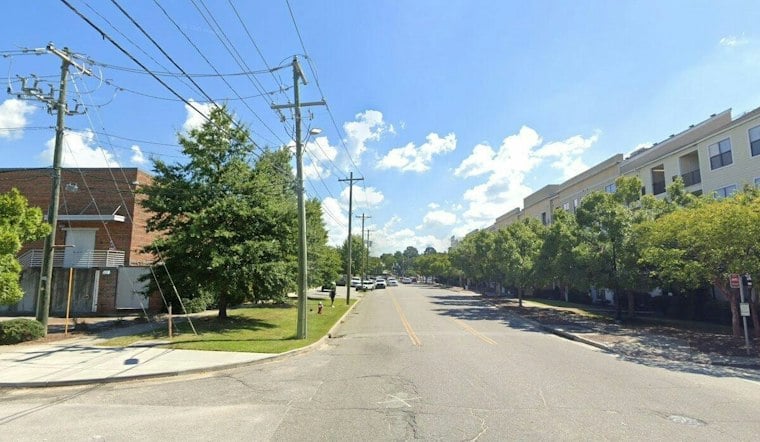
Decades of waiting for trains to clear Assembly Street may finally be nearing an end. At a public hearing in Columbia on Wednesday, the City of Columbia and the South Carolina Department of Transportation laid out new details of a plan to lower Assembly Street roughly 18 feet and build rail bridges over it, eliminating 15 at-grade railroad crossings that have long snarled traffic south of downtown.
The project is estimated to cost approximately $330 million, according to the project estimate cited in a report from WLTX, which first detailed Wednesday's hearing. That figure differs from earlier public estimates: in January 2025, state transportation leaders pegged the total cost between $265 million and $305 million, according to South Carolina Public Radio, while a December 2024 estimate from the SC Daily Gazette put construction costs between $275 million and $300 million depending on final design and timing. It is not clear from available records which estimate has formally superseded the others.
City officials have secured several grants to offset the cost and reduce the burden on taxpayers, per the same WLTX report. Among them was a $204.2 million federal grant that U.S. Rep. Jim Clyburn announced in January 2025, which at the time brought the project's total raised funding to roughly $279 million, South Carolina Public Radio reported. The money traces back to a 2023 award from the Federal Railroad Crossing Elimination Grant Program, according to the National League of Cities.
A Trench Residents Say Is Decades Overdue
For James Hilliard, who has lived on Whaley Street for decades, the project is personal. He has experienced traffic delays firsthand after trains stopped on Assembly Street, and he told WLTX the fix is long overdue. Still, he was clear-eyed about what it would and would not solve: the project will not stop traffic congestion altogether, he said, but it will stop train-related congestion when a train is actually present.
William Yandle echoed that sentiment, telling WLTX that the community has needed these improvements for decades — specifically 25 to 30 years, he said, since the original rail trench was dug and other lines were buried. Yandle also framed the project as essential to Columbia's broader growth, not just a traffic fix for one corridor.
Their frustration tracks with a congestion problem officials have acknowledged for years. A December 2025 report from the Carolina News and Reporter described converging rail lines backing up traffic on a daily basis, with delays sometimes stretching more than an hour. SCDOT has said the study area covering Assembly Street and nearby streets has been under active review since 2018, while officials have discussed separating the road from the railroad since the 1970s, according to the SC Daily Gazette.
Bridges, Buried Rainwater, and a Flooding Question
The engineering centerpiece of the plan is straightforward on paper: lower Assembly Street and raise the rail lines above it on new bridges, including structures over Whaley Street and Catawba Street. The National League of Cities' report on the project describes the same approach — lowering the road while elevating the rail lines to separate vehicle and train traffic for good.
SCDOT's Joey McIntyre described plans for a sump pump lift station that would capture rainwater from the lowered roadway and pump it into Rocky Branch Creek, south of the project site.
Construction Timeline Still Taking Shape
WLTX reports the City of Columbia anticipates construction beginning in 2028, with the project expected to take approximately three years to complete. That timeline is notably longer than earlier projections: a report from Railway Track and Structures had previously put construction at 18 to 24 months.
Design planning has also shifted over time. A December 2024 SC Daily Gazette report said officials were weighing three design options, including whether to lower Assembly Street or raise it over the railway, with one option expected to be selected by the end of that January, per The Post and Courier. A year earlier, in 2020, SCDOT had invited public comment on project alternatives, with a stated goal of reducing congestion from train crossings along and near Assembly Street south of downtown, according to records from the South Carolina Department of Transportation.
Earlier concepts for the broader corridor also included a proposed Huger Street Connector — a new road with a bridge over the existing rail line — according to the Carolina News and Reporter's account of prior project discussions. Columbia Mayor Daniel Rickenmann had previously estimated rail realignment was about five years away, that same report noted, though the timeline described at Wednesday's hearing suggests the project has continued to evolve since then.
For now, residents who want to weigh in on the current plans have a window to do so. WLTX reports that the public can submit feedback online through November 19.




