

























































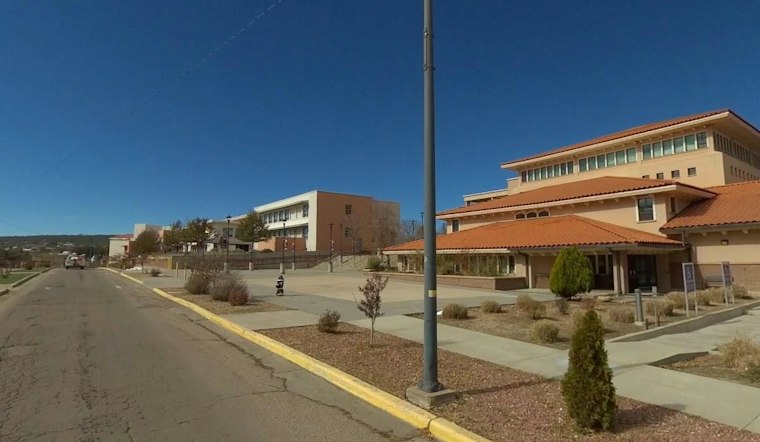
A feasibility study commissioned by New Mexico's Higher Education Department has put a blunt question on the table: should Luna Community College, the only community college serving northeastern New Mexico, continue operating on its own? The June study recommends Luna become a branch campus of or partner with another institution, and it names New Mexico Highlands University — located just three miles away in Las Vegas, New Mexico — as the most direct potential transition partner.
The study, reported by the Santa Fe New Mexican, found that Luna's eight-year credential completion or transfer rate had fallen to 27%, and that 22 of the college's 42 academic programs enroll 10 students or fewer. The Higher Education Department gave the consulting firm MGT just 30 days to complete the review. According to the study, governance problems represent the biggest risk to Luna's continued independence, and shared services alone will not resolve the college's deeper challenges around program scale, enrollment, student success and long-term financial sustainability, as reported by the Santa Fe New Mexican.
Luna enrolls 228 full-time students and 495 part-time students, and offers programs ranging from nursing to beekeeping to wildfire resiliency training — the latter a reflection of the region's history with the Hermits Peak/Calf Canyon Fire in 2022, per the Santa Fe New Mexican. The college describes itself as the only community college in northeastern New Mexico, a point documented in its own Institutional Fact Book, which also notes that Luna's locations are administered and governed by the college and its elected Board of Trustees.
Audits, Monitoring and a New President's Case for Progress
Much of the governance concern traces back to Luna's financial reporting record. The college submitted its fiscal year 2022 and 2023 audits more than 580 days late, and had not completed its 2024 and 2025 audits by the time the study was written, according to the Santa Fe New Mexican. Luna president Carol Linder has pushed back on the idea that the college hasn't changed, saying the study recognized Luna's challenges but that the college had made choices over the prior four years to improve, per the Santa Fe New Mexican.
Linder has a long history with both schools: she taught biology at Highlands before joining Luna in 2021, became interim president in June 2024, and was named president in January 2025. Luna's Board of Trustees voted during a special meeting on April 2, 2026, to extend her contract through April 25, 2027, according to a Luna Community College news release. That same release says the college has completed two prior-year audits and is advancing ongoing reviews toward full compliance, and that it was removed from monitoring status following a Higher Learning Commission focused visit in November 2025.
The college has also pointed to enrollment gains under Linder's leadership: growth of 3% in Fall 2025 and 8% in Spring 2026 over the prior year, plus a 45% increase in award completion over the past five years, the release states. Luna conferred 106 awards in 2024, including 57 associate degrees and 49 certificates. Luna is also financially independent, carrying no debt and maintaining a fund balance, per the Santa Fe New Mexican.
Why Highlands Is the Name on the Table
The feasibility study's recommendation lands at an awkward moment for Highlands, which has experienced firings of its president, provost, multiple vice presidents and its men's basketball coach in recent months, and which currently has an ongoing forensic audit, according to the Santa Fe New Mexican. The study conditioned any Highlands transition on the university first developing a strong plan for sustainable leadership. Highlands currently offers few awards below the baccalaureate level, a structural gap that would shape how a Luna partnership might work.
Still, Highlands interim president Kimberly Blea told the Santa Fe New Mexican that the university is interested in exploring a formal partnership to benefit students, employees and communities, and suggested a transition could save money by eliminating duplicated services such as registrars and financial aid offices. The two institutions aren't strangers to collaboration — Highlands previously let Luna students use its Student Health Center under a pilot agreement for the spring 2019 semester, according to New Mexico Highlands University, and an earlier housing arrangement let Luna reserve 65 beds at Highlands in the fall, as reported by the Las Vegas Optic.
Higher Education Department spokesperson Auriella Valles told the Santa Fe New Mexican in an email that the department agrees with the study's findings and recommendation, while also noting that Luna's Board of Trustees and institutional leadership retain direct authority over programs and enrollment strategies. Legislative Finance Committee spokesperson Helen Gaussoin said lawmakers might discuss Luna during the state's higher education budget hearing scheduled for December, per the Santa Fe New Mexican.
Who Luna Serves — and What a Merger Could Mean
The study also emphasized who stands to be affected by any transition. More than half of Luna's students receive Pell Grants, and the student body is often first-generation, rural, economically constrained, or not yet ready for a large institution, according to the study as cited by the Santa Fe New Mexican. Those characteristics are central to why Luna's advocates argue the college's small scale and local governance matter, even as state officials raise efficiency concerns.
Luna is also part of a separate, already-operating collaboration: the Collaborative for Higher Education Shared Services, or CHESS, which includes six New Mexico colleges — among them Santa Fe Community College and Central New Mexico Community College. According to CHESS, all six member institutions, including Luna, are live on Workday technologies for finance, human resources and payroll, and members share payroll services while planning to share financial aid and reporting services as well. A CHESS case study describes the model as one that preserves institutional independence but pools capacity, with each member college's president holding one equal vote in governance — a structure explicitly different from an absorption or branch-campus arrangement.
Luna is moving from a 26-year-old legacy student information system to Workday as part of that consortium, with the new system set to go live in September 2027; the New Mexico Legislature provided $18.6 million to complete the project, according to the Santa Fe New Mexican. CHESS's own case study reports a 52% reduction in audit findings across member colleges and says its shared systems and services affect roughly 48,000 students and 7,000 employees statewide, as reported by Community College Daily.
Comparisons to past New Mexico restructuring efforts are inevitable, though the circumstances differ. In 2020, New Mexico State University said three of its system's community colleges would operate as branch campuses under central leadership rather than as stand-alone institutions, a move the university said was aimed at saving $1 million, according to Inside Higher Ed. Whether Luna and Highlands would follow a similar path, and what legal mechanism might govern it, remains unresolved.



