

























































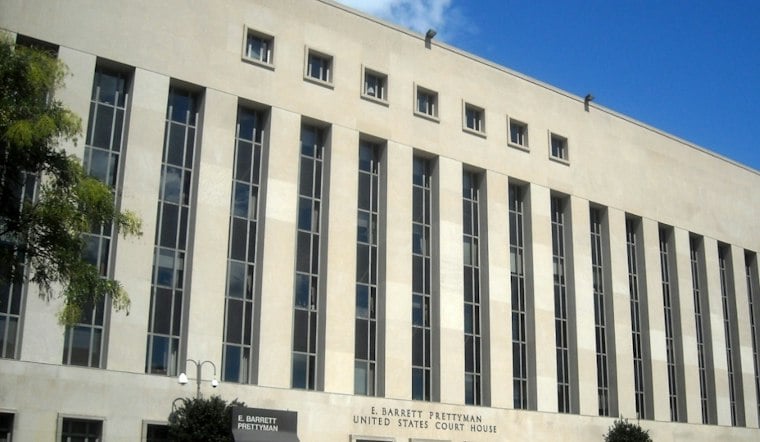
A federal judge in Washington has dismissed a lawsuit challenging the first-ever national-security exemption issued under the Endangered Species Act, a ruling that clears a legal obstacle for oil and gas activity across the Gulf of America. The U.S. District Court for the District of Columbia tossed the case earlier this week, according to the Justice Department, finding that the challenge did not belong before it at all.
The Justice Department said the dismissal came in a lawsuit that had challenged the first national security exemption ever issued pursuant to the Endangered Species Act, according to U.S. Department of Justice. As reported by Bloomberg Law, Judge Rudolph Contreras dismissed the Natural Resources Defense Council's suit, ruling that the challenge needed to be filed in the appropriate federal appeals court rather than his district court.
The court held that it lacked jurisdiction over the challenge, and the ruling rested on the idea that Congress had directed challenges to the Endangered Species Committee's exemption decisions to federal courts of appeals rather than district courts. The exemption itself traces back to a meeting the Endangered Species Committee held on March 31, 2026, in Washington, DC, to address a finding from the Secretary of War that it was necessary for reasons of national security to exempt Gulf of America oil and gas activities, according to a notice in the Federal Register.
How the Exemption Came to Be
At that March 31 meeting, the committee — made up of Trump administration officials — voted unanimously to exempt all Gulf of America oil and gas activities from the Endangered Species Act, the Justice Department said in June. NPR reported the same vote in real time, describing it as a committee of Trump administration officials voting unanimously to exempt the oil and gas industry in the Gulf of Mexico from the law's requirements. The provision allowing a national-security exemption had never been invoked before that meeting, per a report from WBRZ.
The stakes for wildlife are steep. Scientists estimate that only about 51 Rice's whales remain on Earth, and all of them live in Gulf of Mexico waters, the same NPR report noted. NOAA had previously determined that energy companies could take steps to reduce risks to Rice's whales and other Gulf species, including slowing boats down near whale habitat, but the national-security exemption set those considerations aside for the oil and gas activities it covers.
A Second Defeat for Challengers
This week's dismissal was not the only recent legal setback for groups trying to block the exemption. In June, the U.S. District Court for the District of Maryland dismissed a separate lawsuit challenging the National Marine Fisheries Service's 2025 biological opinion and incidental take statement for Gulf oil and gas activities, with that court finding the case moot and ruling it lacked jurisdiction, according to the same Justice Department announcement.
There was also an earlier skirmish before the committee ever voted. The Center for Biological Diversity sued Interior Secretary Doug Burgum on March 18, arguing that the government had violated the law by failing to take proper procedural steps or provide enough public information ahead of the committee meeting. Judge Contreras rejected that group's attempt to postpone the meeting, WBRZ reported at the time — a separate proceeding from the lawsuit dismissed this week over the exemption itself.
What It Means for Gulf Production
The Gulf of America remains a significant piece of the nation's domestic oil and gas output, and federal forecasts show little sign of that changing. The U.S. Energy Information Administration has forecast that crude oil production in the federal offshore Gulf of America will average 1.80 million barrels per day in 2025 and 1.81 million barrels per day in 2026, up from 1.77 million barrels per day in 2024. With this week's dismissal, the legal avenue that environmental groups had used to challenge the exemption directly in district court appears closed, leaving federal appeals courts as the venue Congress designated for such fights.




