

























































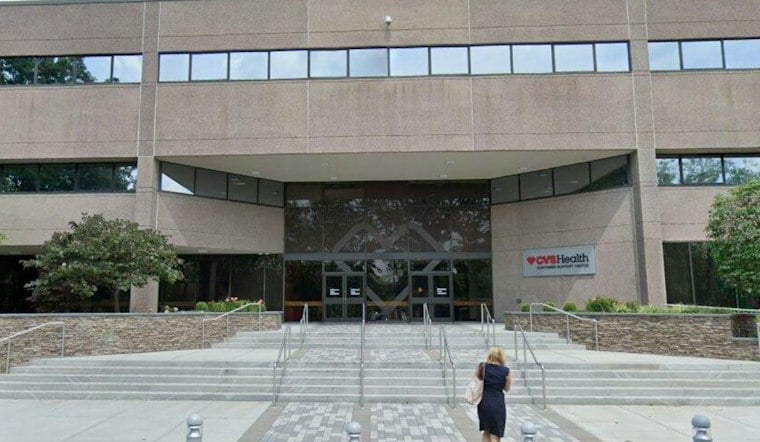
CVS Health announced on Wednesday that it intends to separate into two independent, publicly traded companies, unwinding a decades-long strategy of combining pharmacies, insurance and pharmacy benefit management under one roof. The split, expected to close in the first half of 2028, would break apart a business that traces its roots to a single Lowell, Massachusetts storefront opened in 1963.
According to CVS Health via PR Newswire, one resulting company — a healthcare solutions business — would comprise Aetna, CVS Caremark, CVS Specialty, Oak Street Health and Signify Health. The other, CVS Pharmacy, would hold roughly 9,000 CVS pharmacies, the mail pharmacy operation, MinuteClinic (including virtual care) and the Health100 technology services business. CVS Health shareholders are expected to own shares in both companies once the separation is complete, the company said.
David Joyner, currently chairman and chief executive of CVS Health, is set to become chairman and CEO of the healthcare solutions company, while Prem Shah, currently a CVS Health group president, is slated to become CEO of CVS Pharmacy, per the same release. CVS said the separation is intended to be structured as tax-free to CVS Health and its shareholders for U.S. federal income tax purposes, though the company frames that as its stated intention rather than a finalized tax determination.
A Massachusetts Storefront Grows Into a Conglomerate
The company's roots go back to a single shop selling health and beauty products that opened in Lowell in 1963; the name changed to CVS the following year, according to CVS Health's own corporate history. CVS was sold to Melville Corporation in 1969, and by 1972 it had nearly doubled in size by acquiring 84 Clinton Drug and Discount stores, the company says. As detailed by Reuters, Melville later launched a multi-year reorganization in the 1990s, selling or spinning off most of its other businesses as CVS became its core operation, and the parent company was eventually renamed CVS Corp.
From there, the growth accelerated through acquisition after acquisition. CVS bought Revco D.S. for $2.8 billion in 1997, becoming the second-largest U.S. drugstore chain by revenue, Reuters reports. It picked up Eckerd's drugstores and mail-order pharmacy business from J.C. Penney for $2.15 billion in 2004, then acquired MinuteClinic and bought thousands of Sav-on and Osco drugstores from Albertsons in 2006. The 2007 purchase of Caremark for $26.5 billion, forming CVS Caremark, established the company as a major force in pharmacy benefit management, according to CVS Health's history.
The Aetna Bet and the Push Into Insurance
Between 2014 and 2015, CVS kept expanding, acquiring Coram for $2.1 billion, long-term care pharmacy company Omnicare for $12.9 billion, Navarro Discount Pharmacy, and all of Target's 1,600 pharmacies and clinics, per Reuters and CVS Health's own history. Then in 2017, the company agreed to acquire health insurer Aetna in a $69 billion deal, betting that combining insurance, pharmacy and healthcare services could help curb soaring medical costs, Reuters reported. The acquisition closed in 2018 at a final price of about $78 billion, according to Reuters, adding health insurance to CVS's portfolio for the first time.
Karen Lynch succeeded Larry Merlo as president and CEO in 2021. The following year, CVS agreed to acquire Signify Health, a home healthcare services company, for about $8 billion in cash, expanding its ability to deliver care inside patients' homes. In 2023, it acquired primary-care operator Oak Street Health for $9.5 billion and had CVS Caremark launch TrueCost, a pharmacy benefit pricing model designed to pass negotiated drug discounts to clients and increase prescription-cost transparency, per Reuters.
Cracks Began Showing Before the Breakup Plan
By 2024, Reuters was already reporting that CVS was exploring options including separating its retail and insurance businesses, and the company replaced CEO Karen Lynch with company veteran David Joyner that year. Through 2024 and 2025, CVS cut costs as it grappled with rising medical costs in its insurance business, closed stores, exited certain markets and reshuffled senior management, according to Reuters. CVS Health announced 271 retail store closures for 2025, and it exited the states where Aetna operated on the public insurance exchanges effective January 2026.
As of September 30, 2026, CVS Health reported approximately 9,000 retail locations, more than 1,000 walk-in and primary care clinics, and a pharmacy benefits manager serving approximately 87 million plan members. That scale is now set to be divided between the two new companies once the split is complete.
A Shifting Political and Competitive Landscape
The reported breakup arrives amid a political climate that has turned decidedly hostile to companies owning an insurer, a pharmacy benefit manager and pharmacies all at once, according to Insurance Business. The pharmacy sector has also faced broader strain, with changing consumer habits and industry-wide challenges that have shuttered other major chains like Rite Aid, as The New York Times reported. UnitedHealth and Cigna, like CVS, each encompass a major insurer, a giant pharmacy benefit manager and a mail-order pharmacy, the Times noted, suggesting CVS's move could reverberate across the industry.
CVS executives have framed the split as a way to sharpen focus rather than retreat. The company said the separation would allow the two companies to pursue a focused strategic agenda and gain greater ability to innovate, adopt technology and increase efficiency, according to CNBC. The announcement came alongside strong financial results: CVS reported third-quarter 2026 revenue of $108.4 billion, up 5.4% year over year, and raised its full-year adjusted earnings-per-share guidance to at least $8.20, from a prior range of $7.90 to $8.10, per Investing.com.
For now, the roughly $117 billion business Reuters describes CVS as planning to break up remains intact, with the separation subject to customary conditions and not expected to close until the first half of 2028. Shareholders, employees and patients who rely on CVS's pharmacies, clinics and insurance plans will be watching to see how a company built through more than six decades of acquisitions manages to come apart.




