

























































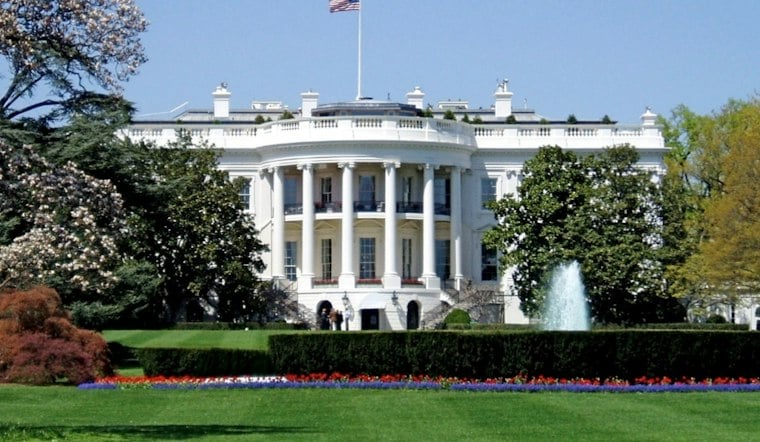
Dallas resident Don Daud left on foot for Washington, D.C., on Nov. 1, planning more than 1,400 miles in 40 days if he stays on schedule. He walks from sunrise to sunset, and he has said he will not stop until he reaches the White House.
The Dallas Observer reported Friday that, at the time of its account, Daud had already walked more than 430 miles and was documenting the journey as he went.
Two Weeks of Planning, Then the Road
Daud said he planned the walk for about two weeks and chose November so he would not be out in summer heat or extreme cold. The published shape of the trip is plain: more than 1,400 miles, 40 days if the schedule holds, and days that run from sunrise to sunset.
That is the method he has described. The finish line is not a midpoint. He told the Observer he will keep walking until he reaches the White House.
"I'm hoping that by the time I arrive, there's enough awareness to put pressure on Congress," he said. The problem he attached to that hope was specific: too many people he talks to are rationing medicine or fighting surprise bills and insurance denials.
A Contract in Richardson, an Email in Dallas
The long walk followed a shorter civic ask. On Oct. 5, at a Richardson City Council work session, Daud spoke about BetterBuy Rx and encouraged the city to reconsider the pharmacy benefit manager for CORPlan, its self-funded health insurance plan. He also asked that the pharmacy benefit manager contract be posted publicly, according to an account of the session.
A self-funded plan pays its own claims, so the contract with the company managing the pharmacy benefit is not a side document. It is where the city decides who sits between the plan and the prescription. Daud was not, on that record, asking Richardson to invent a new benefit. He was asking for another look at the middleman and a public copy of the deal.
Dallas was a separate request, and his account of it is colder. He told the Observer he emailed city leaders about prescription drug prices for city employees. "I sent them emails afterward, and they didn't even bother to lift a finger," he said.
An Index Can Fall While a Bill Climbs
The national price tape is not moving the way a sidewalk conversation might suggest. Prescription drug prices fell 3.1% over the 12 months ending in July, the steepest annual decline in more than six decades, Becker's Hospital Review reported from the Bureau of Labor Statistics' Consumer Price Index.
Vizient, in that same account, projected pharmaceutical prices would rise 3.54% in 2027, 0.7 percentage points above its winter forecast. A steep one-year drop and a higher forecast for next year can both be true. Neither one is a copay.
A May 2025 KFF poll, as described by the Tampa Bay Observer, found that 21% of U.S. adults had not filled a prescription because of cost in the prior 12 months, and 15% had cut pills or skipped doses. That is the household version of a market that can post a decline and still leave people short.
Closer to Daud's starting line, North Texas retiree Linda Clark told NBCDFW that a medication which cost her nothing on an employer plan now costs just over $1,500 for a one-month supply after she retired and moved to Medicare. The drug did not retire. The coverage did.
Maryland Matters reported Monday that U.S. health spending reached nearly $5.3 trillion in 2024, up from $3 trillion a decade earlier, and that costs are projected to reach 20% of gross domestic product by 2032. In that reporting, a District Heights resident tied a $10,000 deductible and a $659 monthly premium to a plain fear: "I am just afraid to even go to the doctor." A travel nurse said the hospital that treated his stroke while he was uninsured sent a bill for $93,000.
Medicaid's Ledger Is a Different Bill
KFF estimates net Medicaid prescription-drug spending rose 46%, from $31 billion in fiscal 2019 to $46 billion in fiscal 2024. The script count barely moved. Prescriptions paid for increased 2%, from 734 million to 751 million, while prescriptions per enrollee fell 12%.
Rebates do a large share of the quiet work. KFF says they reduce Medicaid spending on prescription drugs by more than half, and that enrollees are typically protected from high out-of-pocket prescription costs. That protection is not the bargain Clark described after moving to Medicare, and it is not the surprise bill or denial Daud says he keeps hearing about. Same medicine aisle, different payer, different exposure.
The Centers for Medicare & Medicaid Services has pointed to one 2026 tool on the Medicaid side. In a March announcement, CMS said a drug payment model launching this year would allow it to negotiate lower prices with participating manufacturers. States that adopt the model, the agency said, would use uniform, transparent coverage criteria. Participating and adopting are the operative words. A negotiation model is not a filled prescription.
December, If the Pace Holds
A 40-day schedule that began Nov. 1 points toward December, if Daud keeps it. More than 430 miles are already in the Observer's account. The larger share of the planned distance is still ahead of him, and he has said the walking stops at the White House.
What a North Texas reader can check without waiting for that arrival is smaller. Richardson has a self-funded plan whose pharmacy benefit manager he wants reconsidered, and a contract he wants posted. Dallas has an email about employee drug prices that, by his account, drew no reply. A 3.1% national decline can sit on the same page as a $1,500 monthly drug. Those are not the same number, and the walk is how he has chosen to carry the difference east.



