

























































Westwood Field, where the Dayton Marcos once played, is now marked by an open-air museum in Dayton’s Westwood neighborhood. The museum occupies four vacant lots north of West Third Street and opened with a celebration attended by more than 40 people.
The museum is off Lorenz Avenue, north of West Third Street, according to Dayton Daily News. Its features include a backstop, a concrete diamond, a walking track and five placards curving around an outfield wall that tell the story of the team and the field. The newspaper reports the site was developed with American Rescue Plan Act funds and support from Dayton city government, the Dayton Foundation, and the Glennon and Mathile family foundations.
The Dayton Daily News reported that Conscious Connect Community Development Corp. partnered on the project, with a goal of turning neglected spaces into a community asset for learning, gathering and celebrating Dayton history. The newspaper attributed to Karlos Marshall, the CDC’s co-founder and president, the view that Westwood Field was one of the original sites where the Marcos played and that the museum could serve as a catalytic investment in Westwood. Moses Mbeseha, the organization’s co-founder and co-executive director, also helped lead the effort, according to the report.
Building a Ballfield Into a Monument
Trotwood-based Display Dynamics Inc. served as general contractor, the Dayton Daily News reported. The newspaper also reported that Destinye Arnold, Conscious Connect’s director of strategic initiatives, said community members expected seniors to use the space heavily. Dave Claybrooks, president of the Westwood Collaborative Network, told the outlet that change had already arrived in Westwood.
A Team Born From a Hotel Name
The Dayton Marcos trace back to 1910, founded by Moses Moore, a Dayton real estate agent who owned the New Marco Hotel. Moore apparently named his team after that enterprise, according to negroleagues.org. The team set up shop at West Side Park, later renamed Westwood Field, the site notes.
The Marcos joined the Negro National League in June 1920, becoming part of a league that fielded eight teams that year as Major League Baseball remained segregated. Per Tom Archdeacon's reporting for daytondailynews.com, the Marcos had barnstormed across the Midwest as the only Black team in the Ohio-Indiana League for seven years before joining the Negro National League. Their first game at Westwood Field came on June 12, 1920, against the Chicago Giants, and the matchup drew 4,000 people to a field that only held 2,000, according to that same account. Dayton joined teams from Kansas City, St. Louis, Indianapolis, Detroit, Cincinnati and two from Chicago to form the league that year, and the Dayton Triangles played their first home football game roughly four months after the Marcos entered the league.
A Short But Storied League Run
The Marcos finished their initial Negro National League season with a 16-36 record. Contemporary accounts announced a sale to Columbus and rechristening as the Columbus Buckeyes, but negroleagues.org says later evidence indicates owner John Matthews continued operating the Marcos independently in Dayton. Accounts of the team's later league tenure differ: negroleagues.org describes the Marcos returning to independent play and winning the integrated Indiana-Ohio League championship in 1932 after leaving the NNL, while the Dayton Daily News sports reporting frames their path differently. Westwood Field itself, by then known as Sucher's Park, was sold for redevelopment in 1952, per negroleagues.org.
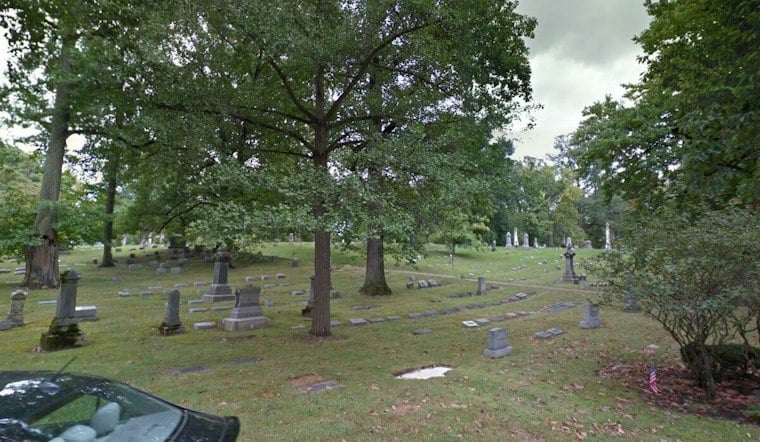
Among the figures tied to the team's history is W.G. Sloan, a Dayton Marcos southpaw pitcher who, according to Archdeacon's reporting, saved more than 300 people over three days following the March 1913 Great Flood. Sloan died in 1931 and lay in an unmarked grave at Woodland Cemetery for 81 years until an anonymous well-wisher, moved by an Archdeacon column about Sloan, paid for a grave marker.
A Broader Reckoning With Black Baseball's Legacy
The Westwood museum opens amid a wider conversation about the Negro Leagues' place in American sports history. A 2023 report from WYSO found that only around six percent of Major League players were Black Americans at the time, with Michael Carter noting in that report that the average cost for a child to play baseball runs about $1,200. Those figures underscore the barriers to entry that have reshaped the sport since the Marcos' era, when Westwood Field briefly stood among the handful of grounds where Black ballplayers took the field as league professionals.
Recognition and Neighborhood Planning
The Marcos’ place in baseball history sits within a broader change in how the sport’s governing body classifies Black professional baseball. MLB says it officially recognized seven professional Negro Leagues that operated from 1920 to 1948 as major leagues in December 2020. Because the Marcos played in the Negro National League, the recognition places that league’s history within MLB’s major-league framework; it does not amount to a separate designation of the Dayton club.
Public space is also a neighborhood-planning focus. The Westwood Neighborhood Plan addresses gateways, streetscape, housing, and public space, and mentions park improvements.





