

























































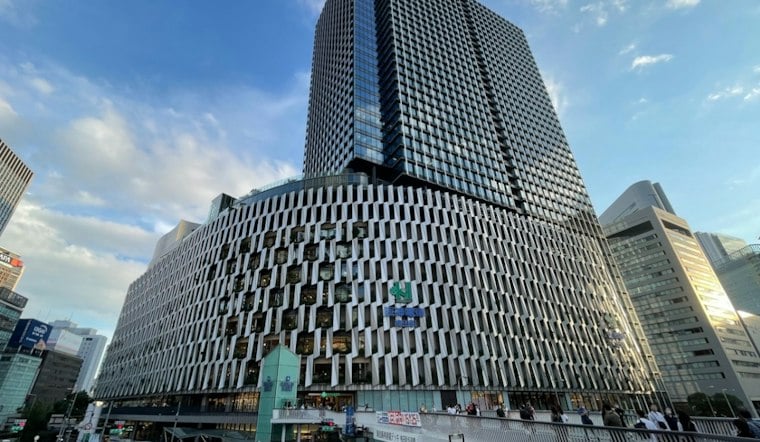
Hawaiʻi's economic development department has partnered with Hankyu Hanshin Department Stores, Inc. to give local businesses a wider shot at Japanese consumers and at sales outside the islands.
The point, the department said, is to expand opportunities for Hawaiʻi businesses to promote their products in Japan and grow international sales. That is the extent of what DBEDT's own post spells out. The longer record of how those companies have actually met Japanese shoppers sits in the Hankyu Hawaiʻi Fair.
A Department-Store Week in Umeda
In 2019, Maui Now described the fair as an annual event at Hankyu's Umeda store in Osaka, then heading into its sixth year. A dozen Maui County vendors were invited for July 10–16. Nine of the 12 were going to test their products in Japan for the first time. More than 80 Hawaiʻi brands were expected to be highlighted that year.
Published crowd figures do not match, and they should not be averaged into a single draw. The 2019 Maui Now report said the fair attracts more than 250,000 Japanese consumers every year. Hawaii Business Magazine has reported more than 130,000 shoppers a year. The write-ups do not share a counting method, a year, or even the same description of who is being counted.
Advertising for the 2019 fair, through newspapers, the website, radio and blogs, was expected to reach more than 1.5 million customers in the area. That was a media projection, not a count of people who walked the floor.
Merchandise Exports and Visitor Billions
The fair is a retail door into a relationship that is already lopsided. Hawaii Business Magazine reported that Hawaiʻi businesses generate $61 million a year in direct merchandise exports to Japan, while Japanese visitor spending in Hawaiʻi has historically reached as much as $2.3 billion. Shipping a jar or a shirt to Osaka is not the same business as hosting the customer in Waikīkī.
A May 2026 DBEDT report describes Japan as, on average, the second-largest export destination for Hawaiʻi products, with $91.9 million exported. That is a broader export figure than the magazine's merchandise total, and neither number is a forecast of what a department-store partnership will add.
The same Hawaii Business report said the yen, then near a 45-year low, had created opportunities for Hawaiʻi-based companies in Japan. The magazine stated the opening. It did not itemize which products, prices or contracts followed from the currency move.
Who Has Already Made the Trip
Some local companies have treated the fair as a repeat appointment rather than a one-off showcase. Nina Thai, owner of Angels by the Sea Hawaii, was invited in 2016 and, Hawaii Business Magazine reported, returned every year after that. With DBEDT's help, the company also joined the Tokyo International Gift Show, an event the magazine said draws more than 200,000 buyers a year. Ten Tomorrow first took part in the Hankyu fair in 2020.
A booth and a storefront are different commitments. UA Hawaiʻi closed its Osaka location in 2025 and kept doing business in Japan, the magazine reported. Leaving a leased shop did not, in that account, mean leaving the market.
Training, Money and a Pavilion
State help for the Osaka trip was already on the books in 2019. Maui Now said DBEDT supported the fair through HiSTEP, a program that provides training seminars, direct financial assistance, and organizes Hawaiʻi pavilions at mainland and overseas venues. The practical stack is presentation, travel money and a place to stand that a single maker does not have to invent.
The department's Hankyu Hanshin partnership points at the same customer: Japanese shoppers, and international sales for companies that can get a product in front of them. The clearest public picture of what that looks like for a local vendor is still the 2019 Maui contingent — twelve invited companies, nine of them testing Japan for the first time — set against an export relationship in which visitor spending has long outweighed the merchandise Hawaiʻi ships the other way.





