

























































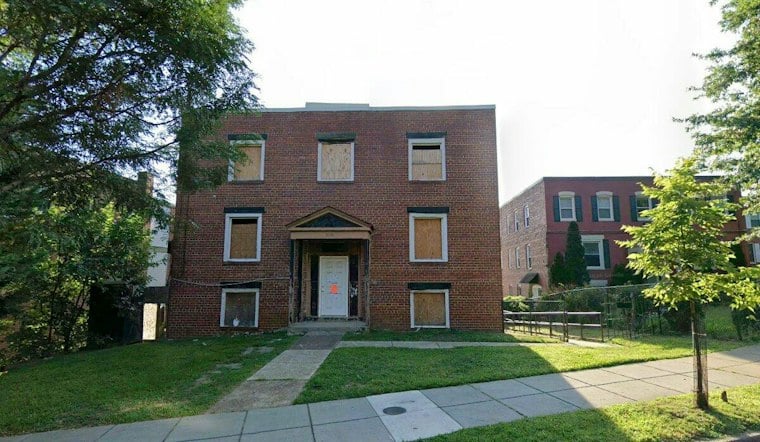
The dispute over D.C. inspection records at a Southeast Washington apartment building remains unresolved even though a later inspection was completed, the Stop Work Order was lifted, and a new building permit was issued. Owner Arch Djabatey says surveillance footage contradicts the Department of Buildings’ records of an August 4 visit, during which the agency initially said it inspected the interior.
According to the WJLA I-Team, an August 25 email from DOB’s Illegal Construction team said the agency had “inspected the interior of the property on 8/4.” After the I-Team began asking questions, DOB said the inspector had observed only the exterior and did not enter because Djabatey refused access. Djabatey disputes that account, saying no one was at the property to refuse entry.
The station reported that Djabatey said he spoke with a DOB official about scheduling an inspection at 1:39 p.m. on August 4, then emailed the department at 2:58 p.m. to say no inspection had been scheduled. The Stop Work Order was posted on the building’s front door at 3:20 p.m. Later, at 5:27 p.m., DOB employee Nicole Rogers emailed that a preliminary inspection still needed to be set up and asked him to work with the department to arrange one.
A Second Disputed Visit and a Reused Photo
A separate August 24 visit also drew conflicting accounts. DOB told the I-Team that two inspectors returned, saw construction crews, and could not enter because the doors were locked. The station’s review of surveillance footage reportedly showed no construction crews at the property during that visit. Djabatey said no appointment had been scheduled.
The I-Team also found the same interior photograph in documents for a July 1 inspection and an August 4 Notice of Infraction. DOB acknowledged reusing the July image in the later notice, explaining that its system records when a photo is uploaded rather than when it was taken. The department said the images should have been labeled differently or replaced, said the mix-up caused confusion, and said it would strengthen its procedures. DOB said complaints about illegal construction prompted the August 4 inspection and separately cited public complaints about noncompliance and inconsistencies in permit applications as reasons for inspections more broadly. When the I-Team offered to let DOB review the surveillance footage, the department declined, saying, “No need exists to look at surveillance video.” DOB Director Brian Hanlon declined an on-camera interview.
A Path to Resolution, and Lingering Questions
At a September 23 meeting with Djabatey and two Advisory Neighborhood Commissioners, DOB said it would dismiss the Stop Work Orders and related fines if he allowed an on-site inspection with him present. Rogers said the department would coordinate a visit after he provided available dates and times, and DOB sent him a list of items to address and verify. The department maintained that a full inspection was legally necessary to verify conditions and help open a path toward permit issuance. It said Djabatey’s refusal to provide full access had complicated efforts to resolve compliance and safety concerns, and that the building could become safe and habitable sooner if he allowed the inspection.
The inspection was later completed, the Stop Work Order was lifted, and DOB issued a new building permit. Djabatey resumed work and thanked the station for contacting DOB on his behalf. He said he still wants an explanation for why official records did not match what he says happened, arguing that accurate inspection records matter to residents who rely on the agency to document visits and enforce building regulations.
Broader Oversight Questions Beyond This Case
Djabatey’s dispute lands amid wider scrutiny of how D.C. inspects construction and housing conditions. A citywide audit covered in Hoodline's recent reporting reviewed eight properties, one per ward, drawn from 57 cases flagged as possible examples of dangerous construction — though that judgmentally selected sample does not establish how often similar problems occur across all D.C. construction projects. The same reporting, citing figures attributed to The Washington Sun, noted DOB had completed required annual audits for only 14% of those eight properties and that roughly three in five construction inspections in fiscal year 2025 were handled by third-party inspectors rather than the agency itself. DOB issued 63,675 permits that year, a 23% jump from fiscal year 2023, according to the same account.
Separately, a D.C. Council Committee of the Whole staff review examined housing-code enforcement and found deficiencies in how inspectors deliver and settle notices of infraction, according to DCist. That review found more than half of the notices of infraction sent to property owners went to the wrong address, and that most housing-code violations were not fixed within the time frame the notices required. DCist also noted that the D.C. Council began overhauling the former Department of Consumer and Regulatory Affairs in 2020, which split into the Department of Buildings and the Department of Licensing and Consumer Protection in 2022.
What Official Records Show About Inspection Demand
DOB’s FY2024 Annual Enforcement Report says the agency received 20,535 requests to inspect potentially noncompliant properties that year, 3% more than in FY23. These agencywide figures describe demand but do not establish what happened during either visit to Djabatey’s building. The report’s complaint-outcomes table separately lists 3,481 illegal-construction complaints with an inspector dispatched in FY24, distinguishing that category from housing complaints. The figures provide a measure of enforcement workload, not evidence about the disputed visits.
D.C. code gives the Mayor broad authority to enter and inspect premises, structures and buildings in the District, according to the D.C. Council Code, and separately bars anyone from interfering with or refusing to permit a lawful inspection. The Department of Buildings' own guidance for appealing a Stop Work Order instructs owners to respond with planned dates for submitting drawings, obtaining permits, or scheduling inspections, noting that an administrative reviewer may temporarily lift a system hold for that purpose. For Djabatey, the underlying dispute — whether his building was actually inspected on August 4 as DOB initially claimed, or not entered at all as he maintains — remains unresolved even after the permit was reissued and work resumed.





