

























































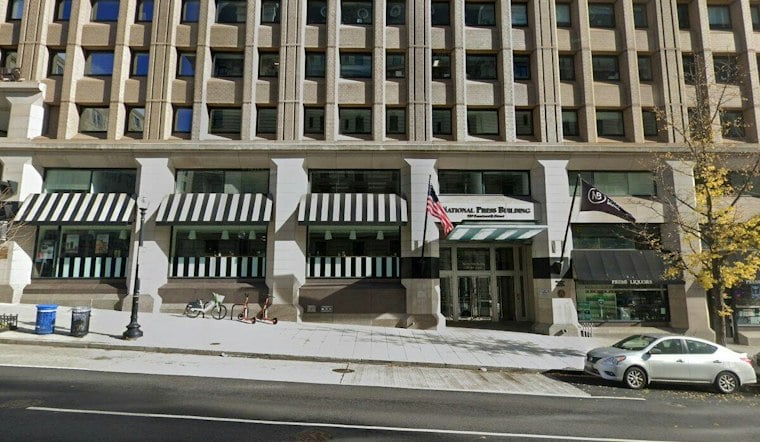
Community of Hope brought 332 guests to the National Press Club on October 1 for its 2026 Night of Hope, and by the end of the night, attendees and sponsors had raised $530,000 for the DC nonprofit's mission. The gathering came as the organization points to rising food insecurity and a sharp jump in family homelessness across the city, framing the fundraiser as both a celebration and a call to action.
According to The Business Journals, the event served as Community of Hope's annual showcase of its work across Washington, DC, where the organization says its mission is to improve health, end homelessness, and partner with communities to make the city more equitable, according to its annual impact report. The nonprofit says it serves more than 20,000 people each year across the city. This year's total marks a dip from 2025, when 364 guests gathered at The InterContinental-The Wharf and helped raise a record-breaking $600,000 for the organization, per a Community of Hope recap of that event.
A Night of Speeches, Tributes and Calls to Action
Client and mother Donnatela Douglas gave a speech during the program, the listing notes, while Lesli Foster served as director of ceremonies and L. Dijon Anderson led what organizers called the Give Hope Moment. Lisa and David Madden co-chaired the event host committee alongside Harold Beynum and Khandra Tyler-Beynum, MD. Guests also wrote notes of encouragement to clients and postcards addressed to the incoming mayor and DC Council outlining preferred policy priorities, the same report states.
Community of Hope President and CEO Kelly Sweeney McShane said 2026 marks her 25th year with the organization, according to the impact report. At the gala, she said the times ahead will be tough, but that the community is strong and can keep turning hope into action, the listing reports. The organization also used the evening to recognize recent board members Monique Diop and Melissa McGuire with its 2026 Tom Nees Award for exceptional service.
Sponsors Behind the Fundraising Push
CareFirst BlueCross BlueShield, Kirkland & Ellis LLP, McAllister & Quinn, Latham & Watkins, Skadden, Arps, Slate, Meagher & Flom LLP, PricewaterhouseCoopers, and VytlOne were named as Activator sponsors for the 2026 event, per the listing. Several of those same firms — CareFirst BlueCross BlueShield, Kirkland & Ellis LLP, Latham and Watkins, McAllister & Quinn, and Skadden, Arps, Slate, Meagher, and Flom LLP — also backed the 2025 gala, where the Give Hope Moment unlocked a $150,000 match for housing, maternal and child health, primary care, and wraparound services, Community of Hope's recap states.
The listing says Community of Hope served more than 1,600 households through its homeless services and more than 15,000 patients in its health centers. That builds on figures the organization has previously cited: in 2024, its three community health centers reached 15,716 people, and its homelessness services impacted 1,386 families and 220 individuals, according to Community of Hope's account of its 2025 Night of Hope. The nonprofit also says it earned a silver quality leader award, which the listing describes as placing it in the top 20% of health centers nationwide — a tier the Bureau of Primary Health Care defines as the top 11 to 20 percent, with Community of Hope appearing among 2025 Health Center Quality Leader Silver Badge awardees in HRSA's own list.
Why the Timing Matters
The gala landed amid warnings about mounting hardship in the District. The listing says new Medicaid rules are expected to cost tens of thousands of residents their health coverage, and that family homelessness in DC increased 16% this year. The DC Department of Human Services has separately reported that homelessness among families increased 15.8%, while homelessness among unaccompanied individuals rose 0.3% and fell 0.7% among transition-age youth, adding that homelessness overall remains down significantly compared with pre-pandemic and pre-Homeward DC levels.
Food insecurity has also been climbing. The Capital Area Food Bank's 2026 report found that food insecurity in Greater Washington is now at a five-year high, surpassing levels seen near the height of the pandemic, based on an annual survey conducted by NORC that drew data from nearly 4,000 area residents. Community of Hope has pointed to similar pressures in its own materials, saying reductions in public funding, growing housing instability, and reduced insurance and community support have made its work more critical than ever, according to its impact report.





