

























































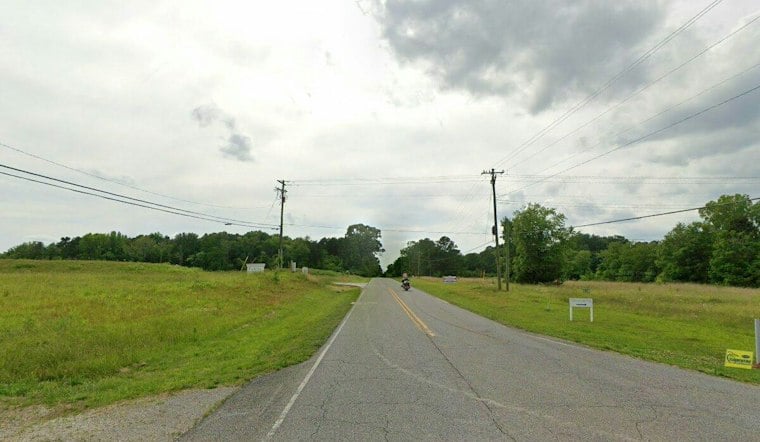
Decatur is tearing out two roundabouts on Grant Street Southeast, even though the city's own Engineering Department says roundabouts are safer than the stop signs set to replace them. The Decatur Planning Commission voted 6-2 this week to remove the circles at Eighth Avenue and 10th Avenue, ending a safety test in the Albany neighborhood.
Engineer's Warning Overruled
City Assistant Engineer Courtney Johnson told the commission that roundabouts are safer than stop signs, a position the Engineering Department also supports, according to Decatur Daily. Commissioners Eddie Pike and Stephen Mosher cited that same engineering position when they cast the two dissenting votes, with Mosher saying he found online research indicating roundabouts are safer than stop signs and voicing concern about liability if someone is hurt after the commission chose what he considers the riskier option.
Commission Chairman Gary Borden said he backed removal because the Albany Historic District Board had requested it. After the meeting, Borden said the vote was final — Decatur will remove the roundabouts regardless of further debate. Borden added that the Decatur City Council will have no input into the fate of the roundabouts, and city spokesman Carter Watkins confirmed the commission's decision is final. The city has budget money available in the current fiscal year to pay for the removal work, though officials have not yet estimated what removing the roundabouts and installing stop signs will cost.
Trucks, Ruts and a Petition
The Grant Street roundabouts were installed as a safety-improvement test in the neighborhood, but residents have complained about 18-wheelers rumbling through them. Grant Street is not a designated truck route under a 2015 city ordinance that restricts heavy trucks to specified streets, though that ordinance allows exceptions for local deliveries and certain other trips using the most direct permissible route. Residents have also asked nearby industrial plants to remind their drivers that Grant Street is off-limits, and the ongoing Sixth Avenue streetscape project is diverting additional traffic through the Albany neighborhood.
Barney Lovelace, a Decatur attorney who lives on Grant Street near 10th Avenue, advocated for removing both roundabouts even though he said he generally supports roundabouts for traffic control. Lovelace said trucks driving over the concrete circles create a safety hazard, and he described a truck knocking over a large bush that once sat in the center of the 10th Avenue roundabout. He said the roundabouts are too small to accommodate an 18-wheeler making a turn, and that unfamiliar truck drivers may end up on Grant Street simply because GPS routes them there. Lovelace also said the roundabout at 10th Avenue has developed ruts that collect water and mosquitoes, and that the city has already removed shrubbery from the circles.
Not every resident is on board. Commissioner Blake Temple argued that large roundabouts are safer than small ones and said many drivers simply do not know how to yield when they encounter one. Larry Waye, another commissioner, said he believes stop signs will slow neighborhood traffic just as effectively as the roundabouts have. City Planner Tommie Williams told the commission removal is not the preferred option from the city's standpoint, but that Decatur requested it on behalf of several Grant Street residents and will support the citizens' request — residents are also working on a petition pushing for the roundabouts' removal.
What the Research Says
The debate over the Grant Street circles plays out against a broader body of traffic-safety research. The Federal Highway Administration describes roundabouts as a proven safety countermeasure, stating that FHWA material notes they can substantially reduce crashes that result in serious injury or death. A separate federal roundabout guide cautions that operation and safety performance are particularly sensitive to geometric design elements, meaning how a roundabout is built matters as much as whether one exists at all.
A 2011 study of Wisconsin roundabouts, examined by the Traffic Operations and Safety Laboratory at the University of Wisconsin, found that converting two-way stop-controlled intersections to roundabouts produced the highest safety benefit compared with all-way stop or signalized conversions. That analysis of 24 roundabouts built in 2007 or earlier reported a 52 percent decrease in injury crashes after conversion, and a separate statistical model in the same study estimated a 9 percent decrease in total crashes. Those findings come from roundabouts built elsewhere and do not speak directly to what will happen at Grant Street once the stop signs go in.
More Roundabouts Still Planned Citywide
Even as it removes the Grant Street circles, Decatur has not abandoned roundabouts as a tool elsewhere. The city has not installed any additional roundabouts since the Grant Street installations, but it plans two more: construction is expected to begin on a $1.5 million roundabout at Upper River Road and Old River Road, and the city has applied for Alabama Transportation Rehabilitation and Improvement Program-II funding to build another at Modaus and Fairgrounds roads.
Decatur Utilities has water and sewer lines running beneath the Grant Street roundabouts that will need to be relocated as part of the removal work, though a full cost estimate and timeline have not been released. Mayor Kent Lawrence's office did not have additional comment included in the available reporting on the commission's vote.




