

























































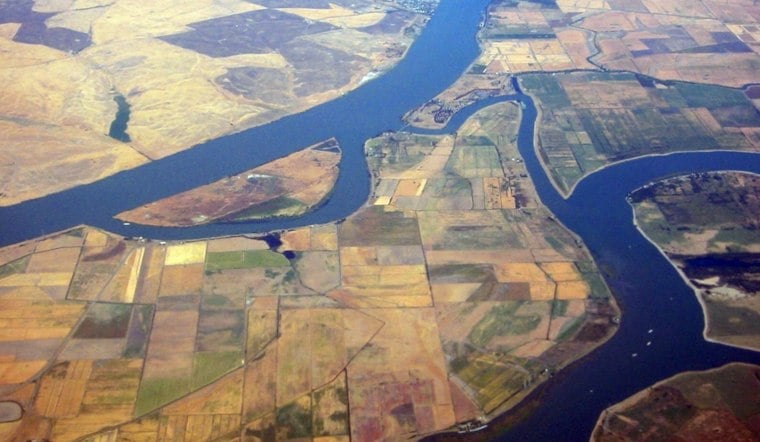
California's Sacramento-San Joaquin Delta has lost more than 120,000 acres of farmland since 1991, shrinking from roughly 538,000 acres to about 416,700 acres today — and a new draft state report is pushing to slow that decline before more ground disappears under habitat restoration and flood-control projects. Public comment opened in late September on the Delta Protection Commission's draft, which lays out 22 recommendations meant to strengthen protections for the region's agricultural land.
The draft report, released in September, calls for California to convert less Delta agricultural land for natural habitat and flood control, according to Stocktonia. Agriculture still covers approximately 416,700 acres, or about 56 percent of the Delta's total area, per a notice from content.govdelivery.com. That same notice states that public comment opened September 25, with members of the public given until Dec. 1 to weigh in before a final report incorporating that feedback goes before the Commission in January.
Amanda Bohl, executive director of the Delta Protection Commission, said she does not know the plan's taxpayer cost, and the draft itself specifies no estimated taxpayer expense or agency responsible for paying for farmland conversion, Stocktonia reports. The report does propose ways to offset losses in reclamation district assessments and local tax revenues — a concern for the 110 reclamation districts within the Delta's boundaries, which spans five counties.
Habitat and Flood Projects Already Reshaping the Land
The draft estimates that since 2013, completed, underway, and in-planning habitat and flood control projects have converted or are expected to convert approximately 17,000 acres of Delta farmland, according to the same state notice. Notably, only 18% of acreage within those projects sits on deeply subsided lands — 15 feet or more below sea level — the notice adds. The state's own announcement, reported by the Daily Republic, stresses that the draft report does not argue against habitat restoration or flood protection, but instead focuses on planning and mitigating those projects to reduce impacts on Delta agriculture.
Separately, the Daily Republic notes that proposed Delta plan measures include 32,000 acres of tidal wetland conversion and 30,000 acres set aside for subsidence reversal and carbon sequestration projects, per Stocktonia's reporting. If built, the proposed Delta Conveyance Project would temporarily or permanently convert 3,800 acres of Important Farmland, with additional conversion possible for habitat mitigation, according to the state notice.
Lawmakers Weigh In as Comment Period Continues
Sen. Jerry McNerney, a Democrat representing Stockton who sits on the Senate Agriculture Committee and serves as an ex-officio Delta Protection Commission member, said California needs to do more to protect valuable Delta farmland, Stocktonia reports. McNerney said Delta agriculture is critical to the economy and environment, supports flood control, and safeguards 500,000 regional residents.
Assemblymember Rhodesia Ransom, a Democrat representing Tracy, said Delta farmland should be defended and cannot keep being lost without reducing farmers' harvests and raising costs, per the same Stocktonia account. Assemblymember Juan Alanis, a Republican representing Modesto who sits on the Assembly Agriculture Committee, said local farmers, landowners and community members should have a meaningful voice as the commission compiles its report. Alanis added that his team is analyzing the draft and will work with local leaders to safeguard the region's agricultural future, and he wants agricultural lands protected before the report's final draft is released in the coming months.
The Delta, which holds more than 400,000 acres of farmland described as helping feed the world, faces farmland loss that could affect California's statewide agricultural economy, valued at $61 billion, according to the outlet's reporting.
What the Report Can and Cannot Do
The Delta Protection Commission's land-use authority extends only to projects in the Delta's Primary Zone that require local government approval, according to the state notice. That notice also points to the Delta Reform Act, which requires the coequal goals of water supply reliability and ecosystem health to be achieved in a manner that protects and enhances the Delta's agricultural values — a mandate the Commission says has guided its work for 17 years.
The draft report also recommends methods to increase Delta farms' agricultural and economic viability while decreasing carbon emissions and subsidence, Stocktonia reports. With public comment running through Dec. 1 and a final version due before the Commission in January, the document's reach will ultimately depend on how state agencies, lawmakers, and local reclamation districts respond once the comment window closes.





