

























































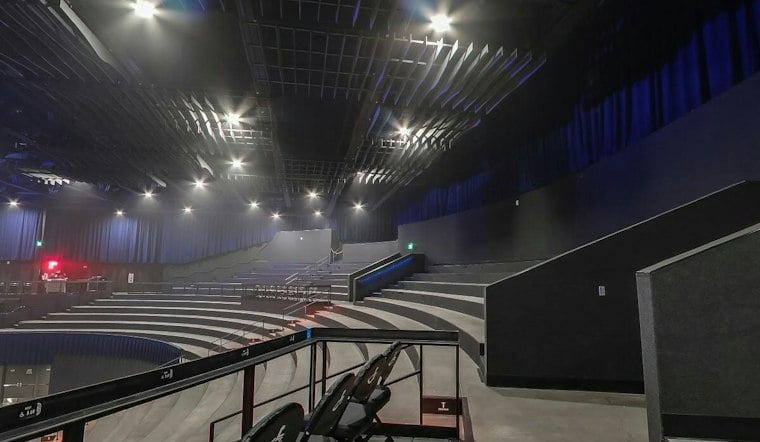
Democratic officials and strategists are in Denver for the opening day of "What's Next," a conference built to celebrate the party's midterm gains and to argue, in the same rooms, over what those gains should be used for.
The meeting was planned before anyone knew the score. Al Jazeera reports it was organized ahead of the midterms by Majority Democrats, a new group chaired by Massachusetts Rep. Jake Auchincloss. Denverite scheduled it for Thursday, Friday and Saturday, Nov. 12-14, at Mission Ballroom and other local venues. Associated Press reporting described officials and strategists converging on the city Thursday to plan a course and celebrate the wins.
A Lineup Wider Than One Ambition
Denverite, previewing the meeting, described a pack of presidential potentials and other top Democrats. Axios named House Democratic Leader Hakeem Jeffries, Pennsylvania Gov. Josh Shapiro, Texas Sen.-elect James Talarico and former Transportation Secretary Pete Buttigieg. New Jersey Sen. Cory Booker and Iowa Sen.-elect Josh Turek are on the program as well.
Jeffries is the likely next House speaker, and he has already drawn suspicion among some on the left about the party's Washington power structure. Around him are a Pennsylvania governor, a New Jersey senator, a former transportation secretary and two senator-elects, from Texas and Iowa. The midterms returned Democrats to power after the 2024 election that sent Donald Trump back to the White House. Majority Democrats had planned the gathering before that result existed, so the win arrived on top of an agenda rather than as the reason the rooms were booked.
A Pitch Aimed at Both Flanks
The organizers are pitching Majority Democrats as the voice of a new generation of party leaders and as a bridge across the left-center divide. The language Al Jazeera reported is less diplomatic than the word bridge. The group presents itself as an alternative to "an old establishment" that "sells mediocrity disguised as moderation" and an activist left that "demands purity disguised as justice."
Some progressives question that vision, arguing it is not ambitious enough. Axios set the same unresolved choice over the conference: whether Democrats should double down on progressive policies or tack toward the center heading into 2028. The suspicion already attached to Jeffries, aimed at the party's Washington power structure, is the personnel version of that fight. A new group can announce that both flanks are selling a disguise. Three days at Mission Ballroom does not retire the objection.
A Majority, and Two House Counts
Democrats are set to take control of both chambers of Congress in January. The Associated Press called the midterms the party's best electoral performance in half a century. The width of the House majority is a separate, less settled question. On Nov. 4, NBC News estimated Democrats would win at least 258 House seats and described that total as the party's largest since 1993. On Nov. 5, The Guardian reported the party was on course for 237 House seats and a Senate majority of at least 54, calling both the largest margins for any party in years.
Those House figures, published a day apart, cannot both be the final total. They also should not be mashed together with a second 258 from the same coverage. The Guardian's other 258 is a reported gain in state legislative seats nationwide, a different set of offices from NBC's House estimate. A conference about what to do with the win is opening with that difference still sitting in the public accounting. The state results do not choose between 237 and 258 in the House. They are another map.
They are also the part of the win with the clearest machinery. The Guardian reported Democrats gained 258 state legislative seats nationwide, created six new governing trifectas and claimed 11 legislative chambers from Republicans. A trifecta is the governor's office plus both chambers, which is the difference between announcing a priority and passing it without the other party's votes. Six new trifectas, and 11 chambers taken from the GOP, change who can move a budget or a voting law. That work does not wait on a Denver panel to pick a slogan.
In Texas, The Guardian reported, Democrats were set to control the state House for the first time since 2002. Talarico, the state's senator-elect, is on the Denver program a week after that shift was described. The argument about ambition has a legislature under it.
Forty Million Dollars on a Short List
Axios called Colorado's two-decade transformation into a Democratic powerhouse the reason Denver was a natural host. The city has presented itself as a modern example of a purple state turning solid blue. It last hosted a Democratic convention in 2008. It is now one of three finalists for the 2028 Democratic National Convention, alongside Boston and Philadelphia. The self-portrait is not a selection.
The bid, unlike the slogan, has a price. Denver Business Journal reported that the Downtown Development Authority has backed Denver's 2028 convention bid with $40 million. The authority expects hosting would generate 1,100 jobs in downtown. That forecast belongs to a convention the city has not won. It is not a staffing plan for this weekend's conference, and Boston and Philadelphia have not left the competition.
The two Denver stories share a Thursday, not a purpose. Party leaders are opening an argument about direction on the day the authority's $40 million commitment is news. Mayor Mike Johnston said, "America tried on hate and it didn't fit." The authority is not competing with that sentence. It has put a number on a bid.
What Saturday Does Not Decide
Sessions continue Friday and Saturday, Nov. 14. Majority Democrats can press the choice between progressive policies and a tack toward the center, in a lineup that runs from the likely next speaker to senator-elects who just won. Choosing a 2028 convention city is a different contest. Denver is a finalist in it, not the host, and Majority Democrats is not the body making that pick.
When the sessions end, the city's offer will still be outstanding: $40 million from the downtown authority, and 1,100 jobs in downtown expected only if Denver is chosen over Boston and Philadelphia. A three-day argument about what the party believes can close on schedule. A finalist's bid does not.




