

























































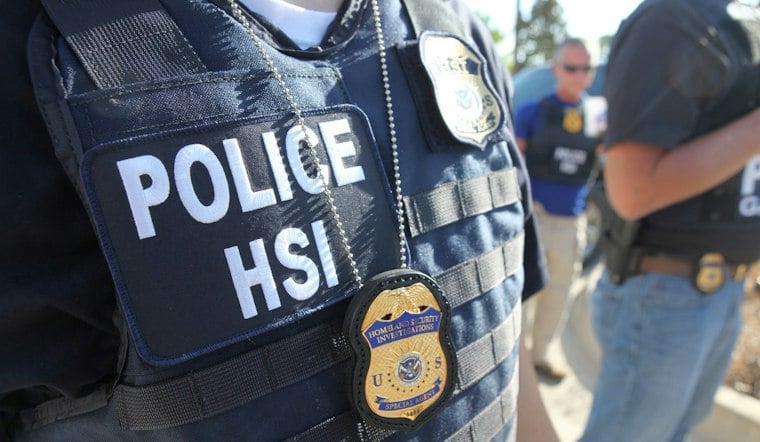
A Mesa County sheriff's deputy who resigned last year after being accused of illegally tipping off federal immigration agents about a University of Utah student is listed in leaked government data as a special agent with the agency he was accused of helping. The deputy, Alexander Zwinck, quit the sheriff's office in September 2025 under pressure from a lawsuit filed by Colorado Attorney General Phil Weiser, who dropped his complaint shortly after Zwinck's resignation.
Hacked Department of Homeland Security data, first reported by The Colorado Sun, lists Zwinck as a special agent with Homeland Security Investigations in Grand Junction, an ICE subagency. It is not clear when ICE hired Zwinck or whether he is still employed there, and ICE declined to confirm his employment status, according to the same reporting. The data was published by the activist group Distributed Denial of Secrets and reportedly contains records on more than 41,000 Department of Homeland Security employees; The Washington Post verified the leak's authenticity with current and former DHS officials, per the Sun's account.
The case that led to Zwinck's resignation began on June 5, 2025, when he pulled over Caroline Dias Goncalves, a 19-year-old University of Utah student, on Interstate 70 near Loma. According to a Mesa County Sheriff's Office investigation summary, Zwinck sent a photo of her driver's license to a Signal chat that included local, state and federal law enforcement personnel, among them Homeland Security Investigations and Drug Enforcement Administration agents. The report states that Zwinck released Dias Goncalves at 1:56 p.m. with a written warning, but had already shared her vehicle description and direction of travel with HSI agents.
Allegations of a Stalling Tactic
Weiser's lawsuit went further, alleging that Zwinck kept Dias Goncalves in his car as a way to stall while alerting ICE's Homeland Security Investigations office to her location through the Signal chat, as the attorney general's office described in its own press release announcing the suit. Weiser alleged that Zwinck violated Colorado law, which prohibits local law enforcement from cooperating with civil immigration enforcement, by working with federal officials to detain the Utah woman after a routine stop. That allegation reflects the attorney general's claim rather than a court finding of liability.
The sheriff's office pulled Zwinck from an interagency drug task force and placed him on three weeks of unpaid leave in July 2025 before he resigned that September. An administrative review found by a preponderance of evidence that Zwinck, along with Investigator Erik Olson and Sergeant Joseph LeMoine, acted outside agency policy, according to the same investigation summary.
Sheriff's Office Says It Should Have Stayed Out
In its own public statement, the Mesa County Sheriff's Office said its review concluded the office should not have had any role in the chain of events that led to Dias Goncalves' detention. The investigation summary also described similar conduct by others in the group chat.
Zwinck's apparent new role surfaces amid wider scrutiny of ICE's hiring practices. A Washington Post analysis of background checks on 300 newly hired ICE agents found at least 19 with past misconduct allegations, criminal charges or other employment red flags, according to the Sun's summary of that reporting. A separate Washington Post review of records exposed in the same DHS hack similarly found that some immigration officers hired the prior year had past misconduct or criminality, though that finding carries lower confidence in the available reporting.
The leaked roster's listing of Zwinck does not resolve the central question hanging over the case: whether the Mesa County deputy disciplined for his role in one of Colorado's most closely watched immigration-cooperation disputes is now drawing a paycheck from Homeland Security Investigations, or when any such hiring might have occurred. ICE has declined to confirm or deny the employment status of individuals named in the leak, leaving the timeline — and Zwinck's current status — unconfirmed.




