

























































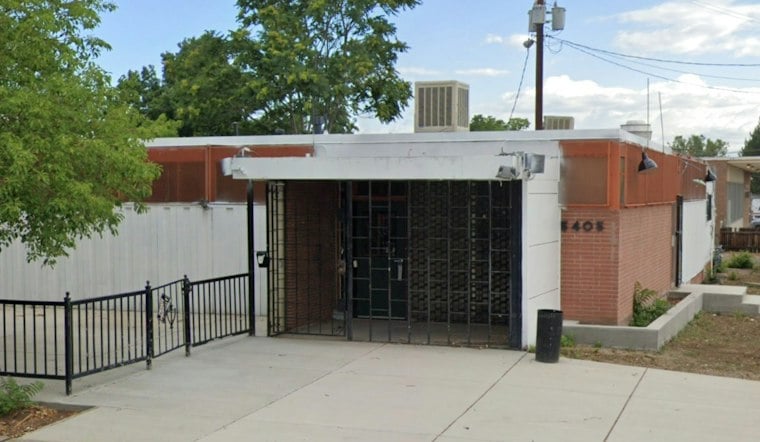
City workers and a locksmith showed up at Ruby’s Good Shoes in Northeast Park Hill on Wednesday, served a warrant, and gave owner Hasena Williams just 30 minutes to wrap up orders and send her staff home before locking the doors over roughly $5,000 the city said she owed. About 20 diners were still eating when the tax compliance enforcers arrived. Hours later, the city reversed course and let the restaurant reopen.
According to Denverite, the workers moved to seize the property and lock Williams out over the roughly $5,000 debt. Williams told the outlet she had mostly been paying her taxes for Ruby’s and that the remaining balance came from late fees and fines, not unpaid tax principal. City officials declined to confirm the exact amount owed on the record, the outlet reported.
Ruby’s Good Shoes opened in Northeast Park Hill in July 2025 and now employs more than 20 people across the restaurant and an in-house croissant shop that also operates inside the building. Williams said running the small restaurant costs about $80,000 a month, and that she sank hundreds of thousands of dollars into renovating the building, including installing a rooftop heating system to comply with the city’s green building ordinances.
A Scramble to Keep the Doors Open
Williams said she’d been squeezed by the city and had nothing more to give. She told Denverite she was denied most of the loans she applied for, and that even some approved loan money hadn’t arrived yet because of the fees and interest owed. Faced with limited cash, she said she had to choose between paying her workers or paying the city.
Williams had met with Chief Operating Officer Emily Garnett, Adeeb Khan of Denver Economic Development & Opportunity, and staff from the Department of Finance to try to find a solution on the fees and interest, the report notes. She asked Denver to forgive the fines and debt outright, and said Colorado had already canceled Ruby’s late fees on state taxes so the business could keep operating. The city, meanwhile, offered her a payment plan, which Williams turned down because she considered the fees and fines unjust.
Community Pushback and a City Reversal
As word spread, Jeff “Brother Jeff” Fard livestreamed Williams’s story alongside mayoral candidate Lisa Calderón, and the pair demanded Mayor Mike Johnston personally come to the restaurant to resolve the situation — a building where Johnston himself once kept an office as a state lawmaker, per the same account. A Denver city worker reportedly threatened to call police on Fard during the standoff. About 20 community members gathered to support Williams and offered financial help to cover the roughly $5,000 debt, which she refused, instead urging supporters to ask the mayor to waive the fees.
Mayor Johnston’s spokesperson, Jon Ewing, said the mayor’s office had been working with Ruby’s for six months and insisted the city was not trying to shut the business down, telling Denverite the city sought a resolution that would let Williams keep her business open while repaying the outstanding taxes. Ewing said the city had offered Williams another meeting that same day to talk through the issue.
The situation shifted once Denverite told the mayor’s office it had witnessed the restaurant being shut down and its locks changed. Ewing texted that the action was not authorized and that the locks would come off immediately. A Department of Finance staffer had already arrived about an hour into the shutdown to de-escalate, though that staffer also said the city would not allow Williams to file her taxes whenever she wanted. A city official ultimately decided to let Ruby’s Good Shoes reopen, and Williams said it was scheduled to serve again Thursday. Ewing also said no one, including Fard, would be jailed over the confrontation.
Williams said the city had been tone deaf to the struggles small businesses face. Marcus Weaver, who runs Lower the Barrier Colorado, backed waiving fines, fees, and interest owed by small businesses more broadly.
Echoes of Raíces Brewing
Denverite drew a comparison to Raíces Brewing, the well-loved brewery that closed its doors in 2025 while facing a city order over unpaid taxes. The brewery’s case involved a far larger sum: the Denver Post reported Raíces owed more than $109,000 in sales and personal property taxes under a distraint warrant, which a Denver spokesperson broke down as nearly $69,000 in sales tax and about $30,000 in penalties and interest. Separately, Denverite’s earlier reporting put the brewery’s unpaid sales tax bill at $98,703.48, including $65,640.55 in back taxes, plus about $10,800 in business personal property taxes.
Raíces’ farewell note said the company had spent about a year working with the city to set up a payment plan, but that invoices dating back to 2019 arrived together in 2024 already loaded with years of interest and penalties. That earlier case, unlike Ruby’s, ended in permanent closure rather than a same-day reopening.





